

To commemorate Women’s History Month, the Afghanistan Policy Lab (APL) at the Princeton School of Public and International Affairs (SPIA), for the fourth consecutive year, acknowledges the struggles and honors the resistance of Afghan women who live in extreme conditions under the Taliban rule. However, they still do not give up hope, and every day through their work and resilience, they inspire us.
This year, through an open call, we asked Afghan women in Afghanistan to write to us about their stories and what a day-to-day life means for them under the Taliban regime, about their struggle and their hope. We were overwhelmed with the submissions we received. Through these stories, we aim to amplify their voices and share their fears, challenges, and resilience. APL is proud to provide a platform to bring them the recognition they deserve. These women share powerful accounts of resilience, bravery, and an unwavering determination to persevere despite oppressive circumstances.
Since the Taliban’s return to power, they have systematically banned girls and women from schools, universities, employment, parks, gyms, public spaces, and businesses, including beauty salons. In January 2026, the de facto Taliban introduced a new criminal code known as the Criminal Procedure Code for Courts, which formalizes a system of extreme procedures against human rights, particularly targeting women, religious, ethnic, and gender minorities, and others. It includes several extreme measures to be applied in courts. Human rights activists and defenders have raised serious concerns that this criminal code contains several provisions that restrict fundamental freedoms.
The United Nations’ and other international agencies' reports reveal the continued persistence of discriminatory policies and their systematic enforcement through arrests, intimidation, and restrictions targeting women and girls. These reports underscore the deteriorating human rights situation in Afghanistan, particularly with respect to women’s rights. Severe restrictions on women remain in place, and in many instances, these measures have been further tightened.
To bring attention to these challenges, APL is marking Women’s History Month by publishing the stories of eight Afghan women, releasing two stories each week in March. These women, living in different parts of Afghanistan, share how they continue to stay, endure, resist, and persevere despite the hardships they face.
Disclaimer: These stories were collected through a call to submit the stories and voluntary virtual interviews. To protect women’s safety, we have not used their real names or shared their actual location details.
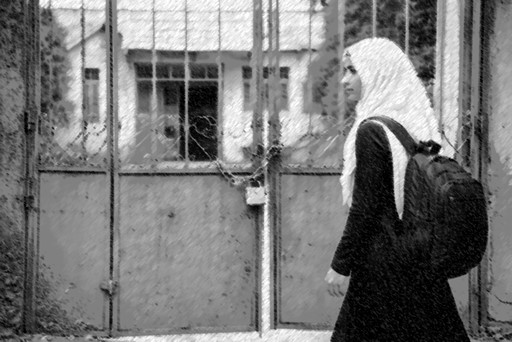
Graduating from high school and then preparing for the university entrance exams in Afghanistan lead to a mix of stress, emotions, and ambitions. On one hand, you are graduating from high school and beginning a new chapter of your life, while on the other hand, it is all about which university and field of study you are going to pursue.
Jamila had similar feelings when she was in her last year of high school and was starting to prepare for the entrance exam, Kankor.
However, what actually happened was unexpected and frightening.
The Taliban came into power, closed the doors of schools and universities for women and girls, and barred them from all aspects of life.
“Those were the most painful days of my life because I felt like my dreams were suddenly taken away from me,” she says.
Jamila and her family went through an immense period of depression as their lives were filled with fear and uncertainty.
Her story recalls the repetition of history, as more than two decades ago, her mother experienced the same repression and oppression from the Taliban when she was attending school. That was the time when Afghanistan was ignored and isolated. Women and girls faced the worst lives, deprived of their basic rights.
Jamila’s mother could not receive her formal education, yet she continued learning and equipped herself with education from books. However, she still carries the scar of being deprived of formal education.
After the fall of the Taliban in 2001, the number of women and girls attending schools and universities rose to millions. They actively participated in all sectors of society, including government, business, education, and civil society.
However, taking control of the country again in 2021, the Taliban once again started ruling with their oppressive policies. Their restrictions on women and girls have not only deprived them of education but also severely impacted their social, economic, and mental lives.
Jamila has been facing an uncertain future, as there seems to be little chance that the Taliban will lift these restrictions.
“When education was stopped, I felt empty and broken. It was like my future disappeared in front of my eyes. But even in that darkness, I did not give up,” Jamila says.
Commenting on the socio-economic and mental impacts of these policies, Jamila adds, “These restrictions have affected every part of our lives. Economically, things have become more difficult. Mentally, we experience stress, sadness, and sometimes deep hopelessness. Socially, our lives are very limited, and we cannot live as we once did.”
The Taliban are unable to provide any reasonable basis for the restrictions and bans they have imposed on women and girls.
“In my opinion, these restrictions do not reflect the true values of Islam. Islam encourages education and knowledge for everyone, but what we are experiencing now feels very different from those values,” says Jamila.
Despite extremely unfavorable circumstances, Jamila did not lose hope. She is looking for other ways to continue her learning. She has enrolled in online classes and continues to learn from home. Seeing the need among women and girls in Afghanistan to access learning through online platforms, Jamila volunteered to teach English to girls. This is how she supports other women and girls who are deprived of education.
“Despite everything, I still believe in the future. Even though today is very difficult, I believe one day things will change. Women in Afghanistan will rise again and have their rights,” says Jamila.
Her message to the international community is not to forget Afghan women who continue to live in extremely unfavorable conditions and who still strive to build their futures. These women and girls seek their basic rights to education, work, and participation in social life.
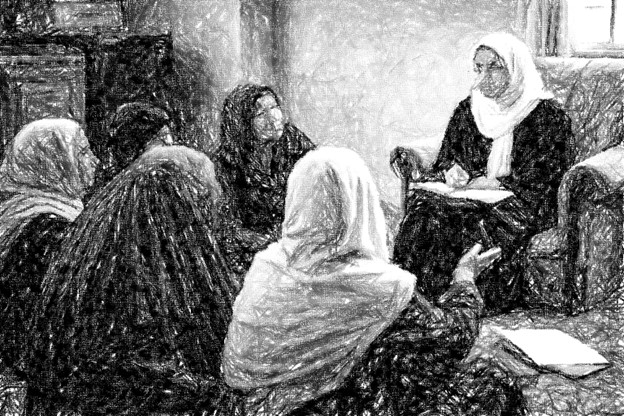
Abida once played an important role in the legal field, helping women in her province resolve their issues. Women trusted her; they reached out to her and filed their complaints in a proper order to seek justice, and the process worked. Her office was often filled with stories of pain. Family disputes, domestic violence, sexual and physical abuse, and struggles over inheritance were the most common issues that the women brought. It was never an easy role, yet she saw deep purpose in her work.
“My job was not easy, but it was important,” she says. “I helped women navigate their problems. I believed in justice for women, and I struggled for a system where they could seek justice without fear.”
For Abida, the growing number of women who came forward was not a burden, it was a sign of trust. There was a system in place, one that allowed women to file complaints and be supported by professionals who understood their realities. For a time, justice felt within reach.
That world began to fade after 2021.
Women were gradually removed from the justice system. Female judges and prosecutors were dismissed, offices were restructured, and the presence of women in legal spaces diminished. In short, women were not allowed any role under the Taliban.
“In my province, where conflict and social barriers already made life difficult for women, it has always been hard to convince people to respect women’s rights,” Abida says. “Now, the situation has become even worse.”
Today, the path to justice for women is nearly closed. Women cannot leave their homes without a male guardian (mahram). There are no female judges, no women to listen, and in many cases, no space to speak. Silence has become the only option for many.
“Almost all the working women I knew have lost their jobs,” Abida says. “It is a hard time. They have lost not only their income, but their ability to make decisions about their own lives.”
Abida’s own life has been deeply affected.
“I lost my job, which was the only source of income for my family,” she says. “Mentally, I am under constant stress, and I do not know what the future holds.”
She draws a direct connection between justice and well-being. Without access to legal protection, the consequences will extend far beyond the courtroom, into homes, hospitals, and communities. There will be more mental health challenges, higher maternal mortality, and more premature births, she explains, adding,
“Young girls will be forced into marriage, and the cycle will continue.”
Yet even in uncertainty, Abida refuses to give up.
“I continue to learn and support women in my province,” she says. “I am attending online courses to stay connected to my field.”
Her message to the international community is urgent and clear:
“The reality for women in rural areas is far worse than what is reported,” Abida says. “They are being erased from public life, step by step. The world speaks of rights and accountability, but in places like Afghanistan, women are being pushed into their homes and forced to stay silent, like the only safe choice.”
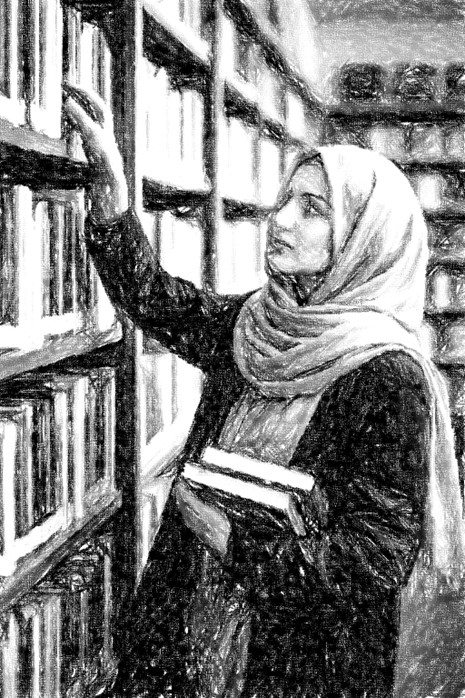
Rana grew up in a time when school, work, and valuing women’s roles were practiced in Afghan society. Although that was not ideal, progress was being made. To follow their dreams, girls attended schools and universities, worked in government and private sectors, and went abroad for education to build their future.
“I grew up believing that attending school and working is normal for women and girls,” Rana says. “Education is for all. But I was wrong after the Taliban took control of Afghanistan in 2021.”
Rana believes that education makes you a better person. During her childhood, she helped her classmates and took on responsibilities in classroom and extracurricular activities.
“Education is not only about books or exams; it shows you how to live a life with a sense of responsibility for yourself, your family, and the broader community,” she says. “An educated mother raises disciplined children who contribute to the society.”
Even then, it was not an easy time. There was fighting, targeted killings, suicide attacks, and Taliban attacks on schools, universities, and women. But women stood strong despite all those challenges, as they learned not to surrender to evil forces.
After finishing high school, Rana took a course to prepare for the university entrance exam. She had a dream to follow. She had a couple of options she was considering for her studies and was confident that she would succeed.
Rana scored high on the entrance exam, Kankor, and she was admitted to one of her preferred schools. But that same year, the Taliban took control, and girls and women were prevented from schooling. Everything changed for women and girls overnight.
On the day of the Kankor exam, her thoughts were not only about her own results. She stood among students who were exhausted yet hopeful, holding onto the fragile belief that something could still survive.
She witnessed panic among people as the news spread that the Taliban had entered the city. That day, Rana rushed home, and thereafter, what she heard were bans upon bans on women and girls. The future became very uncertain for them.
Although Rana had received her university acceptance letter, she was not sure what would happen next.
“All my friends and classmates who received acceptance to study at the university were not sure if they would be allowed to continue. That made all of us very frustrated and sad,” Rana says.
Rana attended a few classes, in fear and under restrictions, before the Taliban announced a complete ban on women studying at universities.
Rana spent the following years in grief and depression. She did not know what to do.
But gradually, she realized she should not lose hope and decided to continue her studies by seeking other feasible platforms. She enrolled in online English and computer classes. That decision marked a turning point. Learning new skills restored a sense of confidence. It reminded her that learning had not ended.
Recognizing that many Afghan girls were facing the same barriers, she chose not to learn alone. With support from online platforms, she began teaching basic computer skills online. In a context of restriction, teaching became a quiet form of resistance.
Her voice also began to find space again. She started participating in women’s group discussions to encourage Afghan women and girls to continue learning despite unfavorable conditions.
Today, the restrictions remain and are increasing. Afghan girls continue to be denied access to education, but that should not prevent them from learning. There are days when the future feels distant, when hope feels difficult to hold.
Yet, she continues.
She studies, she teaches, she writes, and she prepares. In a context where opportunities are limited, her persistence reflects a quiet strength.
Her story is not only about what has been taken from her, but also about what remains: her voice, her determination, and her belief that education will return, not only as a personal achievement, but as a responsibility.
She continues to hold onto the possibility of a future that is still waiting to be realized.
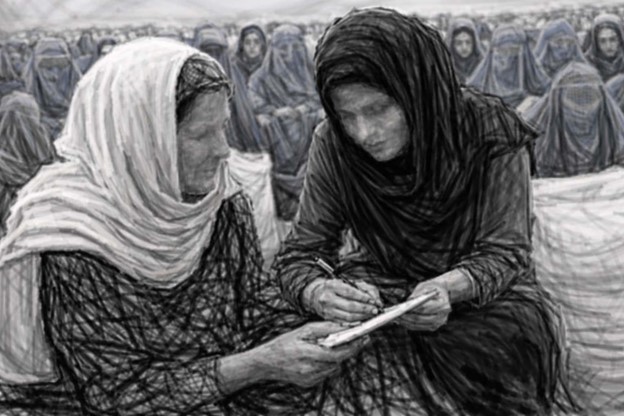
Suhaila’s voice once filled the classroom. A favorite among her students, she took her role seriously, whether addressing classroom concerns, guiding course-related questions, or helping them apply for scholarships abroad. She was not only a lecturer but a mentor who believed deeply in her students’ potential.
Suhaila was not only teaching; she was building the country’s future. For her, education was the only path through which women could pursue their dreams. But after the Taliban came into power, she was forced to remain at home for an indefinite period. Women teachers and faculty were promised that they would continue to be paid, but that promise was never fulfilled.
“Sadly, a group takes power, and they take their first steps against women. They systematically shape their oppressive policies and keep half of the population in a state of shock,” Suhaila says.
She came from one of the least developed provinces, where very few women had access to education. After the fall of the Taliban in 2001, women and girls across Afghanistan began to seek education, build their skills, and work in different sectors. There was a growing belief that dreams could be pursued. Suhaila was among those who succeeded, earning a scholarship to study abroad.
Suhaila returned home after completing her education. She got married and built her career in the education sector.
Soon after she lost her job, her husband became jobless too, as the working atmosphere was severely affected after the Taliban came into power. In such a hard time, survival became the priority. Suhaila did everything she could for her children. She worked daily wage jobs in people’s homes to earn a living. It was a difficult and exhausting time.
Then one day, she heard an announcement that those who had been dismissed could return to their jobs. She could hardly believe it. The next morning, she went to her workplace, hopeful and determined. But when she saw the empty classrooms, her heart sank. Still, she held on to hope that schools and universities would soon reopen.
That hope did not last.
“The person whom I thought would help me restore my position humiliated me. He made fun of my education and said that I did not have the required qualifications to resume my work,” she recalls.
Suhaila returned home in tears.
Despite this, she did not stop.
She applied to multiple organizations and eventually secured a position in the humanitarian sector. Although she missed teaching, this work exposed her to the realities that many Afghans were facing. She saw families struggling for food, medicine, clean water, and other basic necessities. It was painful, but it gave her a sense of purpose.
She did not treat this work as a typical job. She worked beyond her capacity, taking on responsibilities that were not even part of her role. The needs were overwhelming, and resources were limited.
This period lasted only two years.
A new restriction was imposed, banning women from working with international humanitarian and other organizations. This closed the last remaining space where she could contribute meaningfully to her community and support her family.
Afghanistan continues to face one of the most severe humanitarian crises in the world, with more than one-third of the population experiencing hunger. Limited livelihoods, widespread unemployment, and restricted access to healthcare have pushed many families to the brink of survival.
After losing her job, Suhaila’s relations with her husband deteriorated. The worsening economic situation placed immense pressure on the household. Over time, this led to emotional distress and, eventually, domestic violence.
“I was not expecting that things would get so bad that they would lead to domestic violence. Now, I feel the pain more, the pain of other women,” she says.
Suhaila’s life has been confined significantly. She is no longer able to move freely, make personal choices, or rebuild a sense of independence. The aspirations and interests that once defined her life have gradually faded under constant pressure.
Once again, she turned to daily wage work to support her family.
Yet she has not given up.
She continues to search for opportunities, anything that can provide both economic stability and a sense of purpose.
“I do not think this dark time will prevail for long. I believe in women’s strength and the power of education,” she says.”
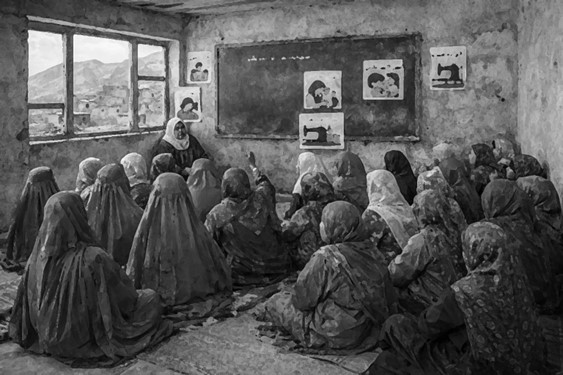
Living in one of the remote provinces of Afghanistan, Samia watched the news stories and discussions from around the world about women’s rights and girls’ education with a keen interest as March began. These discussions covered multiple topics, with an emphasis on improving women’s rights in different areas such as health, education, justice, and all other important areas. During those discussions, the aim was to look for the solutions and design ways to implement them.
However, the case of Afghanistan was the worst. With each passing day, women and girls faced more restrictions and isolation. In today’s Afghanistan, women think about their survival and safety, and acquiring justice is almost impossible.
A professional in the legal field, Samia was forced to stay home since the Taliban closed all the legal institutions functioning in the Republic Regime. They abolished the laws and replaced them with their own misogynistic ones. All those working in the legal field not only lost their jobs but also remained targeted by the Taliban.
Samia, whose work supported women who faced violence, forced marriage, and family disputes, lost her job.
“In my province, women faced many problems, such as domestic violence, forced marriages, and others. I helped them to seek justice, although the system was never perfect.” Samia said. “I remember women and girls coming to our office telling about their stories to seek justice. Our team worked hard in any possible way to ensure justice was served.”
There were delays, corruption, and pressure from people in power, but the doors were still open for women to seek justice. Now all those doors have been closed.
There have been several reports showing the justice system of the Taliban riddled with inconsistencies, pervasive impunity and unaccountability, and arbitrary, unfair, and closed trials. Moreover, they have also been using public flogging and other forms of torture and ill-treatment.
“The impact of the Taliban’s restrictions on the legal sector made women and girls remain silent as there is no institution to listen to them,” Samia said. “They have to go back to the male-dominant traditional form of justice, where justice is not served as per standards.”
Samia noted the increase in domestic violence since the Taliban’s policies left many men unemployed and poverty increased.
“Poverty and unemployment have added significantly to the domestic violence and early child marriages,” she said. “The situation tends to get worse as there is no alternative to address this.”
Women previously had hope, as things were getting better. Men’s ideologies were changing even in rural areas as they began to allow women to seek education and work. The change was witnessed. But with the Taliban in power, all those efforts are reversing. This also impacts society’s mindset, especially among men.
“I remember seeing women narrating the stories of violence with a hope to get justice,” Samia said. “But now there is no such platform that can address the women’s issues.”
Samia still helps her fellow women by giving them advice on how to tackle violence and stay strong despite limited resources. She relies on the skills and knowledge she learned in the past 20 years. However, due to the absence of well-functioning institutions, the path to justice for Afghan women and girls will be very difficult.
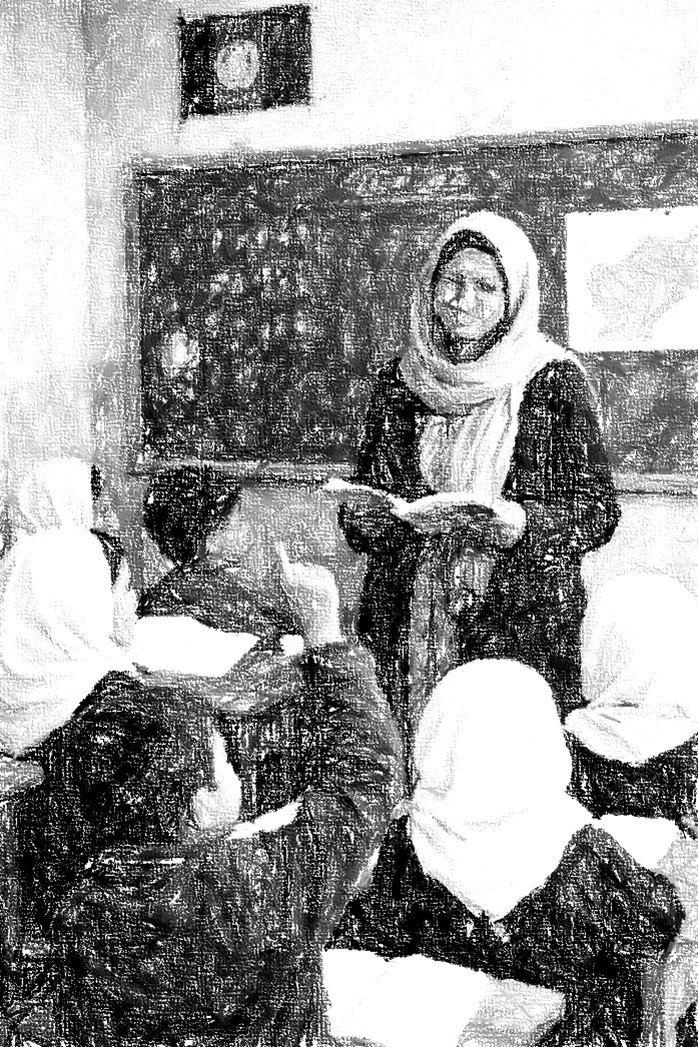
Zahra, like thousands of Afghan women, once lived a life shaped by education and service to her community. She worked as a high school teacher in one of Afghanistan’s provinces, where women’s literacy rates had steadily improved over the past two decades. Teaching was more than a job for her.
Zahra, alongside her husband, who was a public servant, built a meaningful life through years of dedication to education and service. Together, they dreamed of a brighter future for their children, one where they would grow up educated and able to contribute to their country.
But that future suddenly became uncertain. When the Taliban came into power in 2021, the lives of millions of Afghan women were transformed overnight. Schools and universities closed their doors to girls, and women were pushed out of public life and employment. For Zahra’s family, the impact was immediate and devastating.
“Taliban policies affected both my husband and me,” Zahra says. “We both lost our jobs. It was an extremely difficult time for our family because we had no other source of income.”
Finding new employment opportunities was almost impossible. Both Zahra and her husband had built their careers in the education sector, which had become one of the most restricted spaces in the country, particularly for women and for those who had worked under the previous government.
The uncertainty pushed Zahra into depression. When a person is no longer allowed to teach, work, or participate in society, thinking about the future begins to feel impossible.
Zahra’s story is also part of a much longer struggle. For decades, Afghan women have been through war, violence, and instability. Despite living through some of the harshest conditions, many women continued to pursue education and contribute to their communities.
Each night, Zahra writes in her diary. She records the small moments of hope and the stories of oppression and hardships she and her friends face.
“Sometimes I write about the lives of the women around me,” she says. “What they go through every day is so difficult that I sometimes wonder how they are still alive.”
Her words carry the weight of years of conflict.
“Every woman in Afghanistan carries the scars of war, of violence, suicide attacks, acid attacks, and targeted killings,” Zahra says. “Sometimes I think that simply surviving all of this is a miracle. But today’s situation under the Taliban has gone even further. A woman is not even considered a full human being.”
For Zahra, the ban on girls’ education is particularly painful. Education was not only her profession but her passion.
“There is no restriction on women’s education in our religion,” she explains. “That is why I chose to become a teacher. Teaching is a noble profession, and it meant everything to me.”
Today, Zahra sees an entire generation of young people losing hope.
“The youth are deeply disappointed. They no longer see a future. For women, the situation is even worse.”
Despite the restrictions, Afghan women continue to search for ways to survive and support their families. Some have turned to online work where possible. Others sew clothes, cook food to sell from their homes, or find small ways to earn an income.
But many struggle silently with grief and despair. Some women, overwhelmed by the loss of opportunity and dignity, have fallen into deep depression. A few have even attempted to take their own lives.
Still, Zahra believes Afghan women possess extraordinary strength.
“Afghan women are strong. Even in these circumstances, they try to use whatever small opportunities they can find.”
Her voice carries both exhaustion and determination.
“Afghan women have the right to live with dignity and to practice their basic rights,” she says. “The international community should not remain silent.”
For Zahra and millions of other Afghan women, the struggle continues, not only for education and work, but for their recognition as women and their rightful place in society.
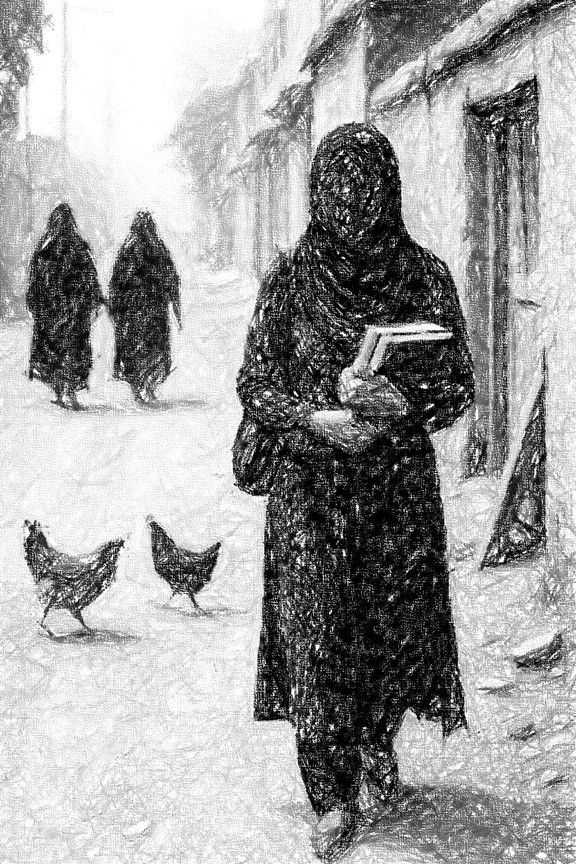
Amina grew up in one of the epicenters of the Taliban during their first rule in Afghanistan. As a child, she witnessed the devastating conditions faced by people in her community. The country was gripped by severe poverty. Girls were banned from education and work, and access to even basic healthcare was extremely limited. Women and girls were denied the most fundamental rights and were often treated as if they did not belong in society.
Then the situation changed with the 9/11 attacks.
To fight terrorism, the United States and its allies intervened in Afghanistan. The Taliban were overthrown, and a new democratic era emerged. Gradually, families began sending their daughters to schools, and women started participating in public life.
“This was not an overnight change,” Amina recalls. “It took years for men to begin valuing education and recognizing the role of women in society.”
Enthusiastic about education, Amina asked her father for permission to attend school. At first, he hesitated, worried about how the community might react. But Amina persisted and eventually convinced him.
“I still remember my first day at school,” she says. “I walked all the way from home, determined to honor the trust my father had placed in me.”
Amina thrived in school. After graduating from high school, she achieved high marks in the national university entrance exam, known as the Kankor. She secured admission to a university in Kabul, where she pursued her studies with dedication and consistently earned strong academic results.
During those years, Kabul was transforming. The city was gradually becoming more vibrant and modern. Women and girls could be seen attending schools and universities, working in offices, and participating in public life. Confidence among women was growing, and society was increasingly recognizing their contributions.
While studying at university, Amina earned a scholarship to pursue higher education abroad.
“That moment felt like a dream come true,” she remembers. “I felt that I could achieve anything I wanted, and that other women and girls could, too.”
Despite her achievements, Amina never forgot her roots. She always dreamed of returning home to contribute to her community, particularly to support women and girls who still faced many barriers.
After completing her studies, she returned to Afghanistan and began working for a non-governmental organization. Her knowledge, skills, and strong commitment to helping her country made her successful in her work. She found deep satisfaction in seeing the positive changes her efforts helped foster.
But everything changed again in 2021.
When Kabul fell to the Taliban, the progress of the previous two decades was abruptly reversed. After taking power, the Taliban imposed strict restrictions on women’s education, employment, and participation in public life. One phrase became painfully familiar to women across the country: “Until further notice.”
“I felt like I lost my identity, and I no longer felt secure about my future,” Amina says. “Women who had built careers and gained expertise in different fields disappeared from public life overnight. Every woman and girl now faces an uncertain future.”
Today, there is little indication that the situation for women and girls in Afghanistan will improve soon. With each passing day, new restrictions are imposed. Women are barred from schools and universities, excluded from many workplaces, and even denied access to public spaces such as parks and restaurants. Amina joined an online learning platform, where she learns and teaches different subjects and skills.
“My hometown now feels like a place haunted by silence,” Amina reflects. “It is as if there is no space left for women and girls.”
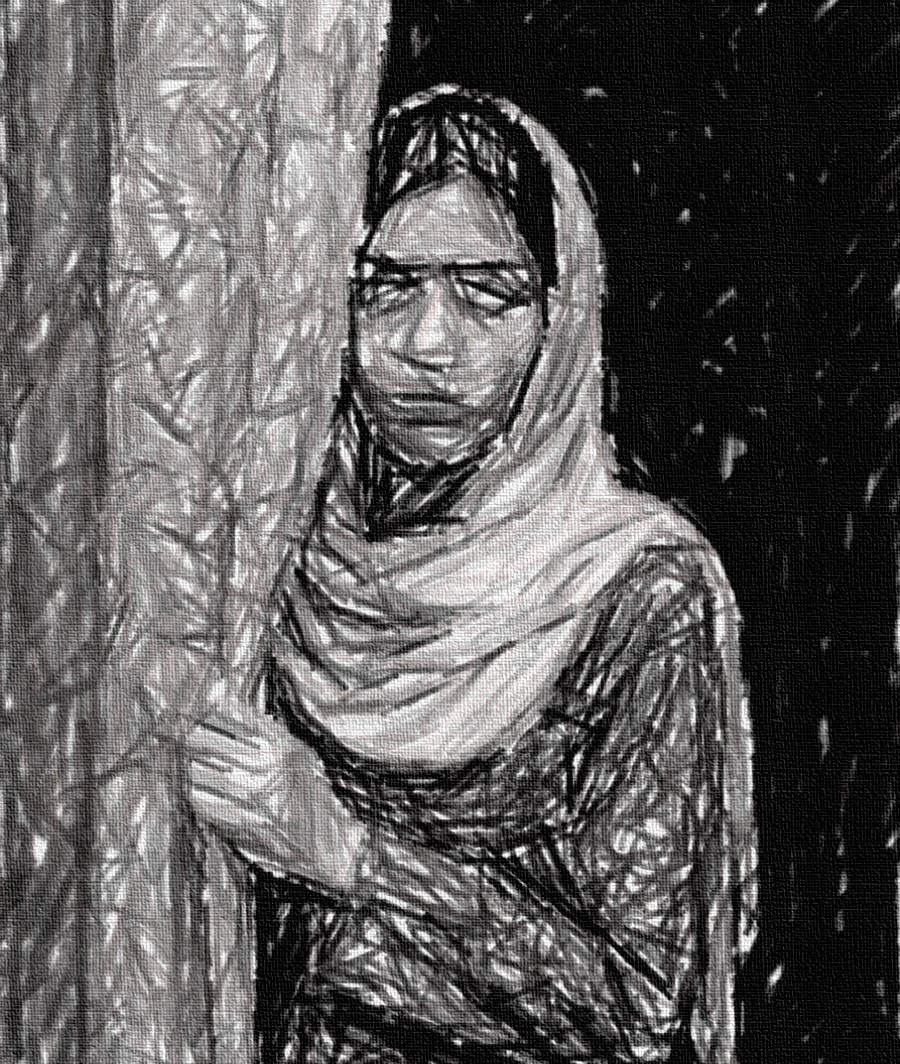
After 2001, in the aftermath of 9/11, a new era of hope and optimism emerged in Afghanistan. Schools reopened. Girls returned to classrooms. Women entered universities and began participating in public life. Families gradually began to believe again in girls’ education, and society became more open to women’s empowerment. The future felt possible and bright, even.
Aylen was part of that hopeful generation.
From a young age, she dreamed of becoming an entrepreneur. She thought of building businesses that would empower women and make them independent. She believed education was the key, so she always strived to be at the top of the class.
But at 15, while she was in 10th grade, her world shifted. One morning, her mother, unusually nervous, asked her to clean the house and prepare for guests. Aylen sensed something was wrong but did not know that her future was about to be negotiated. Soon, several women arrived. They had come to arrange her marriage to a man she had never met.
“My future was being discussed without my consent,” Aylen said. “They came for my hand. I did not know him. I had never met or even seen him.”
The visiting women and her family discussed wedding halls, dresses, guest lists, henna night, and the dowry price. It felt less like a celebration and more like negotiating a transaction. In many families across Afghanistan, child marriage and marriage without consent remain common, often driven by economic pressures, cultural norms, and misinterpretations of religion.
But Aylen did something unexpected — she said “no.”
“I resisted the norm,” she said. “I wanted to study. I had my dream of becoming an entrepreneur.”
It was not easy to revolt in a conservative Afghan family, but Aylen did. The price for saying no was so heavy. She faced so many hardships. Her family suspected her of having an affair with someone. She was confined to a single room. She was not allowed to leave the house, meet friends, or return to school. She was subjected to inexhaustible pressure, scolding, and even violence from her father, uncle, and aunt.
It was a time of uncertainty and fear. However, one thing was evident: Aylen was persistent. After weeks of tensions, she finally convinced her mother to talk to her dad and uncle, asking them not to get her married and to let her continue her education.
“I was on cloud nine when I learned I could return to school,” Aylen said. “I felt reborn.”
For two years, she studied with renewed determination. She prepared for the Kankor, Afghanistan’s national university entrance exam. She believed that if she worked hard enough, nothing could stop her.
Then, in 2021, the Taliban returned to power.
The first announcement was devastating: Girls above grade six were barred from school. Universities soon closed their doors to women. What had felt like a clear path suddenly vanished.
The ban struck like a thunderstorm across her dreams. Although Aylen was permitted to sit for the entrance exam and achieved a score high enough to qualify for any school, there were no classes for women. One by one, doors closed.
Determined to find another way, she enrolled in a private midwifery institute—the only remaining educational pathway for many young women. For one year, she studied again. Then that door closed, too, when the Taliban banned midwifery institutions.
Still, Aylen refused to surrender.
She turned to online English courses supported by Afghans and international partners. She began learning computer skills. At the same time, she started teaching English to others—sharing knowledge even when her own opportunities were shrinking.
“It is hard when nothing seems to work,” Aylen said. “But I am not hopeless. I believe change will come sooner or later. I still dream.”
Today, women in Afghanistan are denied education, employment, and even freedom of movement simply because they are women. Aylen’s story is not unique; it reflects the reality of millions. Yet her persistence reveals something powerful: Even when systems are designed to silence women, their determination continues to carve new pathways.
Aylen still dreams. And as long as she dreams, her story, and the story of Afghan women, are not over.