


Protecting Dignity After Death
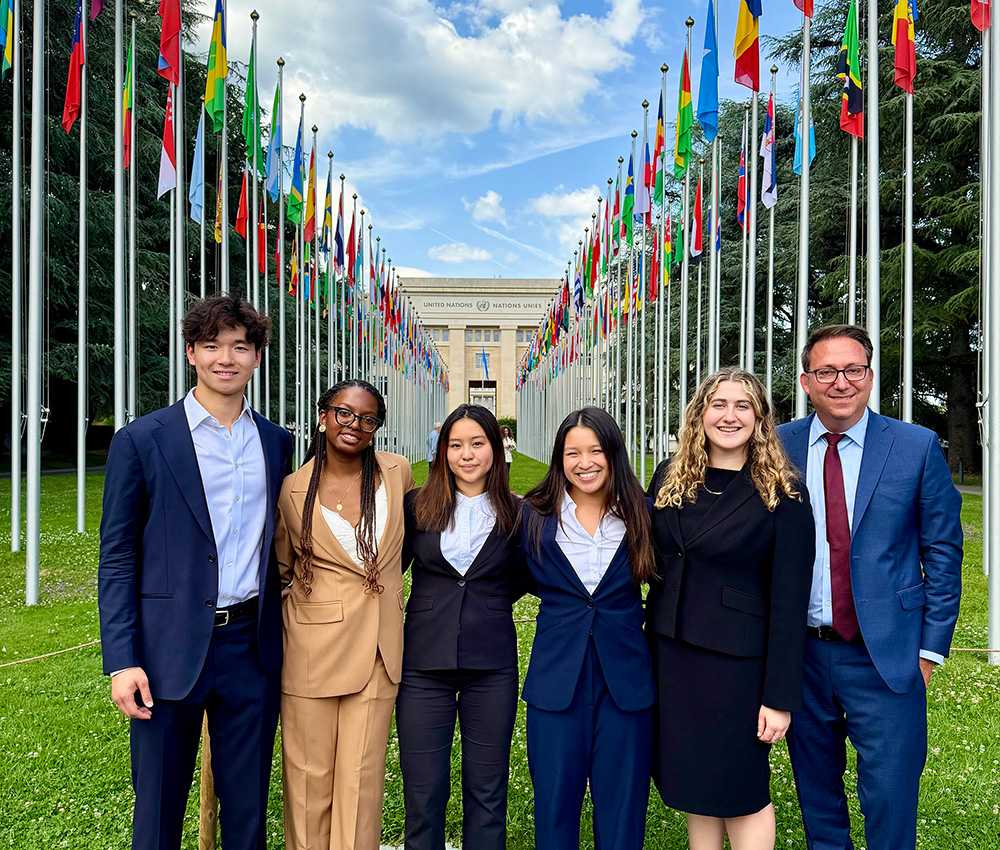
and Udi Ofer in front of Palais des Nations in Geneva.
What happens after a person dies in prison, jail or immigration detention? Who identifies them, tells their family, gathers evidence, investigates the death, and ensures their remains and personal property are treated with respect and that their religious beliefs are honored? Similarly, what happens to the digital remains of people when they die?
In this 442-page memorandum prepared for the United Nations Special Rapporteur on Extrajudicial, Summary or Arbitrary Executions, the Princeton Policy Advocacy Clinic examines the policies governing those decisions across 59 U.S. jurisdictions: all 50 states, the District of Columbia five U.S. territories, three federal agencies. It also examines 50 digital platforms through the lens of dignity. Overall, this memo finds that the dignity of the dead is not comprehensively protected in government detention nor on online platforms in the United States.
The memo reviews more than 285 corrections policies, 100 terms of service and end-user license agreements, and related materials obtained through 13 public records requests, assessing them across 65 metrics. It finds:
- Disrespect of personhood in disposition decisions. 81% of jurisdictions fail to explicitly recognize the deceased’s wishes with regards to disposition, including cremation. At least 27 jurisdictions authorize cremation of unclaimed remains without explicit consideration of the deceased’s beliefs. At least 14 jurisdictions (nearly 25%) allow for donation of unclaimed remains for medical or scientific purposes without explicit consent.
- Disrespect of families. 45% of jurisdictions do not provide a clear timeline for family notification of a death in custody. Only 36% of jurisdictions have concrete timelines for families to claim remains, with timelines varying widely from 24 hours after death notification in Puerto Rico to 60 days from death in Hawaii. The average time allowed for claiming physical remains was 12.3 days but the median time limit was just five days.
- Disrespect of religion. Less than half of jurisdictions address religious practices in notification, disposition, and burial. Only about 25% of jurisdictions consider religious objections to autopsies, and only 13 jurisdictions have a policy authorizing or respecting the religious need for burial, rather than cremation.
- Lack of accountability. Nearly 60% of jurisdictions lack internal mortality reviews and independent oversight bodies and nearly 73% of jurisdictions do not recognize a right to a private autopsy.
- Lack of transparency. Nearly 85% of jurisdictions don’t require public reporting for deaths in custody.
When it comes to the policies of 50 major online platforms, it finds that:
- 75% of top platforms do not grant users pre-mortem control over digital remains.
- 44% of top platforms do not reference digital remains in their policies.
The dignity owed to a person does not end at death. Whether someone dies in state custody or leaves behind a digital presence online, the treatment of their body, memory, and remains reflects how fully we recognize their humanity. A meaningful human rights framework must therefore address both traditional settings, such as deaths in prison, and emerging contexts, such as digital remains on social media platforms.
