

Millions of people now use AI for social purposes, from seeking support and companionship to consulting interpersonal advice. As AI participates in social lives, it can reshape how people navigate interpersonal decisions and form social expectations.
This talk presents findings from a series of the Human-AI Ecosystem Lab’s recent projects examining AI’s role in social interaction:
First, we examine the relational consequences of AI companionship. Through a systematic review spanning relationship science and AI safety research, we find that human-AI relationships do not introduce fundamentally new categories of relational harm. Instead, AI’s engagement-optimizing behaviors, particularly those absent from human relationships (e.g., interactions without natural endpoint), create novel mechanisms that amplify existing relational risks. We further analyze 47K conversations from over 300 users who reported forming relationships with AI. While relational harm rarely manifests at the turn level, users exhibiting signs of relational harm show stronger emotional dependence, suggesting an alternative approach to safety monitoring.
Second, we investigate how AI shapes interpersonal decision-making. Interviews and diary studies suggest users view AI primarily as a tool for analyzing complex social situations rather than receiving direct advice. However, controlled experiments reveal participants predominantly refine and personalize AI-generated suggestions instead of generating independent strategies. AI assistance also increases users’ willingness to adopt conciliatory behaviors, such as initiating apologies.
Finally, our ongoing work explores AI reasoning about group interactions. We develop a social science-grounded benchmark of 76 real-world group conversations, annotated by 400+ human raters, to evaluate leading LLMs’ understanding of group dynamics. Although current models often under-detect misaligned mental models, they can provide more calibrated judgments when human reasoning is biased by social expectations. In an ongoing project, we conduct in-situ studies in which small groups interact while participants report their evolving interpretations of group dynamics in real time. We compare these judgments with those generated by multi-agent LLM systems and welcome feedback on this ongoing work.
Bio:
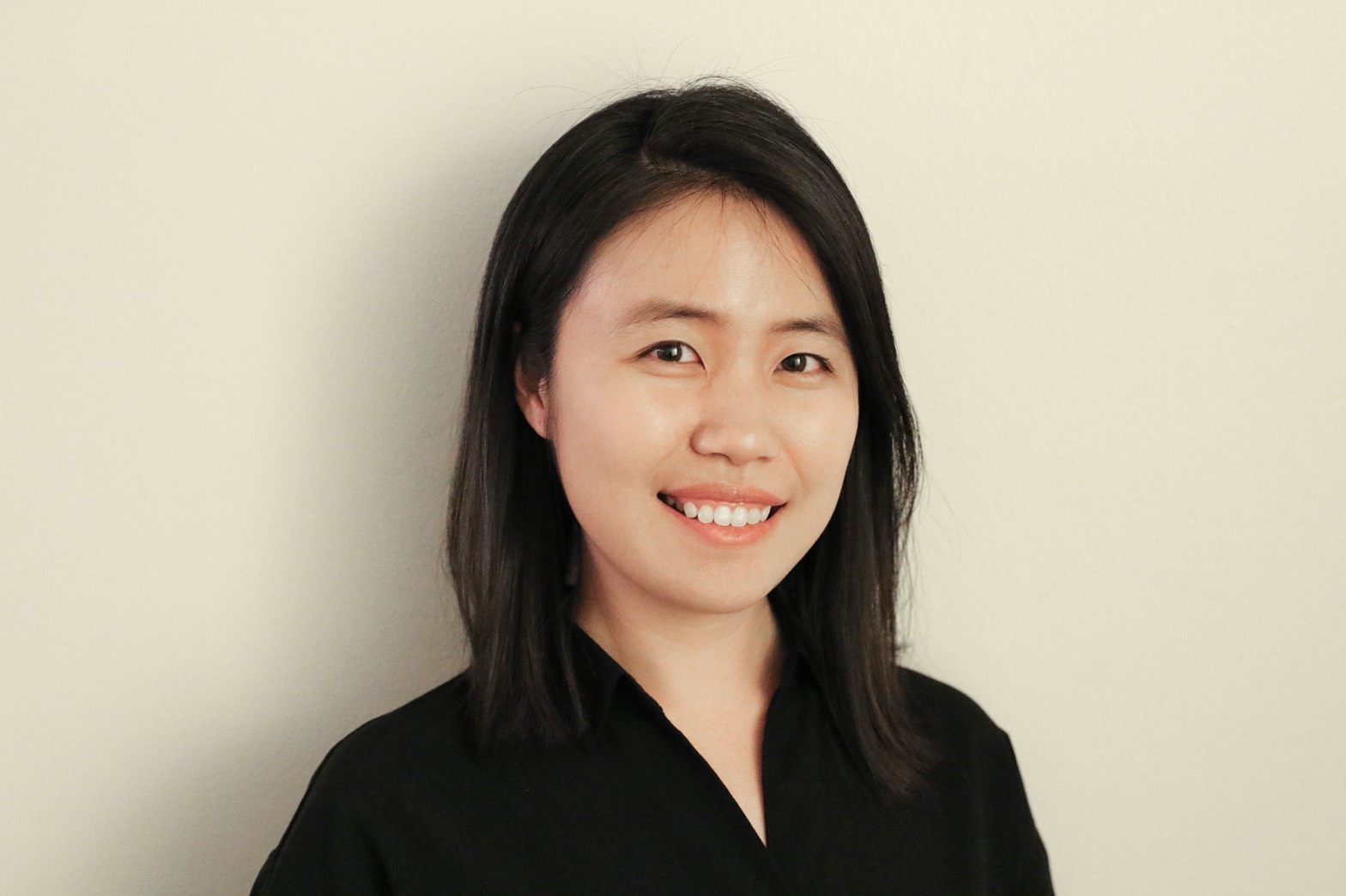
Angel Hsing-Chi Hwang (she/her) is an assistant professor of communication and computer science at University of Southern California and a human-AI interaction (HAII) researcher. Her research explores the impact of artificial intelligence (AI) on social interaction in both professional and personal settings, as well as its downstream influences on people’s mental health, wellbeing, and work practices. Her work aims to inform the design of more responsible and human-centered AI systems for the future of work and social life. Prior to joining USC, Hwang received her Ph.D. in communication at Cornell University with a concentration in human-computer interaction and conducted her postdoctoral training at Cornell Bowers College of Computing and Information Science. Outside of academia, she also has extensive experience researching state-of-the-art AI across several world-class research organizations in the tech industry, including Microsoft Research, Google Research, Sony AI, Adobe, and Accenture Labs.
This talk will be livestreamed and recorded. It will be posted to the CITP website, the CITP YouTube channel and the Princeton University Media Central channel.
If you need an accommodation for a disability please contact Jean Butcher at butcher@princeton.edu at least one week prior to the event.
Sponsorship of an event does not constitute institutional endorsement of external speakers or views presented.