

Overview
This 60-minute webinar will present research by Hanifa Girowal, a 2025 Fellow at Princeton University’s Afghanistan Policy Lab (APL), examining the gap between the conceptual recognition and empirical application of intersectionality in understanding Afghan women’s access to justice.
Drawing on ten qualitative interviews, policy analysis, and existing scholarship, the research explores how geography, ethnicity, religion, language, socioeconomic status, displacement, and local patriarchal structures interact to shape women’s experiences of exclusion under Taliban rule. It further examines whose experiences become visible within international human rights discourse and whose remain underrepresented in documentation and accountability processes. The discussion will consider how a more context-sensitive and empirically grounded application of intersectionality can inform inclusive approaches to justice, representation, and international accountability.
Background and rationale
Since August 2021, Taliban restrictions have severely curtailed Afghan women’s access to education, employment, mobility, public participation, and legal remedies. Yet a common national system of institutionalized gender-based exclusion does not produce uniform consequences. Local institutions, household resources, language, religion, geography, disability, and informal patriarchal structures affect whether women can exercise rights, seek protection, or obtain redress.
The paper identifies a conceptual–empirical gap: although international policy and human rights discourse increasingly acknowledges intersecting forms of discrimination, documentation and accountability processes do not consistently operationalize that insight. Reliance on more visible, urban, or internationally connected experiences can obscure the circumstances of rural, displaced, linguistically marginalized, economically disadvantaged, and other underrepresented women.
Based on a purposive qualitative sample, It argues that understanding access to justice should extend beyond courts to the material conditions such as education, healthcare, livelihoods, mobility, and safety that determine whether rights can be meaningfully exercised.
The paper discusses the recognition and the codification of gender apartheid as an accountability priority. The webinar will examine the related analytical question: how can a shared legal characterization of institutionalized gender-based exclusion remain attentive to differences in women’s lived experiences?
Speakers
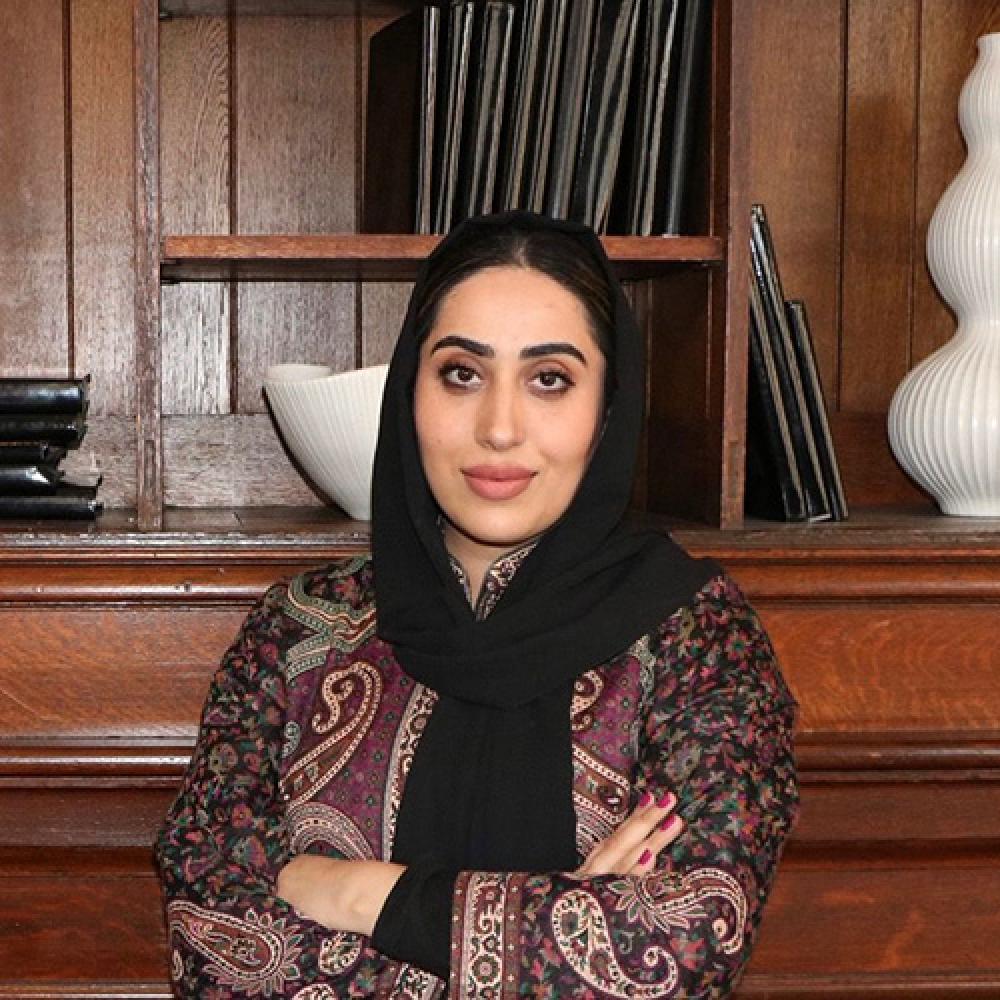
is a former Affiliate at Princeton University’s Afghanistan Policy Lab who also serves as an Advisor to the UN Special Rapporteur on Human Rights in Afghanistan. She is the Vice President of Women’s Rights First (WRF), an Afghan women-led organization dedicated to documenting human rights violations and advancing women’s participation in peace building and accountability processes in Afghanistan.
Previously, Hanifa was a Research Fellow at the Raoul Wallenberg Institute for Human Rights and Humanitarian Law. She has worked as the Deputy Governor of Kabul and the Director of Human Rights for the National Directorate of Security.
In her early career, she served in multiple roles at the Afghanistan Independent Human Rights Commission, focusing on women’s rights, transitional justice, and the protection of civilians during armed conflict. Hanifa holds a master’s degree in public international law from Brunel University London through Chevening Scholarship.
Sponsorship of an event does not constitute institutional endorsement of external speakers or views presented.