

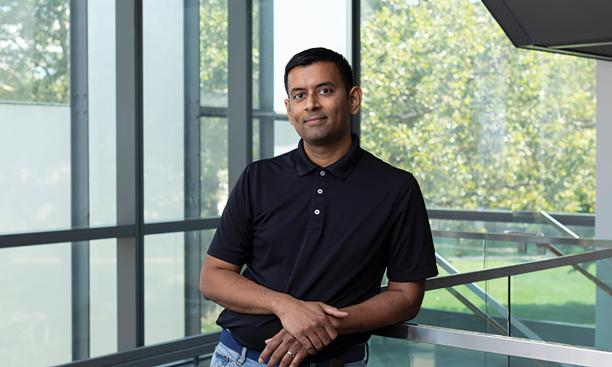
The dominant paradigm in AI research and development envisions the goal as automation of tasks and entire jobs. But another, comparatively marginalized vision has existed since the beginning of AI — that of augmenting workers and amplifying human potential. In this talk, it is argued that the automation agenda is struggling even on purely commercial grounds, and it is time to invest more into augmentation. Building agents for collaboration instead of automation requires elevating a set of underexplored research challenges in human-computer interaction. Such agents can better serve human flourishing, promote broader economic growth, and put into motion the “pro-worker AI” that economists have advocated for.
This talk is based on a collaboration with Gabriel Unger.
Bio:
Arvind Narayanan is a professor of computer science at Princeton University and the director of the Center for Information Technology Policy. He is a co-author of the book AI Snake Oil and a newsletter of the same name which is read by 60,000 researchers, policy makers, journalists, and AI enthusiasts. He previously co-authored two widely used computer science textbooks: Bitcoin and Cryptocurrency Technologies and Fairness in Machine Learning. Narayanan led the Princeton Web Transparency and Accountability Project to uncover how companies collect and use our personal information. His work was among the first to show how machine learning reflects cultural stereotypes. Narayanan was one of TIME’s inaugural list of 100 most influential people in AI. He is a recipient of the Presidential Early Career Award for Scientists and Engineers (PECASE)
This talk will be livestreamed and recorded. The recording will be posted to the CITP website, the CITP YouTube channel and the University Media Central channel.
If you need an accommodation for a disability please contact Jean Butcher at butcher@princeton.edu at least one week prior to the event.
Sponsorship of an event does not constitute institutional endorsement of external speakers or views presented.