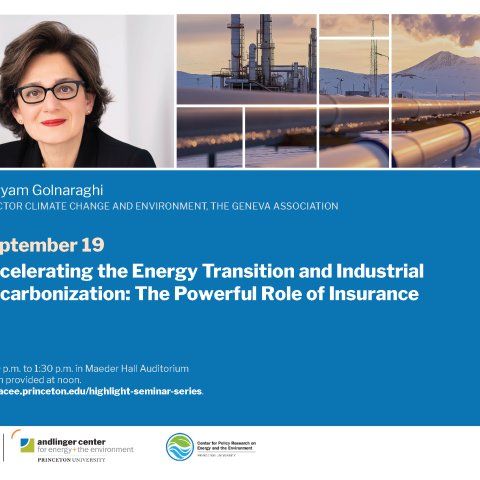
Climate change is changing the characteristic of weather extremes and slow changing climatic trends (physical climate risk). These combined with rising concentration of people and assets in high-risk areas, aging infrastructure and various macroeconomic factors, are leading to growing financial impacts on people, businesses,…
We are at a transformational junction in computing, in the midst of an explosion in capabilities of foundational AI models that may soon match or exceed typical human abilities for a wide variety of cognitive tasks, a milestone often termed Artificial General Intelligence (AGI). Achieving AGI (or even closely approaching it)…
Joining the Center's Behavioral Policy Works in Process noon lunch series in September will be Cass Sunstein, the Robert Walmsley University Professor at Harvard and coauthor of Nudge.He will speak on Tuesday, September 17, on work for a new book. His talk is entitled “The Barbie Problem: Goods that People Buy But Wish Did Not…
Frances C. Moore is an Associate Professor in the Department of Environmental Science and Policy and the University of California Davis. She studies the risks climate change poses to human welfare and how individuals and communities respond to mitigate those risks. Her work is highly interdisciplinary with a focus on climate…
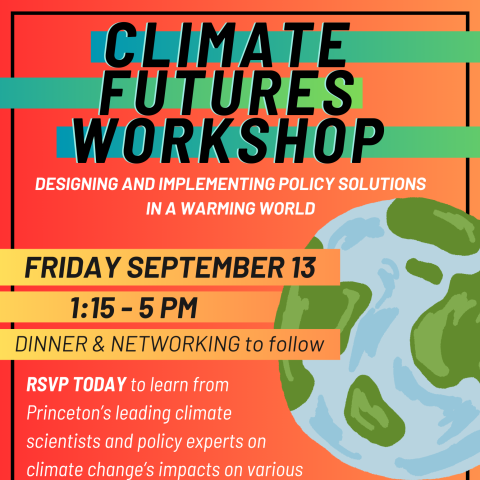
Join us for an afternoon workshop to introduce new and returning students and researchers to the wealth of experts at Princeton University working on environmental policy issues. Open to all with beginner to expert-level knowledge of climate change science and policy! This workshop will help you consider the intersectional and…
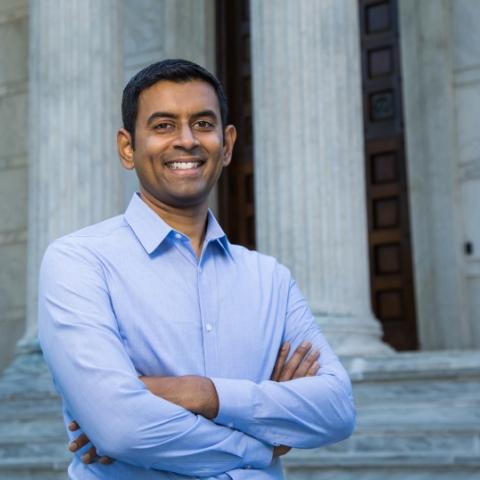
Policy making should be informed by evidence, especially scientific evidence. But exactly how is a surprisingly tricky question. In this talk Narayanan will take a close look at the science-policy interface: how it works and how it should work. The talk will diagnose structural reasons why he believes the kind of evidence that…
Efforts to achieve decarbonization targets often fall short. Energy system modeling based on integrated assessment models (IAMs) has been used widely to assess current climate policies and quantify the additional efforts needed to close the gap. Yet, most energy modeling still lacks adequate considerations of socio-political…
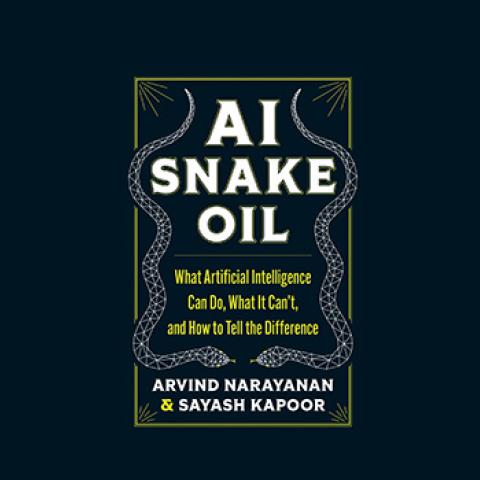
Princeton SPIA in DC, in collaboration with the Center for Information Technology Policy (CITP) faculty, hosted the "Princeton AI Dialogues: Expert Briefings" on Capitol Hill. Princeton Professor Arvind Narayanan, Professor Peter Henderson, and PhD candidate Sayash Kapoor delivered briefings on critical questions on…
Climate has rapidly moved to the fore of the global governance agenda. The Political Economy of Climate Change conference will convene leading scholars for two days of research-based conversation on the issue. Scholars from Princeton and elsewhere will present and discuss cutting-edge scholarship on the political economy of…