What cumulative impacts needs is a simple solution to a complex problem, or at least a simplified approach if solution is a too ambitious goal. A solution implies that they would cease to exist, yet cumulative impacts are a part of everyone’s everyday lives. The question remains whether a feasible, standardized approach can be…
In this talk, Dr. Munyikwa, an anthropologist and practicing clinician, will present cases that help understand how social differences and their structural consequences permeate the clinical space in ways which exceed our existing language to describe them.
Thirty years ago, the idea that China could challenge the United States economically, globally, and militarily seemed unfathomable. Yet today, China is considered another great power in the international system. How did China manage to build power, from a weaker resource position, in an international system that was dominated…
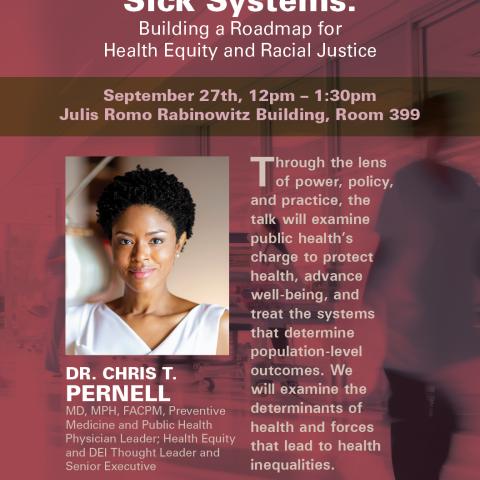
Through the lens of power, policy, and practice, the talk will examine public health’s charge to protect health, advance well-being, and treat the systems that determine population-level outcomes. We will examine the determinants of health and forces that lead to health inequalities.
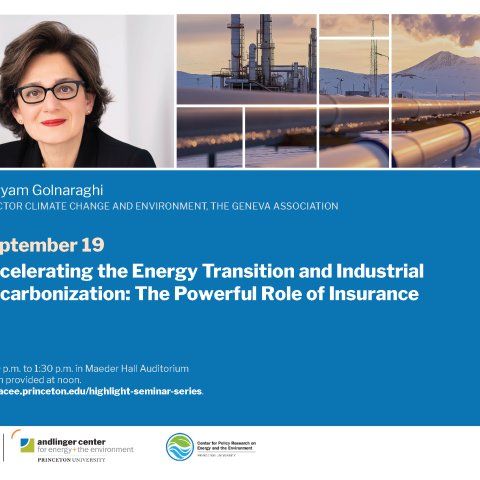
Climate change is changing the characteristic of weather extremes and slow changing climatic trends (physical climate risk). These combined with rising concentration of people and assets in high-risk areas, aging infrastructure and various macroeconomic factors, are leading to growing financial impacts on people, businesses,…
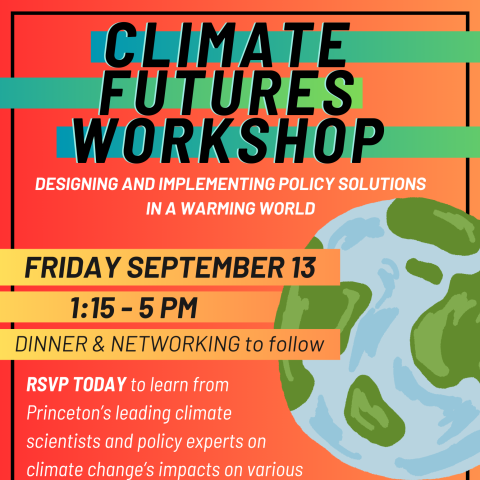
Join us for an afternoon workshop to introduce new and returning students and researchers to the wealth of experts at Princeton University working on environmental policy issues. Open to all with beginner to expert-level knowledge of climate change science and policy! This workshop will help you consider the intersectional and…