


Experts Provide Insights on the Future of Congress, State Legislatures, and Governorships
PRINCETON, NJ – As the November midterm elections concluded, faculty from the Princeton School of Public and International Affairs discussed the impact of those results – from the role that Congress will play in the next two years to the opportunity for Democrats to gain political footing and the overall implications for American democracy.
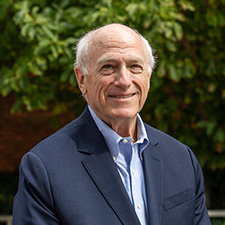 Amb. Daniel C. Kurtzer, Professor of the Practice and S. Daniel Abraham Professor of Middle East Policy Studies:
“While this election was decided on pocketbook issues – affordability of food, fuel, and basic needs – the foreign policy implications are important. The new Congress will press the president to reach a negotiated outcome with Iran. Congress will push back against the administration’s coddling of Russian President Putin and will vote to restore aid to Ukraine. And the Congress will make clear the need to press Israel to curb settler violence and creeping annexation in the West Bank, and it will support serious diplomacy to find a political outcome in Gaza leading to Israel’s withdrawal and security for Israel and Palestinians. One can hope that the Congress focuses on these priorities and does not get distracted by retribution for the corrupt and toxic actions of the president and this administration.”
 Frances Lee, Professor of Politics and Public Affairs; Co-Director, Center for the Study of Democratic Politics:
“Tuesday’s elections offer encouraging evidence about the state of multiracial democracy in the United States. Georgia elected Keisha Lance Bottoms, the first Black woman ever chosen governor of any state. Texas elected Gina Hinojosa, its first Latina governor, and New Mexico elected Deb Haaland, the nation’s first Native American woman governor. Five Black governors won on Tuesday, more than the three elected in all of prior American history. They include Byron Donalds, the first Black Republican elected governor. In Mississippi, Scott Colom is in a near tie in a race that could make him the state’s first Black senator since Reconstruction. The Supreme Court’s Callais decision also did not produce the steep losses many predicted for Black members of the House. Shomari Figures held his Alabama seat even after his district was redrawn, reducing its Black share to 40 percent. These results came in both parties and across red and purple states. They show candidates of color building winning coalitions that cross racial lines, a hopeful sign for American democracy.”

Jacob N. Shapiro, John Foster Dulles Professor of International Affairs:
“Watching the returns, I was reminded of two things from 1994. First, Susanne Lohmann’s paper ‘The Monday Demonstrations in Leipzig,’ which helped topple the East German government by revealing the breadth of opposition. We may well see a similar dynamic on tolerance for executive branch corruption among Constitutional Republicans, who just learned how intensely voters feel about the issue.
“Second, the ‘Republican Revolution,’ which broke 40 years of Democratic control of the House. Tonight the post-Tea Party political map has been decisively redrawn with a less geographically segregated House and Democratic wins for statewide office in seven Republican strongholds so far. And we seem to be seeing meaningful split-ticket voting in some states. The return of competitive elections in ‘red states’ will be beneficial, and we should hope for the same next cycle in ‘blue states,’ because winning voters through programmatic arguments, not just tribal loyalties, is something we should want all politicians to have to do.”

Paul Starr, Stuart Professor of Communications and Public Affairs; Professor of Sociology and Public Affairs:
“If Democrats win the presidency two years from now, they may be able to build on these large congressional majorities and have the kind of decisive control of Congress that they have had in major eras of reform, like the New Deal of the 1930s and the Great Society of the 1960s. As a result, they might be able to bring about major change of a kind we haven’t seen in decades. That possibility means that for the next two years, Democrats shouldn’t only be standing up to Trump and investigating corruption. They should be laying the groundwork for reforms that they can take into the 2028 election as a national program, working through different ideas, developing support for them, perhaps even getting Trump to veto popular bills that will then be teed up for 2029.”

Julian E. Zelizer, Malcolm Stevenson Forbes, Class of 1941 Professor of History and Public Affairs:
“Sometimes midterms fit the billing of ‘historic.’ This is one of those midterms. Voters sent a strong and powerful rejection of President Trump and MAGA Republicanism. They opened the electoral playing field to regions that will be critical in the coming decades while creating a space for a new generation of media-savvy politicians – from left (Abdul El-Sayed) to center (Adam Hamilton) – who will be critical to generating ideas for the 2028 election. Most important, in the short term, the voters decisively left Trump as a lame duck president who will now face divided government and a Republican Party that can see the high costs of still supporting him.”
To schedule an interview, contact Ambreen Ali. Keep up to date with Princeton SPIA, including news, upcoming speakers, and events at: spia.princeton.edu and on X, Instagram, and LinkedIn.
###
About Princeton SPIA
The Princeton School of Public and International Affairs is dedicated to integrating world-class scholarship and a commitment to service in order to make a positive difference in the world. We welcome a robust exchange of ideas and strive to foster a close-knit community that values and supports every member. We believe that public policy in the 21st century demands a passion for service, a respect for evidence of unsurpassed quality, a global perspective, and a multiplicity of voices. Our graduates pursue careers around the globe in government, nongovernmental and multilateral organizations, foundations, and policy and research institutes.
Image credit Shutterstock.


