


For most of the nearly 25 years since the September 11 attacks, armed conflict — including the current war in Iran — has plagued the Middle East. Its devastating effects on economic development, according to Amaney Jamal, dean of the Princeton School of Public and International Affairs, help explain the rising support in the region for undemocratic regimes such as Iran and Hamas.
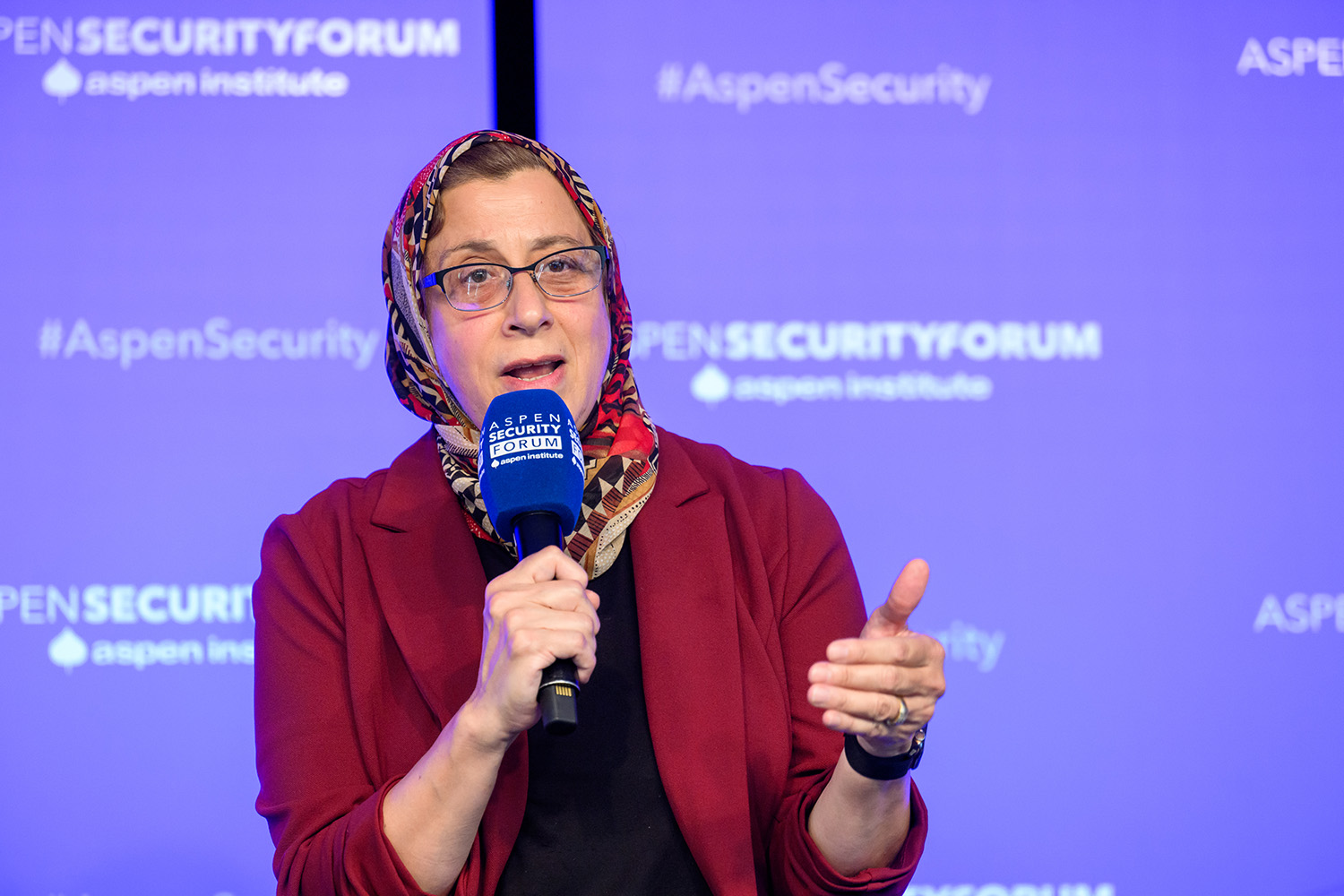
Speaking earlier this month at the Aspen Security Forum, Jamal noted that families in the Middle East want what all families want: work that affords economic dignity, the ability to raise a family, and the capacity to send their children to school.
“But these ongoing wars are not conducive to economic development and the hope of giving the next generation a better future,” she said during a panel discussion titled “Middle Ground in the Middle East?” “We know when the economic conditions in the region are desperate and there's no hope for the new generation, they will turn to the the Hezbollahs of the world, the Hamases of the world.”
The Arab Barometer, which Jamal co-founded and where she serves as a co-principal investigator, has conducted public opinion surveys in the Middle East and North Africa for 20 years. Recent data from the project show a shift in attitudes, with increasing numbers of Arabs supporting normalization with Israel, but only if the issue of violence against residents of Gaza and the West Bank is addressed.
“The idea that normalization will succeed and happen by ignoring what's going on in Palestine, I think, is a myth,” Jamal said, adding that while “the international global community, including the United States and the EU, really ignored the two-state outcome for the last 25 years, the reality on the ground has shifted.”
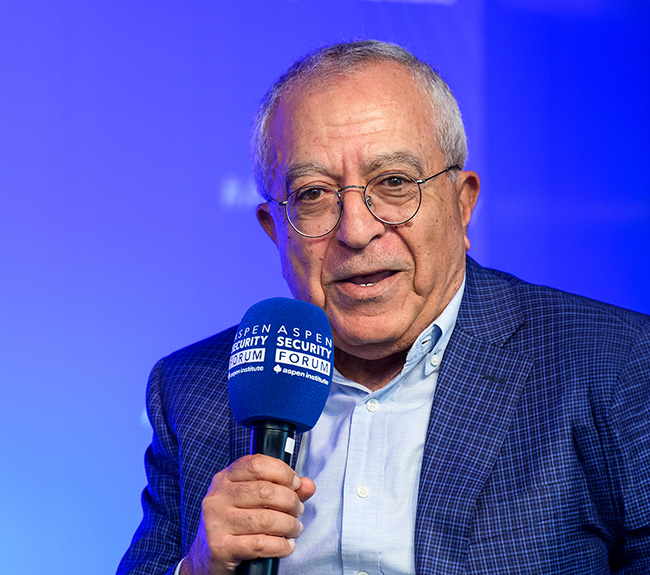
In addition to Jamal, a second Princeton SPIA faculty member, Salam Fayyad, participated. A visiting senior scholar and the Daniella Lipper Coules ’95 Distinguished Visitor in Foreign Affairs, he believes the Arab world’s “freedom deficit” prevents many from fully grasping what is happening there.
“A lot of the difficulty that people have with understanding the region relates to a failure to understand how important it is for there to be good governance,” said Fayyad, a former prime minister of the Palestinian Authority. “The lack of that really underlies many, many of the problems and what seems sometimes to be difficulties in trying to understand what it is, where it is, that people are coming from.”
While he was in Aspen, Fayyad was also a guest on The Foreign Affairs Interview, a podcast produced by the journal, discussing the future of Palestine in a conversation with executive editor Dan Kurtz-Phelan.
"Middle Ground in the Middle East?" panel during the Aspen Security Forum.
All photos courtesy of Aspen Security Forum.