


Current MPA Students
Biographical Profiles of Current MPA Students
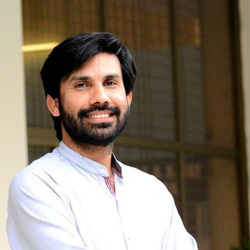
Meer is among Pakistan's most accomplished civil servants of his generation, a physician-administrator whose rare combination of medical training, executive governance experience, and international professional development has made him an indispensable force in Punjab's most consequential policy arenas. Before entering public administration, Meer earned his medical degree from King Edward Medical University, Pakistan's most storied medical institution, and served as a frontline physician for four years, delivering emergency care and surgical treatment in resource-constrained settings. This clinical foundation instilled in him a practitioner's instinct for diagnosing complex systems under pressure, a quality that would define his entire administrative career. Commissioned into the elite Pakistan Administrative Service, he has spent fifteen years at the intersection of crisis and governance. He personally directed Punjab's district-level COVID-19 response, establishing emergency hospital infrastructure and preventing the health system from collapsing during peak infection waves. He has dismantled corruption networks as Regional Director of the Anti-Corruption Establishment, restructured provincial energy policy, pioneered social protection programs for vulnerable citizens, and recovered over 10,000 acres of illegally occupied state land. Recognized internationally, he was selected for the U.S. Department of State's prestigious Legislative Fellows Program, a highly competitive exchange reserved for emerging policy leaders of exceptional promise. He has further strengthened his expertise through specialized training in social health protection with GIZ and executive leadership development at the National Institute of Management. At Princeton, Meer seeks rigorous analytical frameworks to match the scale of his ambitions and serve his country in various leading positions.
Ella is from Northern Utah and holds a Bachelor of Science in economics with an emphasis in business analytics from the University of Utah. During her studies, she acted as a student ambassador for the Department of Economics and interned with the National Head Start Association. Upon graduation, Ella served in the Peace Corps as a development facilitator in the Republic of Moldova as part of the first cohort back following the start of the Russo-Ukrainian war. While there, she collaborated with local and national organizations to promote sustainable growth and achieve program initiatives targeted at increasing access to public services for vulnerable populations. She remains involved in promoting civic opportunities for youth through her position as Treasurer with the Friends of Moldova nonprofit. At Princeton, Ella is excited to continue working to find strategies to balance economic growth with social inclusion. In her free time, she enjoys any activity that allows her to enjoy the great outdoors she has access to in Utah and looks forward to exploring the East Coast.
Born and raised in Saginaw, Michigan, Carrie grew up in a community marked by the socioeconomic and environmental effects of the decline of American manufacturing. Her experiences mentoring underprivileged youth through Big Brothers Big Sisters and working at an inner-city library in high school prompted her to pursue majors in sociology and economics at Michigan State University, with the goal of understanding the root causes of the poverty and environmental degradation she witnessed in her hometown. Upon graduation, she took a position at the Congressional Budget Office (CBO) in Washington, helping to estimate the budgetary effects of legislation related to climate and energy. While at CBO, she co-authored a report assessing the effects of climate change on the United States economy in 2100 and conducted analytical work that directly informed CBO’s score of the environmental permitting provisions of the 2025 Reconciliation Act. Carrie likes to volunteer as an environmental steward in her free time, picking up trash on Michigan beaches or maintaining community gardens across D.C. The summer before moving to New Jersey, Carrie picked up trash on the Appalachian Trail while hiking from Georgia to West Virginia. Carrie plans to focus on environmental policy and regional economic development at Princeton, with a focus on the U.S. Rust Belt.
Loren, from Houston, Texas, graduated with high honors from the University of Texas at Austin with degrees in physics, mathematics, and government. While attending, she pursued a Russian minor, earning a FLAS grant to study’s the language in Latvia. Through her time in the Polymathic Scholars Honors Program, she completed a thesis on the impact of translation on Russian foreign policy interpretations. During her undergraduate career, Loren spent a semester in Washington, D.C., as part of the Archer Fellowship Program. There, she interned with the Wadhwani AI Center at the Center for Strategic and International Studies. At the University of Texas at Austin, Loren conducted research for the Policy Research Lab and went on to establish and lead the AI and Advanced Technologies research silo. During the summer of 2026, Loren worked as an intern at NASA in Washington, D.C. Through her work at Princeton, she hopes to pursue a career in science and technology policy. In her free time, Loren enjoys reading, traveling, and rock climbing.
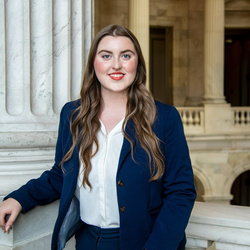
Shannon is an Alaska-born policy professional whose experience spans federal energy policy and Arctic governance. She began her career at 19 as an intern for U.S. Senator Dan Sullivan before joining his staff full time. She later worked for U.S. Senator Lisa Murkowski in both her personal office and on the Senate Committee on Indian Affairs, where she focused on issues affecting Alaska Native communities. Following her time in the Senate, Shannon joined the Polar Institute at the Woodrow Wilson International Center for Scholars, where she helped lead implementation of the U.S. Polar Leadership Program and deepened her interest in Arctic governance and international affairs. Most recently, she served as policy and government relations manager at Citizens for Responsible Energy Solutions, a Washington, D.C.-based nonprofit focused on energy, economic, and environmental security. In that role, she planned national energy convenings and contributed to policy initiatives focused on permitting reform, land management and energy storage. Outside of her professional work, Shannon serves as vice president of the Alaska State Society, a nonprofit organization supporting the Alaska community in Washington, D.C. In 2025, she was recommended as a Fulbright Research Grant finalist for Norway. She holds both an associate’s degree and a bachelor’s degree in political science from the University of Alaska Anchorage.