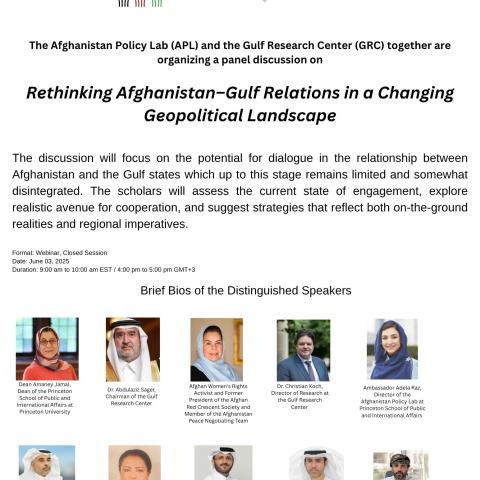
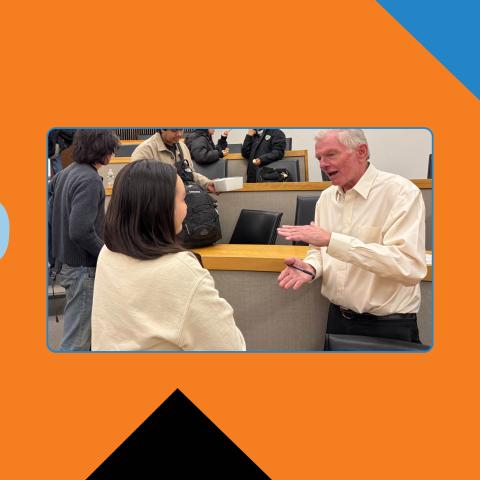
On June 3, 2025, the Gulf Research Center (GRC) and the Afghanistan Policy Lab at Princeton University’s School of Public and International Affairs co-hosted a closed-door webinar titled “Rethinking Afghanistan-Gulf Relations in a Changing Geopolitical Landscape.” The session brought together experts and policymakers to examine…
People seem to buy social media accounts to gain credibility and expand their influence, and they seem to sell accounts to make money. But is it really that simple? In recent years, the market for social media accounts has grown larger and more commoditized. By following a few thousand YouTube channels advertised for sale––from…
Interested in AI and tech policy? Curious about how to get involved at the state level? Join SPIA in NJ and the NJ AI Hub as we explore opportunities, on and off campus.open to SPIA graduate students ONLYSponsorship of an event does not constitute institutional endorsement of external speakers or views presented.
A key principle of democratic elections is we should be able to trust election outcomes without entirely trusting any single person to count the votes: the vote count is witnessed. In the American federal system with so many contests on the ballot, it is impractical to count all the votes by hand, so computers help count the…
This exhibit brings together the longstanding collaboration between anthropologist Laurence Ralph, co-director of the Center on Transnational Policing, and photographer Carlos Javier Ortiz whose visual storytelling critically explores the themes of criminal justice, urban violence, and systemic inequality.Biographies
We are undergoing a fundamental shift in how we think, work, focus, and find fulfillment in the digital age. While personal technologies are designed to extend our capabilities, Mark's research shows that they often lead to increased multitasking and stress—factors that can hinder performance. To better understand how we use…