


Mattie Isaac ’27 began learning Mandarin at an immersion school in Washington, D.C., as a child. She closely follows Chinese culture, enjoys the region’s cuisines, and listens to its music. Her family has hosted two exchange students from China, and she first went to the country in 2017.
As a student at the Princeton School of Public and International Affairs, Isaac has a strong interest in U.S.-China relations. Yet, up until this spring, Isaac had few opportunities to engage directly with peers and scholars in China.
In May, on the heels of the Beijing summit between U.S. President Donald Trump and Chinese President Xi Jinping, Isaac was one of 11 Princeton undergraduates who visited Beijing and Shanghai as part of the Princeton SPIA China Study Group.
Their arrival was well-timed for meaningful conversations about the future of U.S.-China relations, and she said the group’s meetings at the nation’s leading universities created opportunities for “people-to-people connections and constructive dialogues.”
“Our engagement with students, scholars, and government officials helped me conceptualize the differences in how the U.S. versus China sees the relationship,” noted Isaac, who said she is newly inspired to re-engage with her Mandarin studies.
The visit marks the first time Princeton SPIA students have gone to China since the COVID-19 pandemic, which slowed travel between the two nations and reduced opportunities for direct engagement.
“Given increasing competition and tense periods in the bilateral relationship, there has been too little contact between Americans and Chinese diplomats, students, ordinary citizens,” said Zach Vertin, director of the Princeton SPIA DC Center, who led the trip and teaches a course on U.S.-China relations. “Whatever views our students ultimately adopt about how best to manage the bilateral relationship, we think those views should be informed by direct experience and direct dialogue.”
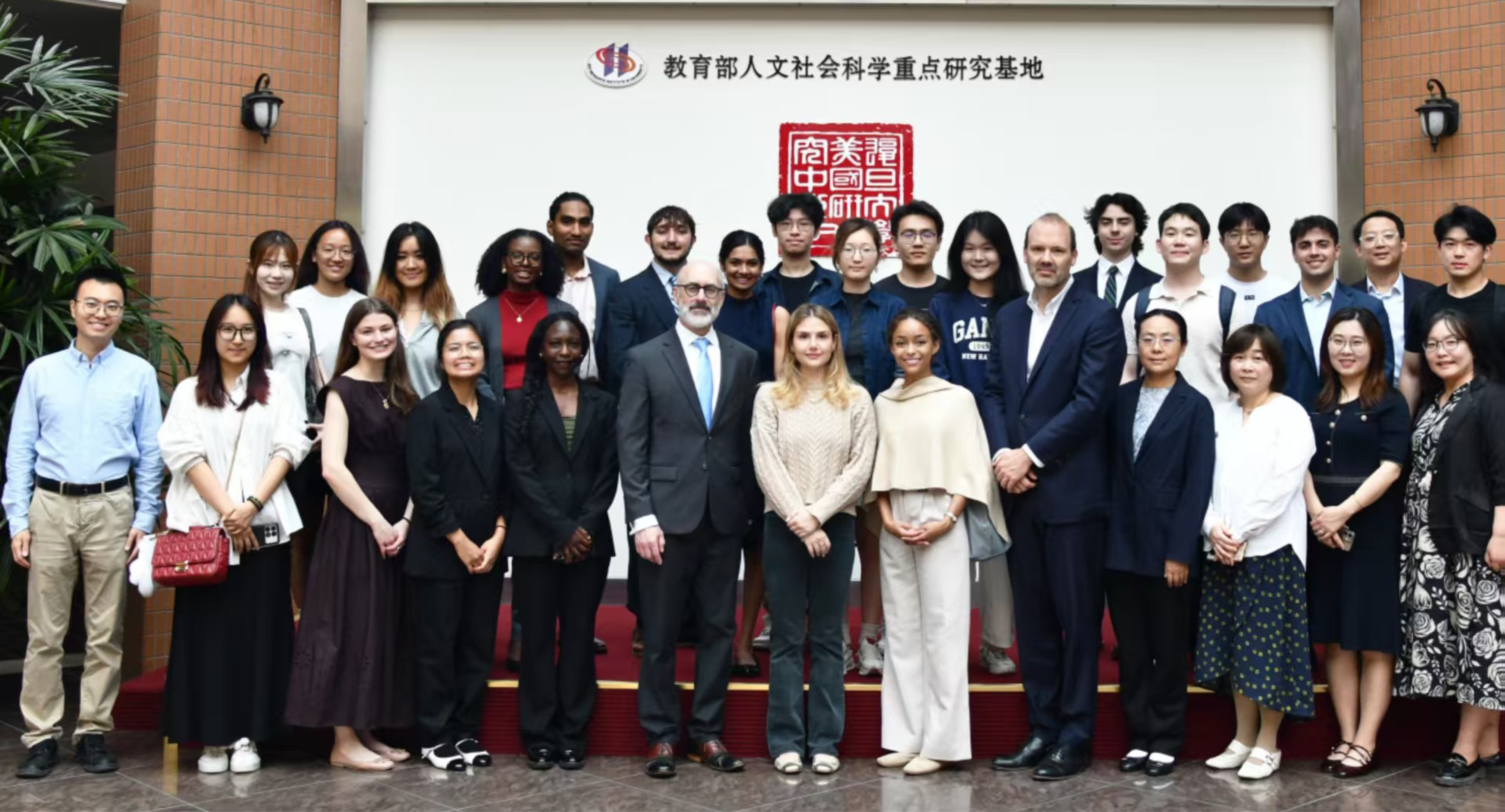
Photo courtesy of Zach Vertin, Princeton SPIA in DC Center
Vertin designed the study group to give students broad exposure to Chinese politics and economics, as well as history, culture, and thought. The students visited Chinese universities to discuss topics ranging from artificial intelligence to international security and met with American diplomats, Princeton SPIA alumni, and international journalists to learn about living and working in China. They learned about China’s robotics and electric vehicle industries and toured historic sites such as the Great Wall and Beijing’s Summer Palace.
This was the third trip to China for Dean Minello ’27, who is pursuing a Chinese language minor and helped orient his peers to the new environment. During a walking tour at Tsinghua University, Minello observed that his fellow Princetonians were nervous at first to talk to the Chinese students but quickly found shared interests.
“When we debriefed afterward, it was fascinating to hear the range of topics that had come up: the NBA, the Hong Kong protests, electric vehicles, their social lives, how to get a job in China,” he said. “It’s easy to conflate the Chinese people with the regime that governs them, and it’s important to separate the two, as one of my classmates aptly put it in a later meeting.”
Minello said his personal highlight was going to the U.S. Embassy in Beijing. Conversations with the deputy chief of mission and State Department officers helped clarify for him how he might pursue his own path to public service after graduating.
For Dhyana Mishra ’27, the stop at Fudan University in Shanghai at the tail end of the 10-day tour stood out. After seeing the campus and meeting with the dean of the School of International Relations and Public Affairs, the Study Group met with Fudan students and professors to talk about China’s economy, international relations, and bilateral issues.
“I met impressive students whose viewpoints came across as genuinely thoughtful, even when they diverged from mine. The conversations at Fudan made me more consciously consider how each of us comes to hold the views we do,” she said. “Exchanges like this one, with people sitting across from each other, curious and willing to engage, feel important. They won't resolve structural tensions alone, but they create the conditions for finding common ground where it exists.”
Mishra signed up for the trip because of her junior-year policy task force on AI and national security, which sparked an interest in technology policy. She plans to take more courses on U.S.-China relations to learn about supply chains, trade, and the flow of capital between the two economies, in preparation for a career in business.
“The conversations I had in Beijing and Shanghai gave me a much richer foundation for that than what I could have gotten from a classroom alone,” she said.
Top photo: Princeton students, along with faculty and staff advisors, at the Great Wall of China.
Photo courtesy of Zach Vertin, Princeton SPIA in DC Center