


Current Students
Biographical Profiles of Current MPA Graduate Students

Ellie has worked across politics and policy to advance evidence-informed solutions that prioritize the needs of vulnerable communities. Most recently, she served as Senior Communications, Policy, and Research Associate to the Global Executive Director of the Abdul Latif Jameel Poverty Action Lab (J-PAL), where she helped shape organizational strategy and advised public and private sector partners on applying research to real-world challenges. A graduate of Brigham Young University, Ellie’s early experiences as a political aide, writer, and educator sparked her commitment to bridging the gap between well-meaning policy and lived experience. At SPIA, she plans to focus on climate adaptation and poverty reduction, building the tools to help governments and multilaterals scale effective, locally grounded solutions.
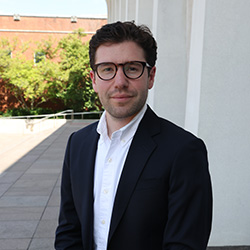
Andrew is a state government professional who most recently served as Deputy Chief of Staff at the Maryland Department of Veterans and Military Families. In this role, he modernized agency operations by launching the first dedicated constituent services program, establishing data-driven performance dashboards, and advancing legislative priorities. Prior to this, Andrew worked on political campaigns across the United States, gaining experience in organizing, communications, and fundraising. Originally from Massachusetts, he holds a Bachelor of Arts in Political Science from McGill University. Before Princeton, Andrew lived in Washington, D.C., and enjoys cooking and going on long runs.
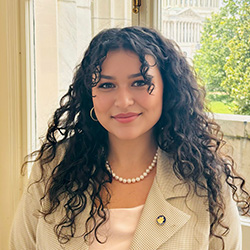
Mariah Lima is an MPA candidate at SPIA where she focuses on climate justice and sustainable development. She was raised in Los Angeles, California and graduated with honors from UCLA, where she majored in political and environmental science. Growing up in California, Mariah experienced firsthand the impacts of worsening wildfires, air pollution, and drought, and witnessed how her community faced disproportionate exposure to environmental risks, sparking her interest in understanding the structural drivers of environmental inequality.
Prior to Princeton, Mariah served as a Sustainable Connected Communities fellow with Enterprise Community Partners, a national affordable housing nonprofit, where she advanced decarbonization and climate resilience initiatives across California’s affordable housing sector. In this role, she supported policy advocacy, built partnerships with local governments and community-based organizations, and helped expand access to Inflation Reduction Act funding for underserved communities.
Mariah has also worked with several international and research organizations, including the climate resilience team at ICF International and the humanitarian affairs office at the U.S. Mission to the UN in Geneva, Switzerland. She is currently a graduate student researcher for the Geneva Centre drafting a report on the nexus of climate change and human rights in the Middle East and North Africa.
Captain Ian MacPherson is an active-duty Infantry officer and U.S. Army General Wayne A. Downing Scholar hosted through the United States Military Academy's Combating Terrorism Center. Over the past three years, he commanded multiple companies in the 75th Ranger Regiment. Ian has operational experience in Europe, the Middle East, and Africa.
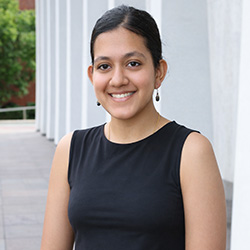
Sreya has completed a Post Graduate Diploma in Advanced Research Methods and a Bachelor’s in Economics from Ashoka University. After graduating, she worked at the Centre for Development Economics (Delhi School of Economics) on research projects studying the intersection of caste and allocation of public goods in India. Subsequently, she worked at the Energy Policy Institute at the University of Chicago (EPIC) India, where she collaborated closely with The Government of National Capital Territory of Delhi to conceptualize and implement vehicular pollution and congestion abatement policies. Over the summer, Sreya interned with the Rapid Social Response Trust Fund team in the Social Protection and Jobs Global Practice at the World Bank. She led independent portfolio analyses to identify mechanisms to maximize the extent to which the 30-billion-dollar WBG social protection portfolio can improve food and nutrition outcomes for the most vulnerable. In the future, she envisions working at the intersection of research and policy implementation. She aspires to work with multi‐national development institutions to lead policy at the grassroots level, strengthen local institutions, and empower communities to improve resource allocation.