

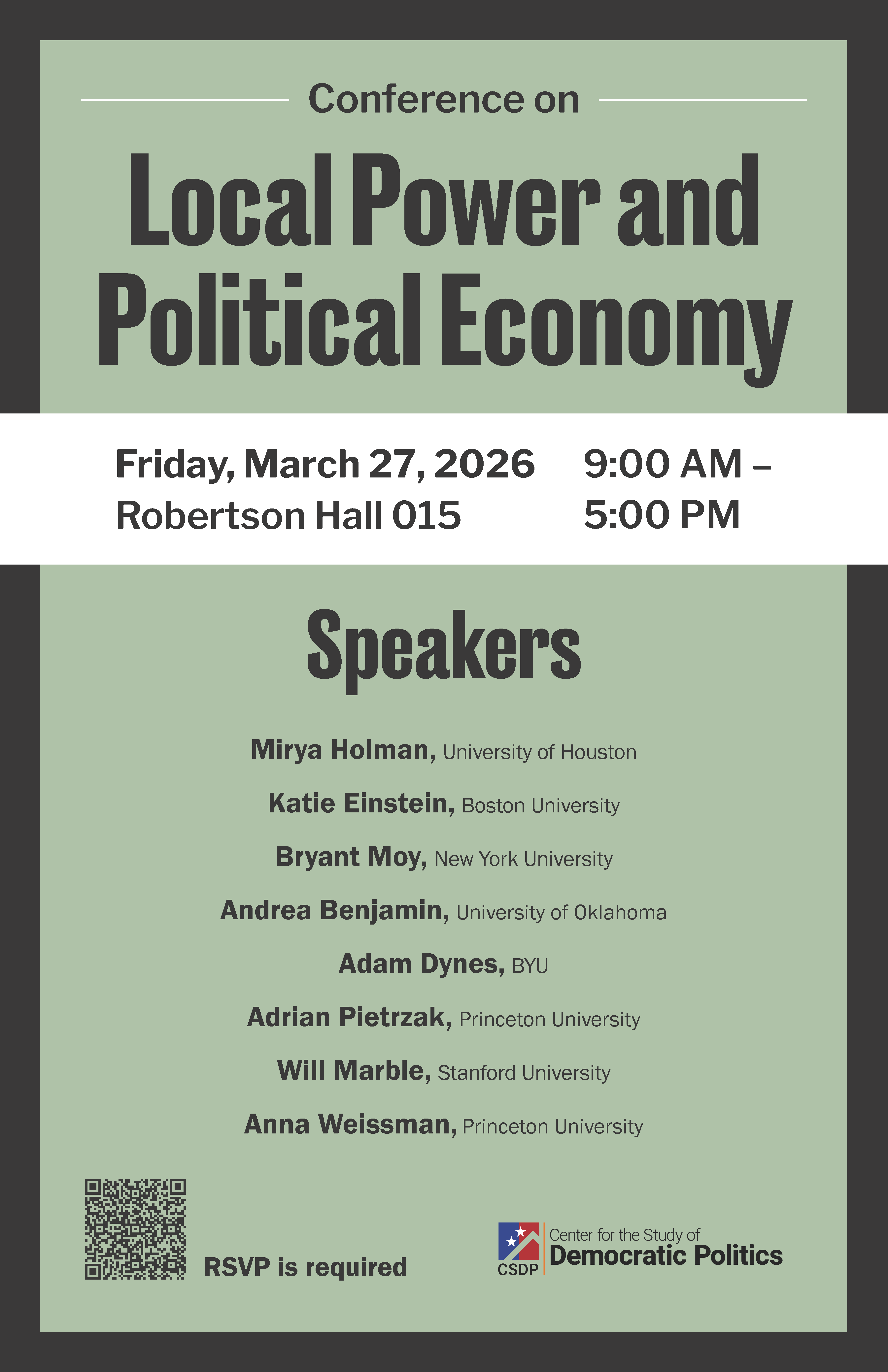
Understanding power remains central to the study of political science, yet many fundamental questions about power in local governance remain unresolved. Who governs municipalities, both small and large? How do local powerholders make decisions about policies that influence everyday life, such as housing, infrastructure, taxation, and economic development? How is power distributed across actors within towns and cities, and how does that distribution vary across places?
This conference examines who holds power in local governments, how that power is obtained and maintained, and how it structures policy outcomes. Authority in local governance is fragmented across elected officials, appointed bureaucrats, organized interests, and community actors. Explaining variation in local policy decisions and the provision of public goods requires understanding how power is distributed across these actors, and how that distribution depends on institutional arrangements, demographic contexts, and broader structural conditions.
The conference brings together scholars studying the political economy of local governance, with attention to the institutional, economic, and social forces that structure local decision-making. Research presented will examine how different actors influence local policy, how political authority interacts with markets and development, and how these dynamics shape inequality, representation, and accountability. Together, these studies aim to advance a more systematic understanding of how local governments govern and whose interests they ultimately serve.
Additional details, including the full conference program, can be found here.
Sponsorship of an event does not constitute institutional endorsement of external speakers or views presented.