The emerging field of artificial intelligence (AI) safety has attracted public attention and large infusions of capital to support its implied promise: the ability to deploy advanced AI while reducing its gravest risks. Ideas from effective altruism, longtermism, and the study of existential risk are foundational to this new…
Please note that this seminar will begin at 12:30pm, rather than the usual 12:15pm start. The speaker will be broadcast to our audience in Wallace Hall from SPIA's Washington, DC office, or attendees may register directly for the Zoom Webinar.
In this talk, Professor Narayanan shares lessons learned over the last decade and a half about how to be more effective in tech policy. He will also talk about the resources and opportunities that CITP offers to enhance the impact of your tech policy work.
Bio:
David J. Hayes is a Lecturer in Law at Stanford Law School and a Senior Fellow at the Natural Resources Defense Council. Since returning to Stanford in January 2023, Hayes has been working through Stanford’s Law School and the new Doerr Sustainability School on climate matters, with a special focus on climate resilience and…
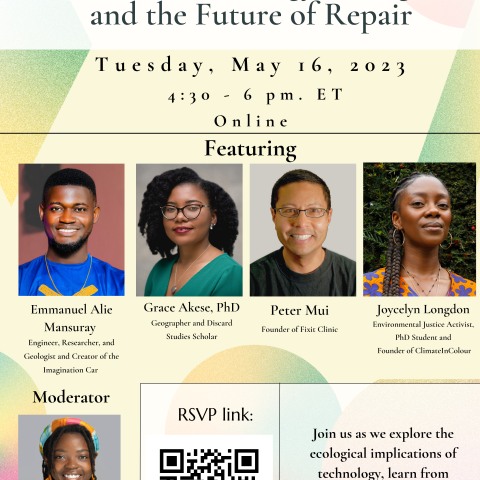
Electronic waste, or e-waste, is the fastest growing waste stream in the United States. But there is a way to curb the spread — allowing consumers to repair and repurpose used devices. This solution is the driver behind the Right to Repair — a movement of technologists and climate activists calling for a new tech circular…
Organizations can use computers or AI to make decisions about people: digital differentiation. For example, insurers can adjust prices to consumers, and the government can use AI-driven analysis to combat welfare fraud. Such digital differentiation is often useful and efficient, but it also brings discrimination-related risks…
As part of the CITP Digital Investigators Conference, the public is invited to join us in person or virtually for this event. Please register here to attend in person. The livestream will be available here.