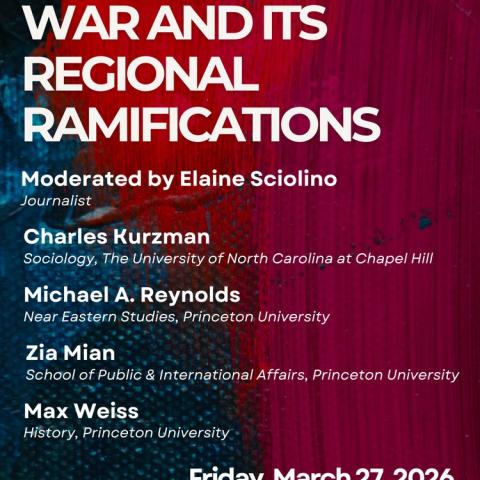
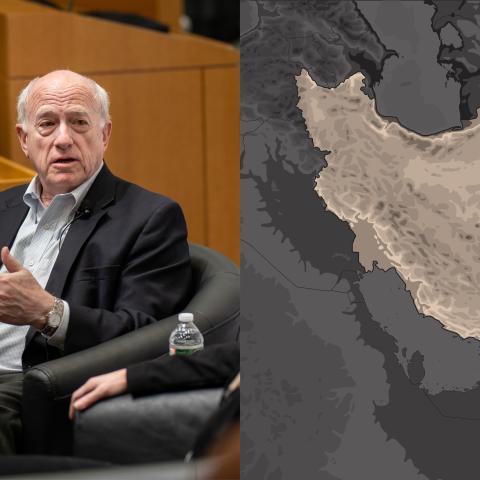
Elaine Sciolino, Journalist; ModeratorThe first American and the first woman journalist to interview Ayatollah Ruhollah Khomeini in Paris and Ayatollah Ali Khamenei in Iran, she covered the Iranian revolution, the hostage crisis, the Iran--Iraq war from both sides of the border, and Iran's nuclear program. From 2015 to 2017,…
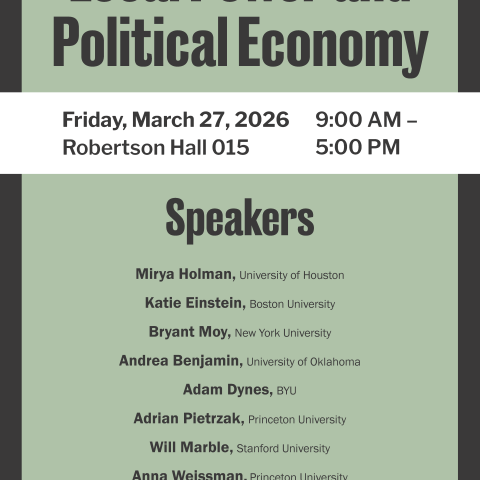
Understanding power remains central to the study of political science, yet many fundamental questions about power in local governance remain unresolved. Who governs municipalities, both small and large? How do local powerholders make decisions about policies that influence everyday life, such as housing, infrastructure,…
Seminar Series – Spring 2026The Education Research Section (ERS), an interdisciplinary unit in The Princeton School of Public and International Affairs, promotes the use of high-quality research in education decision-making. We conduct, support, and promote education research, and disseminate results to educators, policymakers,…
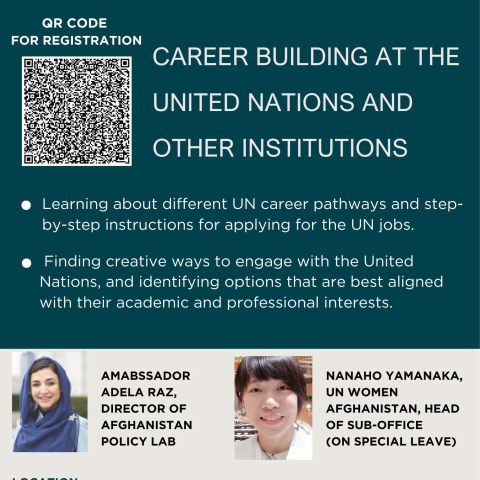
The United Nations remains one of the world’s most influential multilateral institutions, operating across a wide range of thematic areas peace and security, development, human rights, climate change, education, health and humanitarian assistance. For many students and young graduates, building a career at the United Nations or…
How frontline communities are organizing and building power as environmental protections are rolled back.Arif Ullah is Executive Director of A2 (Anthropocene Alliance), a national coalition of frontline groups advocating for environmental health and protection. He is a social and environmental justice advocate, grassroots urban…
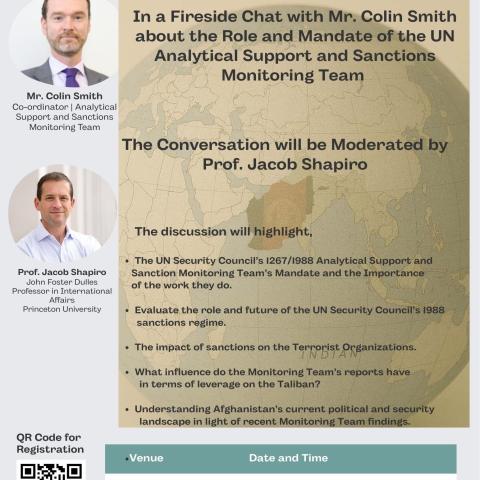
The UN Security Council’s 1267/1988 Analytical Support and Sanctions Monitoring Team has, for more than twenty-five years, played a central role in supporting the Council’s counter-terrorism sanctions regimes related to Al-Qaida, ISIL/Da’esh, and the Taliban. Mandated to monitor compliance with sanctions measures, including…
Seminar Series – Spring 2026The Education Research Section (ERS), an interdisciplinary unit in The Princeton School of Public and International Affairs, promotes the use of high-quality research in education decision-making. We conduct, support, and promote education research, and disseminate results to educators, policymakers,…