


The event “Career Building at the United Nations,” co-organized by the Afghanistan Policy Lab at the Princeton School of Public and International Affairs and Princeton University’s Center for Career Development, featured a practical and candid conversation with students interested in pursuing careers at the United Nations and related international institutions. The session offered encouragement and realistic guidance about the pathways, challenges, and strategic decisions involved in entering the U.N. system.
The speakers at the event were Ambassador Adela Raz, director of the Afghanistan Policy Lab, and Nanaho Yamanaka of U.N. Women Afghanistan, Head of Herat Sub-Office (On Special Leave).
The session was structured in a question-and-answer format to reflect the types of questions that are important from students’ perspectives. The purpose of the event was to provide step-by-step guidance for applying to the U.N. jobs and finding creative ways to engage with the United Nations.
Ms. Yamanaka outlined different pathways into the U.N. system, including U.N. Volunteers (UNV), Junior Professional Officer (JPO) programs, temporary assignments, fixed-term appointments, consultancies, and eventual roster placements. She explained that for many students, especially at the graduate level, the most realistic immediate options are often UNV and JPO programs. She clarified that U.N. volunteer roles are not unpaid positions; rather, they serve as important entry points, especially given the current budget constraints facing the U.N.
Similarly, the JPO pathway was described as an important route, particularly for candidates from countries that sponsor such programs. Ms. Yamanaka emphasized that students should research whether their home countries participate in JPO schemes and should regularly monitor those openings. Commenting on networking and building contacts, Ms. Yamanaka said:
“I would advise not to hesitate to build networking and contacts at the U.N., which may help you get through the United Nations and build your career.”
Ambassador Raz reinforced this by encouraging students to think strategically. She highlighted the importance of internships and short-term opportunities in New York, especially for students at Princeton, given the school’s proximity to the U.N. and permanent missions. Students actively engaged with the speakers and asked questions regarding internship opportunities. Ambassador Adela Raz also discussed career mobility, including transitioning from U.N. agencies to U.N. political missions.
“We [the Afghanistan Policy Lab] at SPIA organize events at the United Nations, and we provide opportunities for students to speak and get connected with different U.N. agencies and departments. I believe this is a great opportunity that students should utilize in building contacts and networking,” said Ambassador Adela Raz.
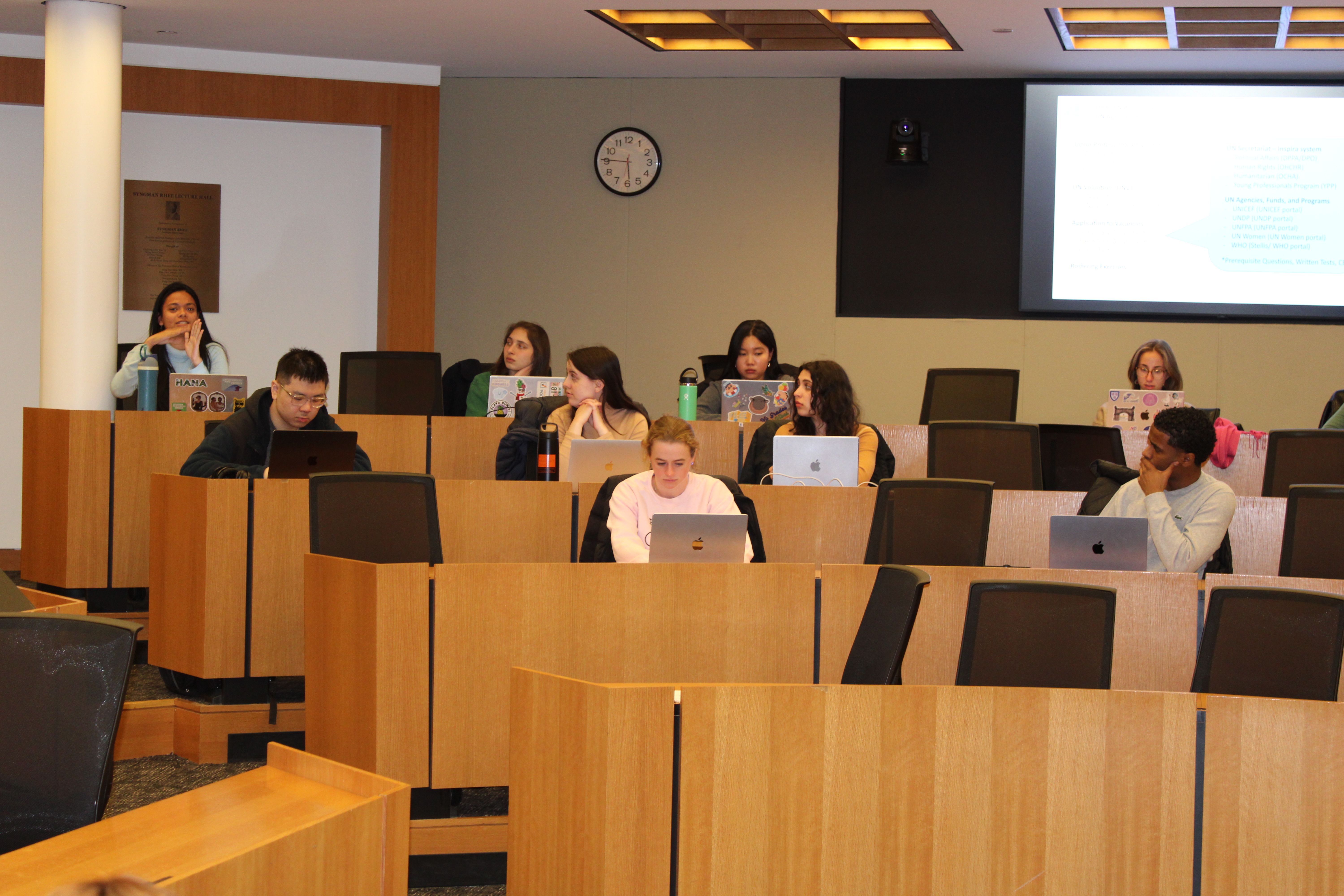
She also made an important observation about the value of connections and relationships, stating openly that “professional relationships” are important in building careers. Students were urged to build relationships with individuals in permanent missions, think tanks working with the U.N., multilateral institutions, and U.N. offices.
Ambassador Raz further advised students who aspire to senior U.N. positions to consider working through their own countries’ diplomatic services. She pointed out that many higher-level U.N. appointments require work experience, and those working in home countries’ diplomatic missions will be incredibly important. For those with long-term ambitions, foreign service can serve as a strategic steppingstone toward future U.N. leadership roles.
The conversation also addressed the importance of home country missions, the distinction between headquarters and field postings, the recruitment process, particularly regarding application forms, and interviews and the interview process, which is typically competency-based (CBI), often including behavioral questions about workplace experiences. In addition, students were encouraged to consider consultancies within the U.N., such as U.N. Women, UNDP, UNICEF, and UNFPA, as an important entry route into the U.N. system.
Toward the end of the discussion, the speakers answered student questions directly. They reassured students that even without strong networks, they should still apply, as interviews themselves can become networking opportunities. Commenting on strategies for early-career professionals, Ms. Yamanaka advised:
“There are a couple of things that students should do, such as use LinkedIn and informational outreach strategically.”
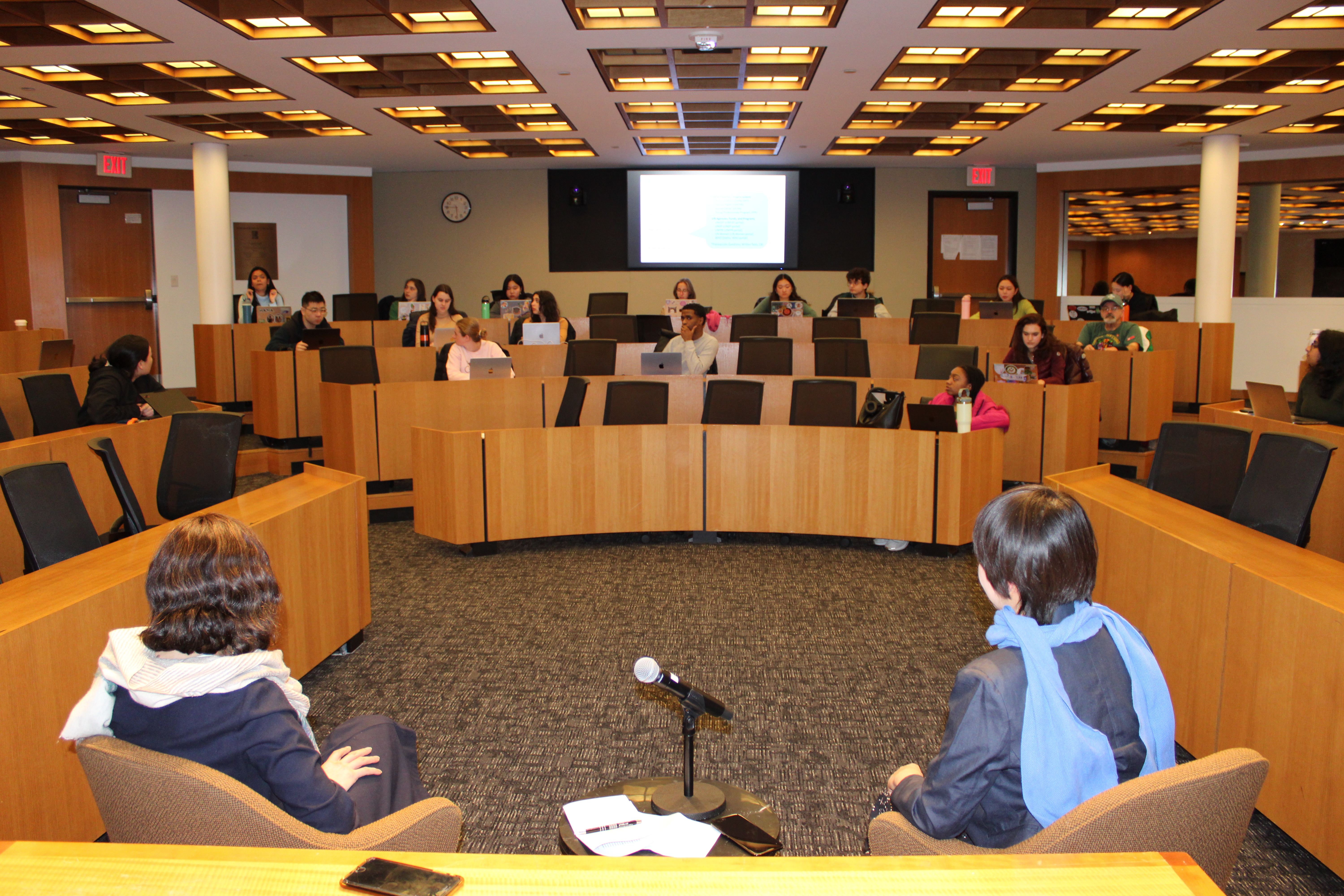
Overall, the event offered a rich and realistic picture of career-building at the United Nations. Rather than presenting the U.N. as a simple dream destination, the speakers framed it as a complex system requiring strategy, persistence, confidence, and flexibility. Students were encouraged to apply widely, think broadly, cultivate relationships, gain practical experience, and remain open to multiple pathways.