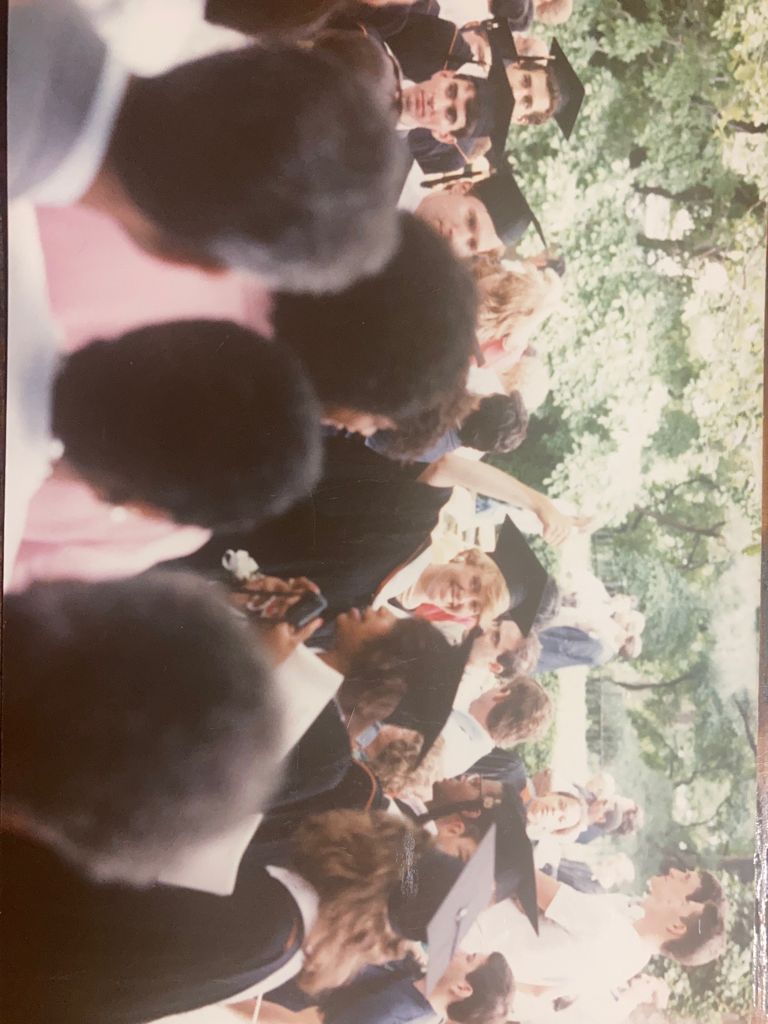


It’s the spring of 1989 at Princeton University, and inside her Patton Hall dorm room, Wendy Kopp ’89 is putting the finishing touches on a senior thesis that would guide her career for the next 40 years.
Increasingly concerned about educational equity during her time as an undergrad student at the Princeton School of Public and International Affairs, Kopp’s thesis took shape when she noticed just how aggressively students were being recruited to banks and consultancy firms, while options to address education inequities in the U.S. were hard to find.
“Recruiters were banging down our doors, asking us to commit two years to work on Wall Street — and I knew that our generation would jump at the chance to commit two years to teach in our nation’s urban and rural communities if we were called upon to do so,” Kopp said.
The resulting 177 pages, titled “An Argument and Plan for the Creation of the Teachers Corps,” laid the groundwork for what would soon become Teach For America, a leadership development organization that recruits recent college graduates across the U.S. to teach in under-resourced public schools, and invests in their long-term leadership as they work toward changing the systemic issues that prevents children from meeting their maximum potential in the classroom.
“Once I got this idea in my head, I just couldn’t stop thinking about it,” Kopp said. “I saw just how powerful it could be, both for the students these teachers would reach, and for our country if many of our leaders’ priorities and perspectives were shaped by foundational professional experiences working in urban and rural communities.”
However, Teach For America’s origins did not come without its trials and tribulations, including what Kopp describes as multiple “near-death experiences” in the organization’s first decade of existence. As a 21-year-old leader and the face of her foundation, Kopp learned to navigate financial woes, the politics of the education sector, and the management challenges involved in building and scaling a high-performing organization.
“Those early years were very tough,” Kopp said. “Even as we sought to inspire the most talented graduates to join Teach For America — never an easy undertaking — we also climbed a big learning curve in training and supporting them to succeed and grow more committed to the long-term effort to effect the changes that are crucial for realizing our vision. And on top of all this, there were debilitating challenges of raising the needed funds and navigating the complex political landscape in education.”
Despite these challenges, Teach For America has left a lasting impression. Since its origin in 1989, more than 70,000 college graduates have completed the program, with three-quarters of those individuals staying in the education field.
“Seventy-five percent of our alumni remain in this work for the long term,” Kopp said. “They work as educators, social innovators, policymakers, advocates, and become part of a growing ecosystem of leaders working collectively with others across every level of the system to create needed changes.”
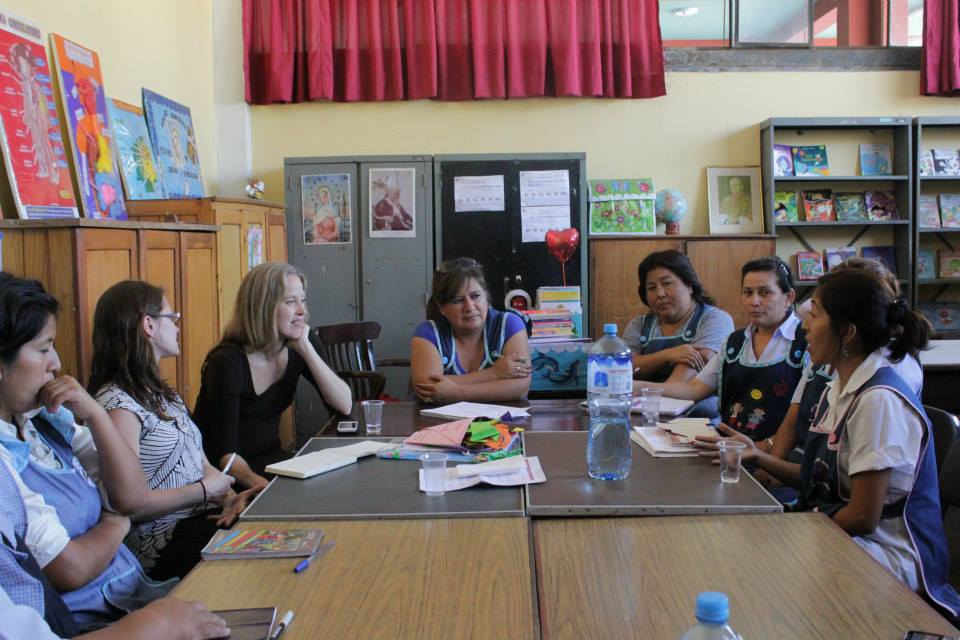
Kopp soon began meeting people from all over the world who were inspired by Teach For America’s approach and wanted to see a similar model in their countries. In response, in 2007, she co-founded Teach For All, a global network of organizations that recruits their nations’ promising future leaders to teach for a similar two-year commitment. Today, there are 15,000 teachers in the programs across more than 60 countries, reaching more than 1.5 million students.
The growth of Teach For All’s global network led Kopp to see the power of enabling educators all over the world to learn from each other. As a result, Teach For All recently launched a new Global Institute for Shaping a Better Future to foster global learning among educators committed to developing students holistically.
“Many think of education as a purely local issue, but the reality is that it is a global issue in the same way public health and environmental protection are,” Kopp said. “Our collective welfare depends on the kind of education students receive all over the world, and the solutions are much more shareable across borders than is often recognized. Educational solutions must be owned by local stakeholders and deeply rooted in local context and culture, but we’ve seen that local stakeholders can benefit so much from learning what is working in other communities around the world.”
Kopp’s influence and outlook have resulted in multiple awards and recognitions, including a spot on Time Magazine’s most influential persons list, 15 honorary doctorate degrees, and being the youngest person and first woman to receive Princeton University’s Woodrow Wilson Award, the highest honor the school confers on its undergraduate alumni.
But her journey still circles back to her undergraduate days, musing on the possibility of a Peace Corps-like program for eager teachers.
“I’m so grateful for Princeton’s undergraduate thesis requirement, and for all the support of the SPIA ecosystem,” Kopp said. “Without that, I doubt I would have had the discipline to research the policy context in which Teach For America would operate, or look deeply at historical models such as the Peace Corps. It was this process that really inspired me to decide to try to make Teach For America a reality, and that gave others the confidence to get behind the effort.”
Top photo courtesy of Wendy Kopp ’89.