

From people who graduated from the Princeton School of Public and International Affairs more than four decades ago to those who will begin their studies here in the fall, the breadth of the Princeton SPIA community was on full display this month as the School hosted three coinciding events.
Admitted Student Weekend, the annual Students and Alumni of Color (SAOC) Symposium, and a new conference, SPIA in Service, brought more than 300 people to the Princeton campus between April 9 and 12. They had a chance to mingle, learn from one another, and discuss how to navigate changing times in public service.
“Having all these events over the same period allowed everyone in our community – current students, alumni, and our incoming cohort – to connect at a time when leaning on your network is crucial to advancing a public service career,” said Paul Lipton, the School’s senior associate dean for academic administration.
The public service job market in Washington, D.C., and globally has seen major disruptions, as the Trump administration has laid off federal workers, instituted hiring freezes, and cut funding for international development, diversity and equity programs, and climate change initiatives.
The School launched the SPIA in Service conference in response. The two-day gathering featured candid small-group discussions, one-on-one coffee chats, and panels on specific public service tracks – with more than 95 students and 25 alumni participating.
“One of the School’s strategic pillars is building a cohesive Princeton SPIA community. One way we accomplish this is by connecting students with alumni for mentorship and professional development,” Dean Amaney Jamal told attendees. “This conference is just the latest in a series of programming meant to demonstrate that there are many different pathways to service.”
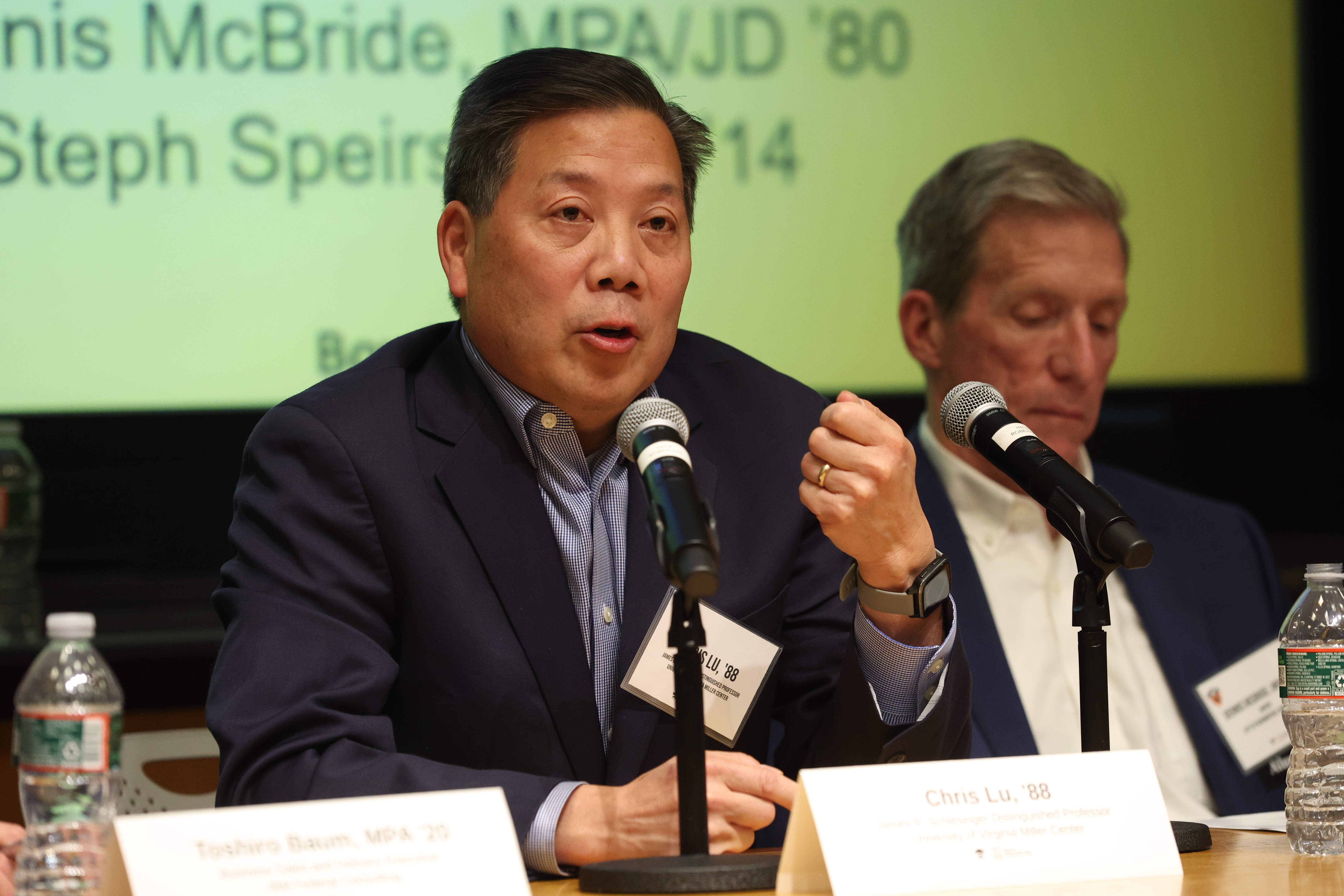
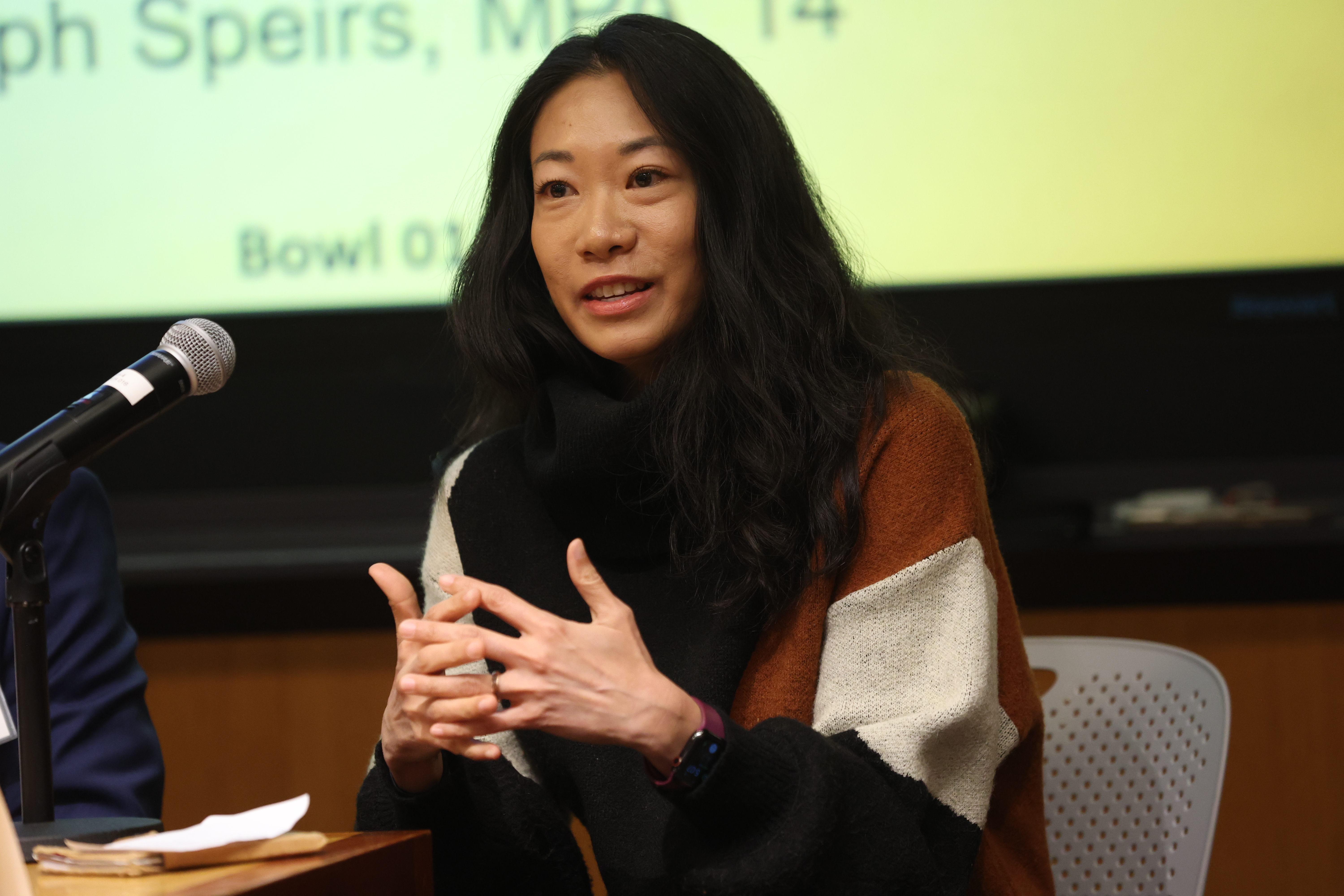
The conference began with a storyteller’s lounge on Thursday, April 9, when four alumni whose post-SPIA careers ranged from six years to 46 talked about how they have pivoted as they faced uncertainty in their careers. Steph Speirs MPA ’14 discussed transitioning from government service to social entrepreneurship.
“You can have impact in any industry you want,” she said. “It is easier to have impact in policy and government and nonprofits, because you're surrounded by people who buy into that premise. But we can't give up the hope that we can have social impact and care about justice in every industry.”
Chris Lu AB ’88, a former U.S. ambassador who has served as deputy secretary of labor and a White House cabinet secretary, emphasized the importance of being a lifelong learner. He reminded the audience that the Cold War was still the focus at the policy school when he graduated, that there was no widely accessible internet or tracks to study climate change and terrorism, and that he has worked on those issues nonetheless.
“Even if there were not the dramatic changes that we’ve seen in the federal government over the last year, the economy is always changing,” said Lu, who is currently a professor at the University of Virginia. Like the other alumni, he encouraged students to take advantage of the fact that they are going to graduate debt-free.
“Be willing to take risks,” he said. “One needs to be flexible along the way.”
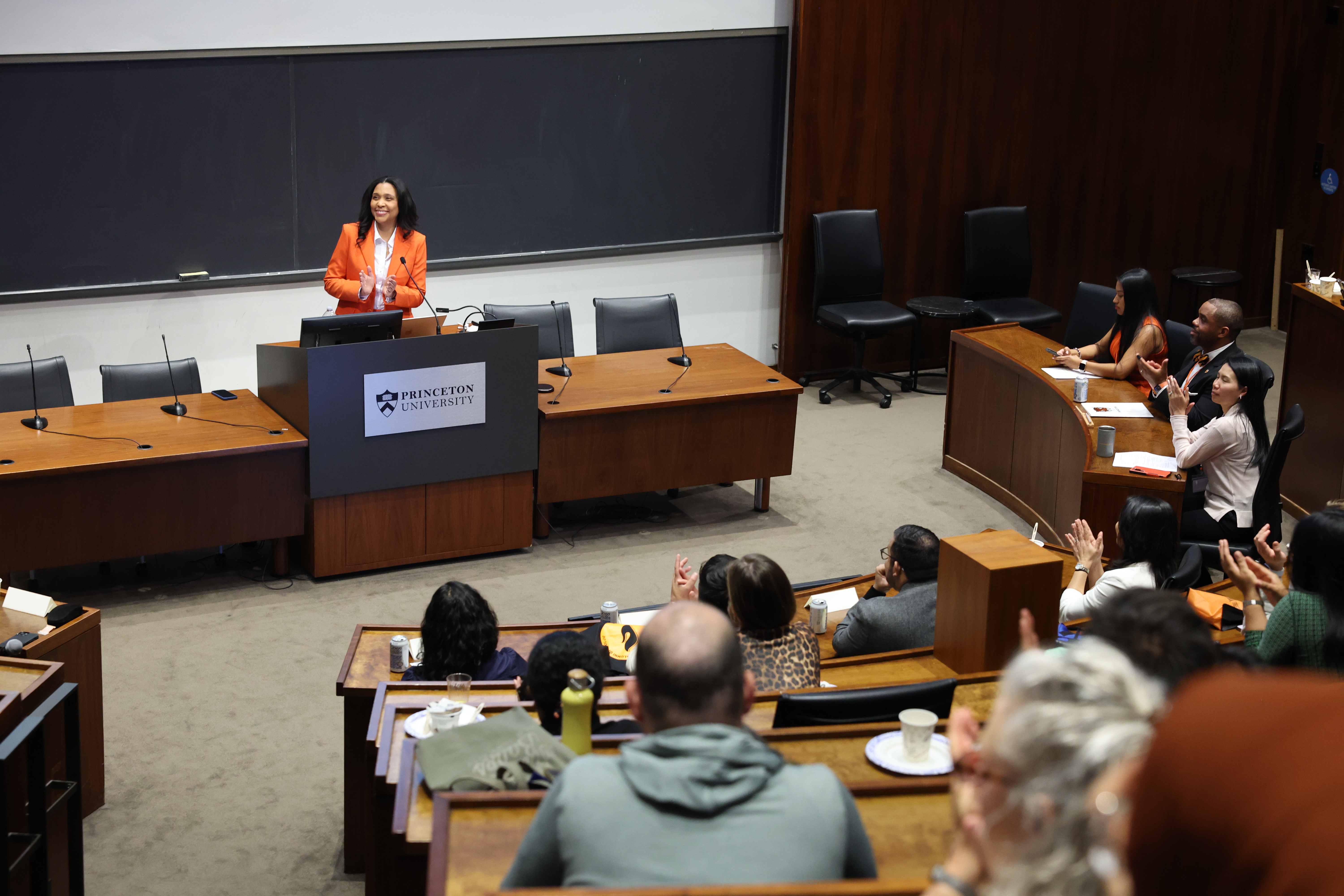
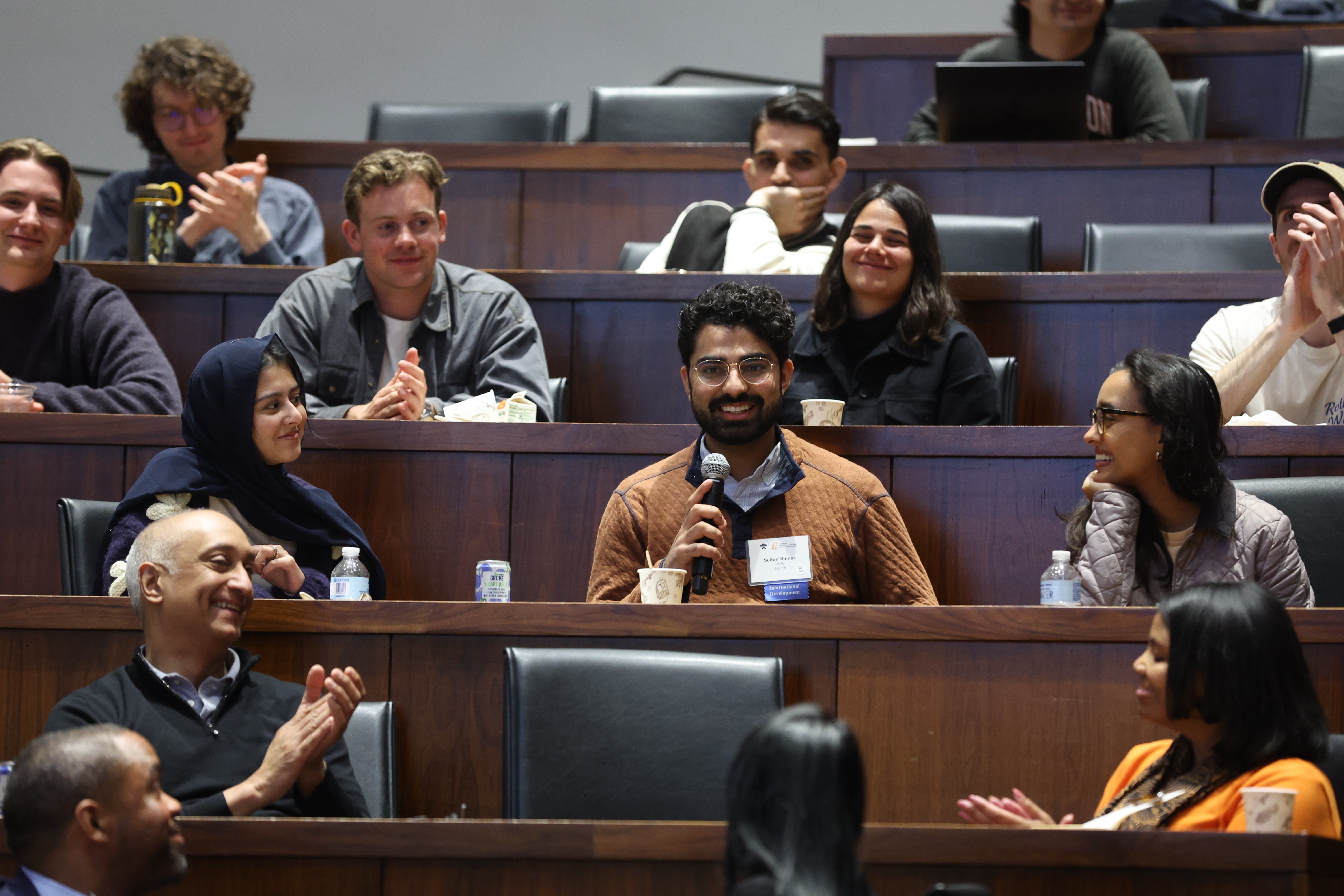
At the SOAC Symposium, keynote speaker Amber Greene MPP ’12 also acknowledged the challenges of pursuing public service careers in this moment. She asked students in the audience to share if their dream job has been eliminated under federal cuts, and then she prompted alumni in the audience to offer advice to those students about how they can pursue that work through a different path.
“Crisis sparks action, and new systems can be born,” she said. “The 20th century Civil Rights and labor movements turned systemic inequality into protections that all of us rely on today. Across centuries and continents, disruption has always been a catalyst for communities to mobilize, for people to innovate, for people to rebuild systems that serve everyone – and it’s time that we build something better and stronger.”
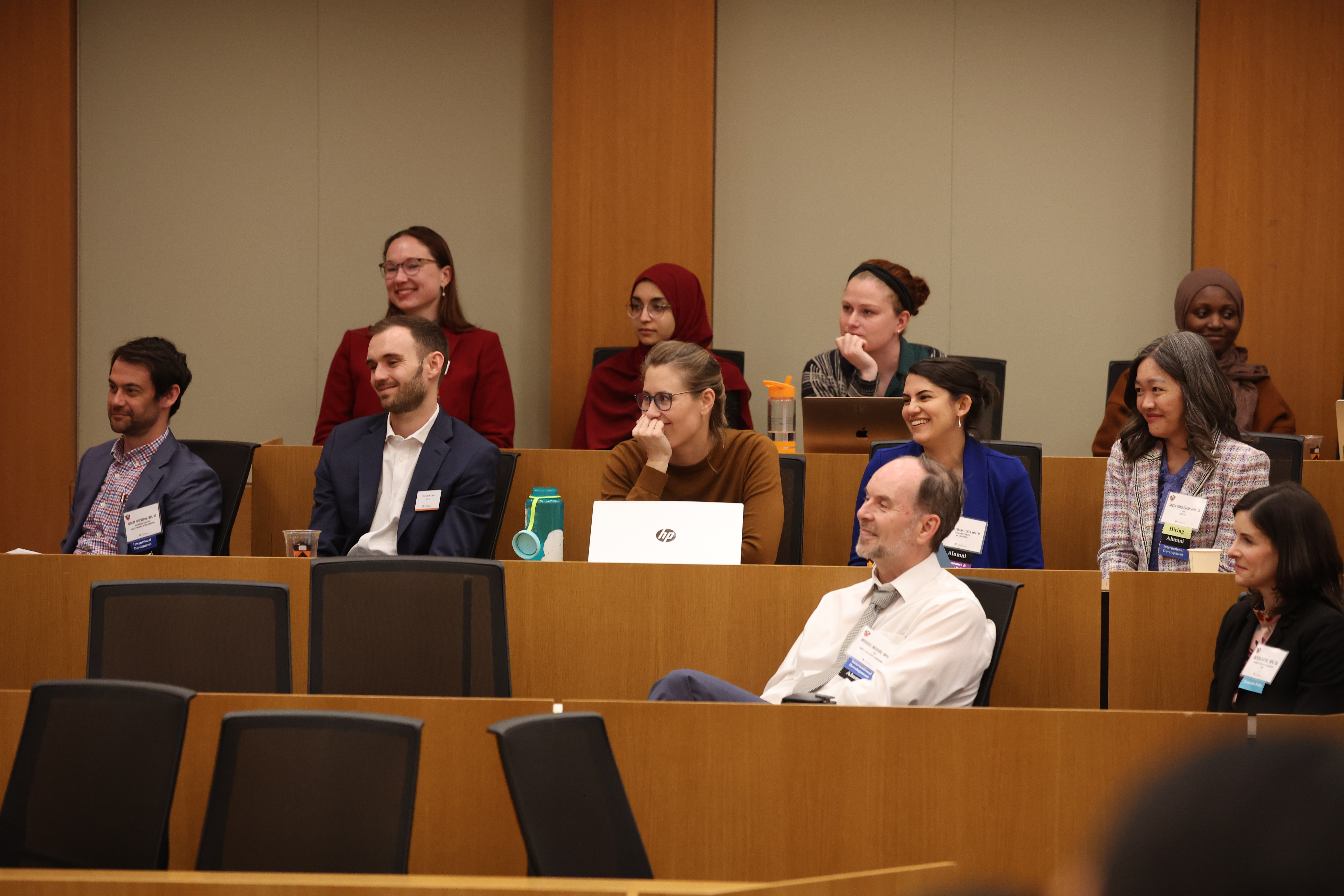
Header Photo: Student and alumni attendees at SPIA in Service Conference.
Photo credit: Beverly Schaefer