


When the Princeton School of Public and International Affairs launched its SPIA in New Jersey initiative in 2023, Dean Amaney Jamal said she was proud “to launch a research-based program that seeks to advance the wellbeing of my fellow Garden State residents.”
Princeton SPIA faculty have taken that charge to heart, participating in a variety of policy, research, and volunteer activities in service to a better New Jersey.
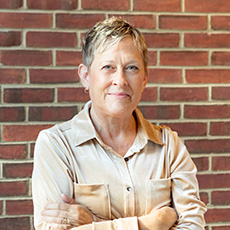
Their engagement reaches all the way to the Statehouse. Two of the School’s faculty members each co-chaired one of Governor Mikie Sherrill’s Transition Action Teams, which were groups comprised of experts seeking feedback and making recommendation on the incoming administration’s top policy issues.
Kathryn Edin, the William Church Osborn Professor of Sociology and Public Affairs, co-chaired the Action Team on Kids’ Mental Health and Online Safety.
“I was thrilled to be working with my co-chair, Rishi Barwani, and the rest of our talented Action Team on Kids Mental health and Online Safety,” said Edin, who directs the School’s Bendheim-Thoman Center for Research on Child and Family Wellbeing. “These are concerns that all New Jersey parents share.”
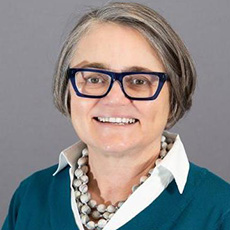
The other faculty co-chair was Heather H. Howard, with the Affordable Healthcare: Addressing Washington’s Medicaid Cuts Action Team, which developed strategies for promoting health care affordability and addressing federal cuts to Medicaid. Her co-chair was Chiquita Brooks-LaSure ’96, who spoke at Princeton SPIA last semester as part of the Dean’s Leadership Series.
“The One Big Beautiful Bill Act imposes significant cuts to the Medicaid program, which is the largest item in the New Jersey state budget and critical to the health care ecosystem,” said Howard, a professor of the practice, co-director of the Global Health Program, and a faculty affiliate of the Center for Health and Wellbeing. “The transition team tasked us with thinking about how to mitigate the harm from those cuts — both to the people in the Medicaid program who rely on it for health care, and to the broader health care safety net: the hospitals, doctors, and clinics that everyone in New Jersey relies on. It was exciting to see how these issues are playing out now in the Garden State and to work with the new Governor’s team.”
In addition to co-chairing the Medicaid action team, Howard, who served as commissioner of health and senior services under Democratic Governor Jon S. Corzine, participated in a bipartisan SPIA in New Jersey conversation with Republican Richard Bagger ’82, a former New Jersey state senator and chief of staff to Governor Chris Christie. With dozens of undergraduate and graduate students, faculty, staff, and community members in attendance, the two discussed their experiences with governmental transition structures at the state and national levels and chatted about their successes and opportunities to ensure effective governance and continuity.
Away from the halls of government, SPIA faculty are giving back to the Garden State in various ways.
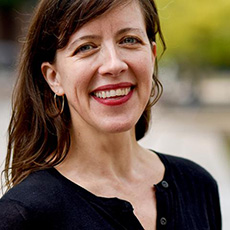
Documentary film specialist Purcell Carson is project director of the multi-year, community-based documentary venture The Trenton Project, in which students explore the rich fabric and pressing issues of New Jersey's capital through film and art. Carson sees value in sharing how Trentonians “experience the circumstances of the world they actually live in — both its inequities and injustices and systems, as well as the strategies and institutions that help people thrive.”
“I find it artistically and formally provocative to show people to themselves in this way,” Carson said. “At its best, our screenings elevate others’ public service and amplify the potential we each have to contribute to civil society. Our screenings start — or continue, or deepen — important conversations. And our films can suggest to others, hopefully especially young people, ways that they themselves can impact their world.”
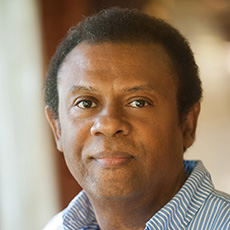
Nicky Sheats ’78 was a post-doc at Columbia University’s Earth Institute when he helped to found the New Jersey Environmental Justice Alliance, which seeks to eliminate environmental injustices in low-income communities and communities of color. He remains on its board of trustees, is a member of several regional and national environmental justice coalitions, and continues to advocate for public policies that aim to reduce air pollution.
Sheats, a senior policy fellow at Princeton SPIA’s Center for Policy Research on Energy and the Environment and a lecturer at the School, grew up outside of Trenton. He sees his work on behalf of the state’s and nation’s more marginalized communities as a way of giving back to those whose efforts a generation ago enabled him to attend Princeton.
“I was very aware that one of the reasons I was at Princeton is that people actually died during the civil rights movement so kids of color could go to majority white universities,” he said. “I felt that that obligated me to do something, for my community and other communities in New Jersey and around the country.”
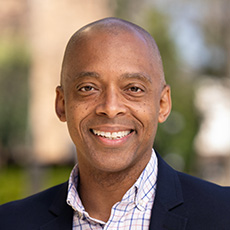
Khalil Gibran Muhammad, a professor of African American studies and public affairs, serves the Garden State as co-chair of the New Jersey Reparations Council. The first-of-its-kind commission seeks to confront and repair New Jersey’s deep and often overlooked involvement in slavery and its lasting impact on the contemporary life of Black people in the state.
The faculty’s involvement is in addition to SPIA in New Jersey itself, which has spent three years bettering the state through classes, fellowships, policy development, and “research projects centered on issues of strategic importance to the wellbeing of the people of New Jersey,” according to Anastasia R. Mann, the initiative’s founding director.
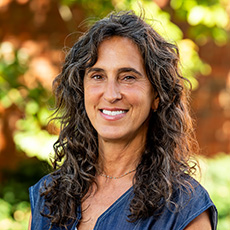
“New Jersey's vibrant and diverse economy, politics, geography, and population afford us at SPIA the opportunity to address most if not all of the major public policy issues of our time, right here in our own backyard,” said Mann, a Princeton SPIA lecturer. “The relatively small size of the state combined with its population density — the highest of any state in the union — means we can meaningfully engage in almost any policy arena. And we do!”
“Like the University as a whole, Princeton SPIA is proud to be in New Jersey and of New Jersey,” Jamal said. “And I am proud of our faculty for their dedication to the state and their willingness to step up for all New Jerseyans.”
Top image: Photo by Shutterstock


