


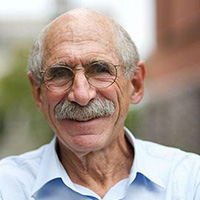
Michael Oppenheimer, the Albert G. Milbank Professor of Geosciences and International Affairs and the High Meadows Environmental Institute, contributed a chapter to Climate Change: What Must Be Done?, which will be published on April 30.
The book brings together scholars and experts to examine the urgency of the climate crisis and the range of responses needed to address it.
“The book is unusual in drawing on both technocratic and sociocultural perspectives of what a solution to the climate change problem might entail,” Oppenheimer said. “My chapter is about adaptation, specifically a future-looking view on how to limit climate risk to people and places while the great global energy transition is gradually unfolding. In particular, I tie the challenge of protecting our future to experiences out of our past, including my own.”
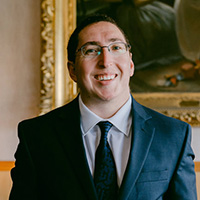
Jacob Kaplan, a professional specialist in the School of Public and International Affairs, has received provisional approval for a grant from Arnold Ventures to support a project aimed at making FBI crime data more accessible and accurate for use in research and policy analysis.
“FBI crime data are widely used in research and policy, but errors and inconsistencies in these data often go undetected, and that has real consequences for criminal justice,” Kaplan said. “I’ve spent a decade understanding and cleaning these data, so I’m thrilled to finally do it more formally and with a great team. This grant gives us the chance to build a cleaner, better-documented foundation so that researchers and policymakers are working from better data.”
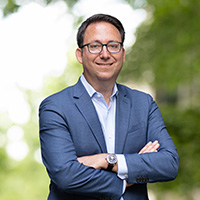
Udi Ofer, the John L. Weinberg/Goldman Sachs and Co. Visiting Professor and Lecturer of Public and International Affairs and founding director of the Policy Advocacy Clinic, presented research on bipartisan criminal justice reform legislation at the U.S. Capitol Building.
The presentation, titled “Bipartisan Criminal Justice Reform in the States: New Data and Shared Principles in a Polarized Era,” was delivered to an audience of more than 100 people, including the director and deputy director of the Federal Bureau of Prisons, the United States pardon attorney, state lawmakers from across the country, and criminal justice advocates from the left and right.
Ofer was also invited by the United Nations to participate in an expert consultation in Paris to review draft model guidelines on protections for the dead. The guidelines, which will be presented to the Human Rights Council in 2027, provide guidance for states on how to respond when a person dies in government custody, including in prison, immigration detention, or police custody, while respecting the dignity of the dead and their family.
“It was an honor to participate in the expert consultation in Paris on forthcoming United Nations guidelines on the protection of the dead,” Ofer said. “This is an effort that underscores how human rights principles must extend to all stages of life and death. Moreover, presenting my latest criminal justice reform research on Capitol Hill reinforced a complementary lesson: even in a polarized moment on the federal level, states continue to advance pragmatic, bipartisan criminal justice reforms grounded in shared values of safety, fairness, dignity, and accountability. Together, both these experiences highlight the enduring importance of evidence-based and values-driven policymaking across both global and domestic policy arenas.”

Elke Weber, a professor of psychology and public affairs and the Gerhard R. Andlinger Professor in Energy & the Environment, gave the 2026 Cognitive, Computational, and Systems Neuroscience (CCSN) Annual Lecture at Washington University in St. Louis on April 20.
The CCSN Annual Lecture invites a speaker each year whose work captures the interdisciplinary nature of the group. Weber’s lecture was titled “Query Theory: A Process Account of Constructed Judgments or Preferences.”
“Preparing for my visit gave me the opportunity to reflect on the trajectory of my research career that has taken me from mathematical modeling of basic psychological processes of judgment and decision making to studies of their neural instantiations, and more recently to models of individual and collective decisions made in complex physical and social environments that are informed by field data and LLM-analyzed text data,” Weber said. “My lecture tied these different streams of research together, using Query Theory as a unifying thread.”