

Kyler Zhou’s evening commute home began with the same expectations it does each day — a little bit of traffic and a good podcast. However, what caught him by surprise on this particular June trip was that by the end of the 40-minute journey, his worldview would change, and he had to share it with the Princeton community.
Zhou’s podcast of choice that day was The Interview from The New York Times. On it, host David Marchese spoke with historian and author Rutger Bregman — described as a "Dutch wunderkind of new ideas" by The Guardian. It was the podcast’s title — “Rutger Bregman Wants to Save Elites From Their Wasted Lives” — that grabbed Zhou’s attention, but the content of the conversation proved more potent.
“Bregman identified what he calls the talent crisis, and he's referring to the opportunity cost in which the best and brightest minds of our generation go on to pursue careers that create relatively little meaning to society,” said Zhou, a junior at the Princeton School for Public and International Affairs. “There are issues around the world that impact millions of people that are solvable, but no one is solving them. That struck a chord because I think it's happening on our campus and campuses across the country. The minute I got home, I had to email him.”
Zhou reached out to Bregman’s School for Moral Ambition — a foundation designed for mid-career professionals to pivot toward positive-impact careers. The School, despite having instituted a fellowship program with Harvard University, wasn’t ready to expand further into the higher ed space at the moment. But Zhou continued to refine his pitch to Bregman’s team until he finally persevered.

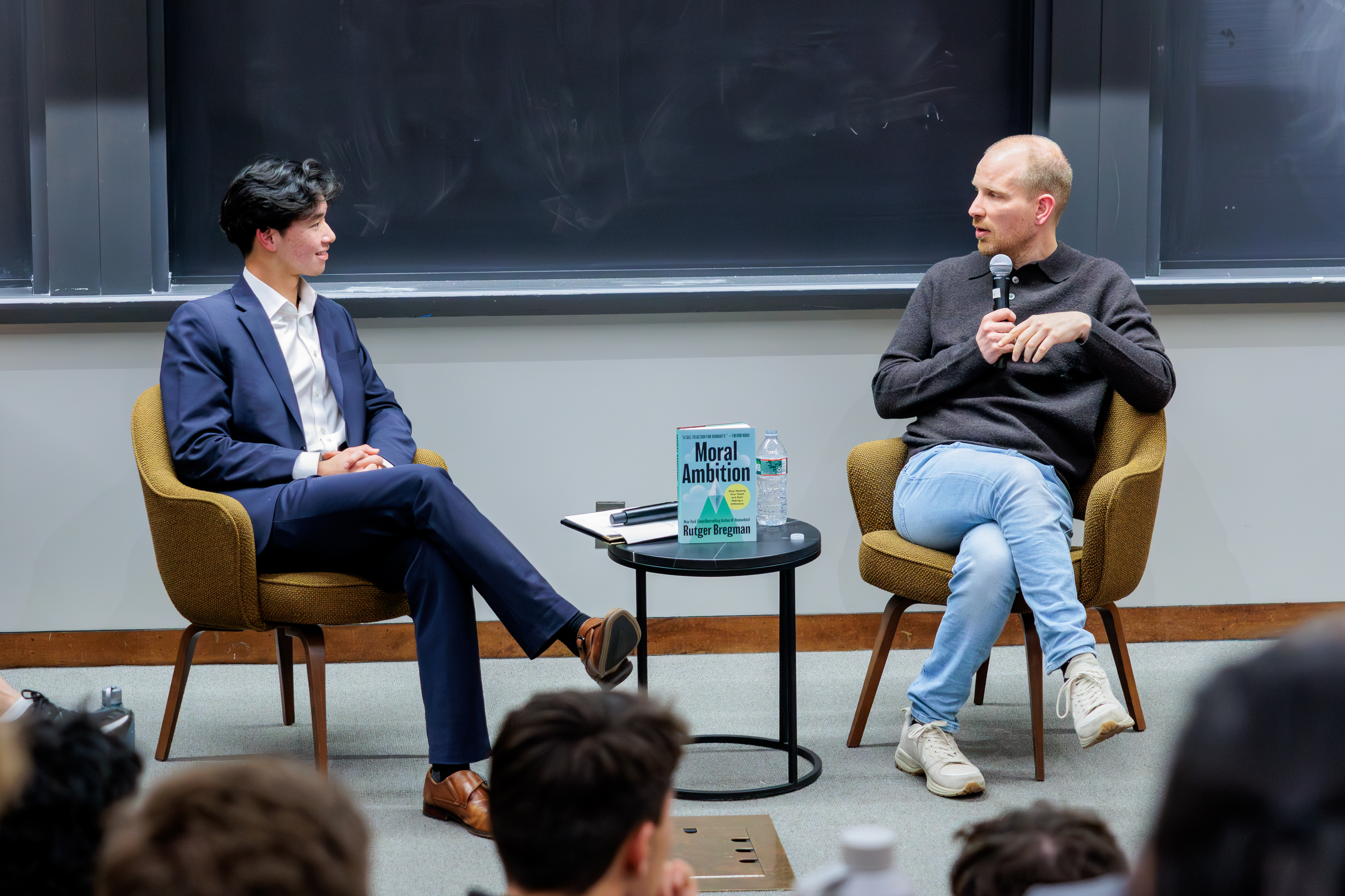
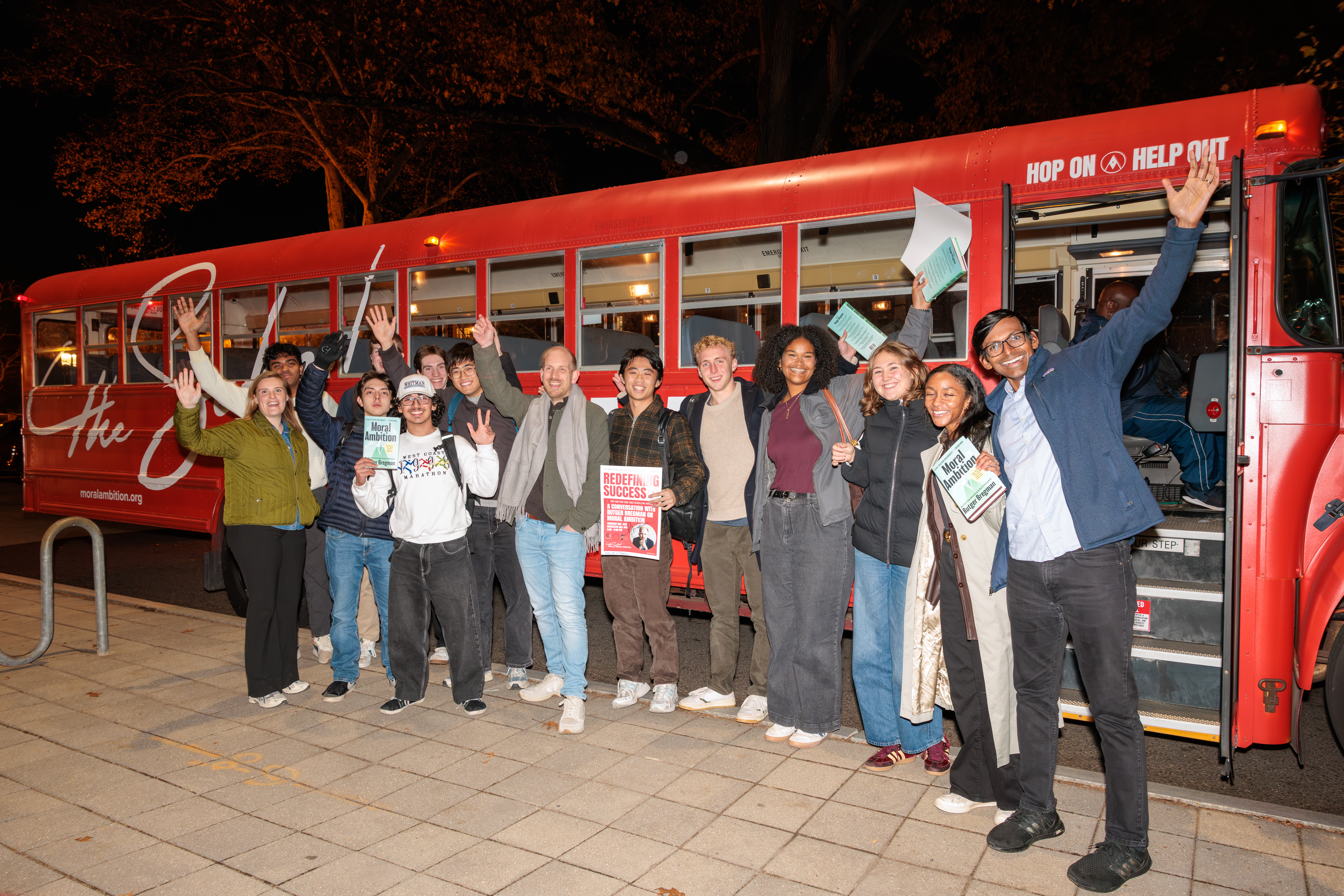
The result was a college chapter of the School for Moral Ambition, which, in the first three days of the fall 2025 semester, had amassed 120 registered members. The Princeton chapter celebrated its beginnings by inviting Bregman to campus on November 13, when he spoke to a standing-room-only group of students in Robertson Hall.
“There’s an important message for young people, specifically college students, to take away from this,” Zhou said. “You talk about being a part of something meaningful, or wanting to be a part of something meaningful, and dedicating your life to service. That’s the draw. That's the core ethos of Princeton. Let’s live up to that.”
The chapter is implementing a three-pronged approach to spread its laudable message. The first being small pod conversations over dinner to discuss what being morally ambitious means to everyone. The second is a speaker series featuring professionals who have flourished in career paths that promote the greater good. And the third component is a service element that will provide opportunities to make an impact on local communities.
“Poverty is a massive problem in the U.S., but it’s also a problem 10 minutes away in Trenton,” Zhou said. “If people are not in proximity to these issues, they can’t understand the lived experiences of the communities impacted by politics. You lose a critical part of policy- and decision-making that has plagued the public policy space as a whole.”
As Zhou embarks on his first full academic year as leader of his newly formed chapter, he is excited about the opportunity to promote more morally ambitious career opportunities to all members of the Princeton community. From number crunchers to literary fanatics, if someone is willing to have a conversation on the topic, they’re welcome to join.
“We have the potential to create a lot of change,” Zhou said. “That starts at the grassroots level among students. There’s a really strong population of people who have an interest in making an impact.”