Touch-screen ballot-marking devices (BMDs) produce paper ballots that are counted by optical-scan voting machines and can be recounted by hand. If the BMD is hacked or misprogrammed so that it prints a different candidate selection than the voter indicated on the touchscreen, the voter is supposed to notice this; this is an…
Lemon will be joined in conversation with Julian Zelizer, the Malcolm Stevenson Forbes, Class of 1941 Professor of History and Public Affairs, Princeton. Registration is required.
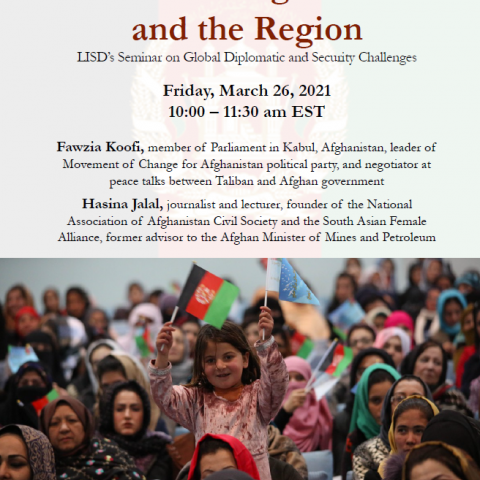
Join LISD’s Seminar on Global Diplomatic and Security Challenges (GDSC) for a session with Ms. Fawzia Koofi and Ms. Hasina Jalal on "Women in Afghanistan and the Region." This session will explore the framework for the withdrawal of American forces in Afghanistan and the importance of ensuring democratic safeguards and rights…
Amb. (Ret.) Daniel C. Kurtzer, S. Daniel Abraham Professor of Middle East Policy Studies at the Princeton School of Public and International Affairs, and former U.S. ambassador to Israel and Egypt, and Amaney A. Jamal, the Edwards S. Sanford Professor of Politics at Princeton University and Director of the Mamdouha S. Bobst…
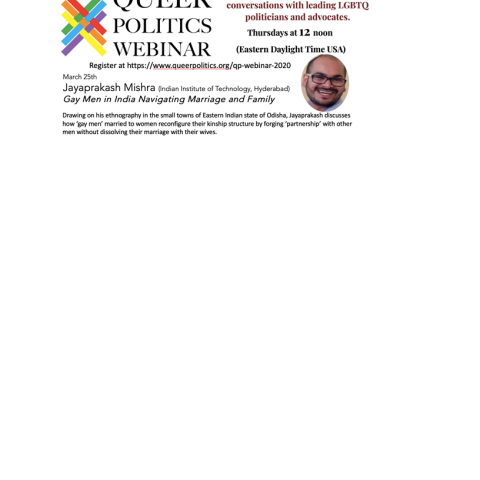
Jayaprakash Mishra
Graduate Student, Indian institute of Technology, Hyderabad, Liberal Arts
Drawing on his ethnography in the small towns of Eastern Indian state of Odisha, Jayaprakash discusses how ‘gay men’ married to women reconfigure their kinship structure by forging ‘partnership’ with other men without dissolving…
Dr. Priya Joshi will present- Learning from different perspectives: How education matters for sustainable development, and the role of private actors in the mix.
Data privacy law fails to stop companies from engaging in self-serving, opportunistic behavior at the expense of those who trust them with their data. Academics and policymakers have recently proposed a possible solution: require those entrusted with peoples’ data and online experiences to be loyal to those who trust them. But…