Sarah Ganty is a FWO Postdoctoral Fellow at the Human Rights Center of Ghent University, theorizing the concept of Merizenship, which she has introduced. She is also a J.S.D.
Over the past two years, passage of successive infrastructure-related bills by the U.S. Congress - Bipartisan Infrastructure Act, Chips+, Infrastructure, Investment & Jobs Act, and Inflation Reduction Act - equals historic levels of investment by the federal government in transitioning to a clean energy economy and…
KTC Student Affiliates have the opportunity to present their work. Sociology doctoral student Megan Kang presents her ongoing work on what it means to exit a violent social network, over lunch, Friday, March 24, 12:15pm.
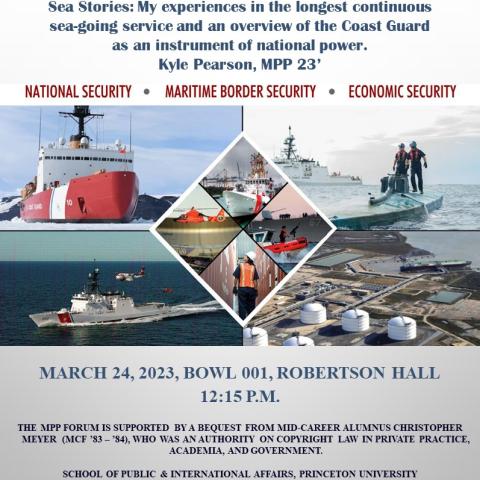
Kyle will provide exposure to the Coast Guard’s multi-mission afloat operations through the lens of ten years of cumulative sea duty in the Arabian Gulf, Caribbean Sea, and Eastern Pacific Ocean.
In this talk, Dr. Mbuya will explore how the World Bank views nutrition within the context of competing global health priorities. He will discuss how this critical but often overlooked issue (and others like it) can be framed to build its profile on national and international agendas.
In his new book, the Pulitzer Prize–winning author of Evicted reimagines the debate on poverty, making a new and bracing argument about why it persists in America: because the rest of us benefit from it. He is joined in conversation by fellow scholar about housing and poverty in America, author, and activist Keeanga Yamahtta…
In Dobbs v. Jackson Women’s Health Organization, the Supreme Court overruled Roe v. Wade and Planned Parenthood v. Casey, which had protected the constitutional right of pregnant persons to decide whether to terminate their pregnancies. Justice Alito’s 5-4 majority opinion in Dobbs denied that it “cast doubt” on any other…
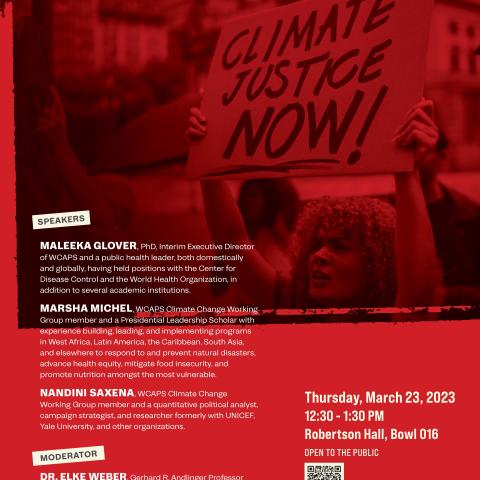
As the world grapples with how to address climate change, at the heart of the issue is justice. Globally, the nations that are projected to suffer the worst impacts of climate change are those that are least responsible for causing it and that have fewer resources to adapt. The same is true in the United States, where…