

Amidst a sea of hype and despair surrounding the use of computational artificial intelligence in mental healthcare treatment, comparatively less has been said about the implementation of AI into psychiatric triaging, evaluation, and monitoring. These under-regulated and bureaucratically oriented practices involve making decisions about the cadence, quality, and caliber of care a patient will receive, including whether that care will be covered by health insurance.
This talk focuses on a growing field of automated mental healthcare assessment called vocal biomarker AI (VBAI). Emerging at the intersection of speech signal processing and machine learning research, VBAI strives to analyze the voice for signs of mental distress that are theorized to be more objective and more directly correlated with the biological underpinnings of disease etiology than a patient’s self-report of their symptoms, the standard technique of assessment that Western psychiatry has attempted to streamline and scientize for decades.
Drawing from ethnographic fieldwork with VBAI labs at the inception of this subarea in the mid- to late-2010s, Semel will show how VBAI ultimately entails the production of algorithmic legibility and illegibility, side-by-side. Put differently, the sociotechnical function of VBAI is not necessarily to enhance the discernment of psychiatric suffering but to provide a justificatory apparatus for rendering some forms of mental distress more worthy of recognition and restitution than others. Altogether, she argues that efforts to fold AI into mental healthcare administration must contend with the political and moral economy of the healthcare system, along with longer histories of actuarial logic in American psychiatry.
Bio:
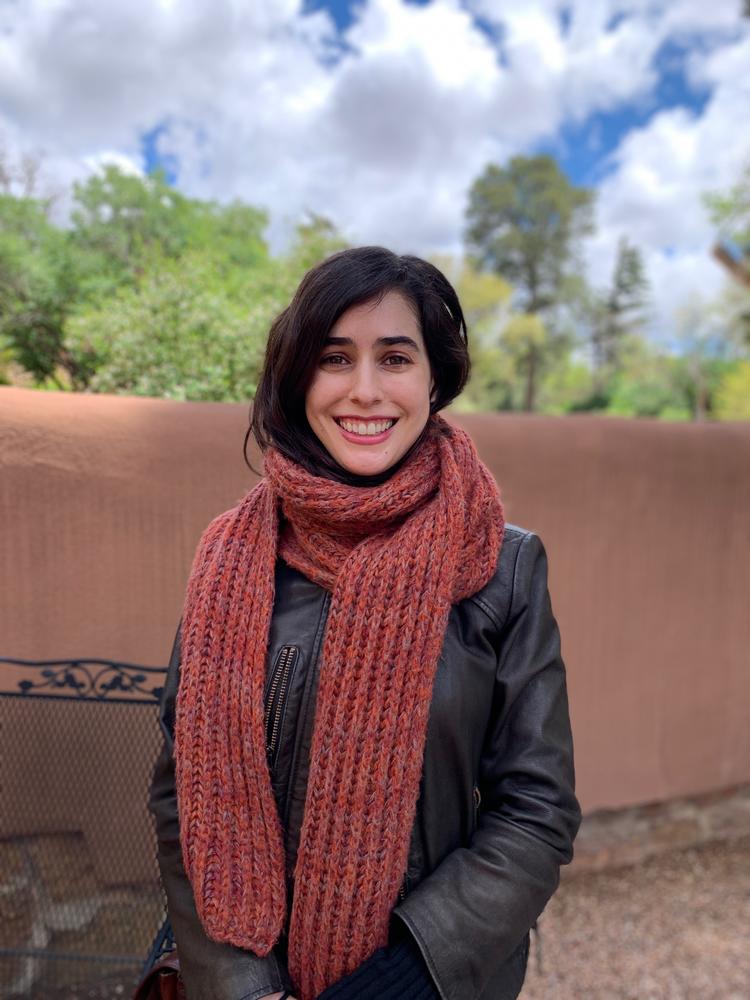
Beth Semel is a linguistic anthropologist, feminist STS scholar, and an assistant professor and the 2025-2028 Richard Stockton Bicentennial Precept in the Anthropology Department at Princeton University. Semel is a faculty affiliate of the History of Science Program, the Program in Cognitive Science, the Center for Health and Wellbeing, Princeton Language + Intelligence (PLI) and Natural and Artificial Minds.
Semel studies the sensory politics and technopolitics of American mental healthcare in an era in which technologies that “travel under the sign of AI,” to use Lucy Suchman’s evocative term, are called upon to manage increasingly broad arenas of human life. Semel’s research projects trace the auditory and interpretive practices and moral economies of discernment that underpin machine listening technologies, especially those deployed for healthcare and intelligence-gathering use cases.
Semel received a Ph.D. in History, Anthropology, Science, Technology and Society (HASTS) at MIT and an MA in Anthropology at Brandeis University. Previously, Semel was a postdoctoral associate in the Anthropology Department at MIT, the associate director and co-founder of the Language and Technology Lab, and a Weatherhead Fellow at the School for Advanced Research.
In-person attendance is open to Princeton University faculty, staff and students.
This talk will not be livestreamed or recorded.
If you need an accommodation for a disability please contact Jean Butcher at butcher@princeton.edu.
Sponsorship of an event does not constitute institutional endorsement of external speakers or views presented.