


Faculty Provide Analysis on Legality, International Implications, and Venezuela’s Future
PRINCETON, NJ – Following the capture of Venezuelan President Nicolás Maduro by the United States, faculty from the Princeton School of Public and International Affairs are sharing expert perspectives to provide context and clarity on the potential implications for Venezuela and Latin America, the effects on oil prices and global energy markets, questions of legality and use of executive power, as well as broader signals for containing adversaries such as China, Iran, and North Korea.
Implications for Venezuela and Latin America
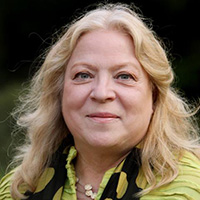
Kim Lane Scheppele, Laurance S. Rockefeller Professor of Sociology and International Affairs and the University Center for Human Values:
“Invading another country to kidnap its de facto president is a blatant violation of international law. That said, there is one scenario under which this otherwise outrageous action might have been justifiable. Nicolás Maduro has not been recognized as a legitimate head of state by the U.S. and most democracies in the world ever since he refused to honor the results of Venezuela’s 2024 election. The rightful winner of that election, Edmundo González Urrutia, is in exile in Spain and the leader of the domestic opposition, Maria Corina Machado, was spirited out of the country with U.S. assistance to claim her Nobel Peace Prize last month. If the lawful government of Venezuela had invited U.S. help to restore democracy ensuring that the winner of the last election could govern, then U.S. actions would have still not been legal, but would have at least aided democracy and the rule of law in Venezuela.
“If the U.S. continues to govern with the heinous vice president of Maduro’s dictatorship, however, then the weekend’s raid will have not only been illegal but immoral as well. And if the U.S. ousted a dictator to steal the country’s oil, then the U.S. has truly become an international outlaw.”

Maria Micaela Sviatschi, Associate Professor of Economics and Public Affairs:
“Venezuela has a long road ahead, democratically and economically. However, a topic missing in the discussion is the state monopoly of violence. Evidence has shown, all over Latin America, that once criminal organizations establish territorial control, reversing that control is extremely difficult. Given the current state in Venezuela where multiple criminal organizations operate across large parts of the territory, restoring the state’s monopoly of violence will remain a central policy challenge and is likely to require a sustained, long-term effort."
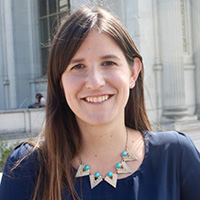
Guadalupe Tuñón, Assistant Professor of Politics and International Affairs:
“The capture of Nicolás Maduro removes the central node holding Venezuela’s authoritarian coalition together. In the short term, it is likely to trigger elite bargaining and internal power struggles within the security forces and ruling party. Regionally, it sets a powerful precedent for external removal of authoritarian leaders, forcing Latin American governments to recalibrate positions on sovereignty, intervention, and cooperation with the United States.”
Effects on Oil Prices and Global Energy Markets
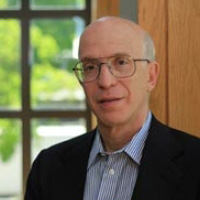
Alan Blinder, Gordon S. Rentschler Memorial Professor of Economics and Public Affairs:
“The markets seem to be taking this event as “no big deal”—probably because oil from Venezuela is such a small share of world supply. The latter is certainly true. But I worry (among other things) about the quagmire the Trump administration may get itself into as it tries to “run” a country this large with an economy in ruins.”
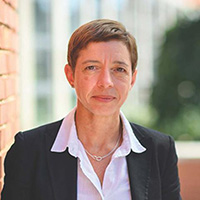
Layna Mosley, Professor of Politics and International Affairs:
“The U.S. raid increases political risk in Venezuela. The result is likely to be higher and more volatile oil prices. Producing oil in Venezuela is far from straightforward. The absence of any long-range U.S. planning for a political transition in Venezuela will leave oil companies – even those closely connected to the Trump administration – hesitant to make long-term investments. More generally, global markets will worry about the ever-expanding U.S. disregard for rule of law, at home and abroad.”
Questions of Legality and Use of Executive Power
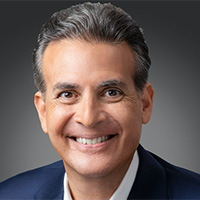
Eduardo Bhatia, John L Weinberg/Goldman Sachs & Co. Visiting Professor and Visiting Lecturer in Public and International Affairs:
"Dangerous precedent in this military intervention. Nicolás Maduro is a dictator who stole elections and crushed democratic institutions in Venezuela. The Venezuelan people have suffered enormously under his rule, and their demand for freedom, accountability, and self-government is fully justified.
“However, it is deeply troubling when any country uses its military superiority to unilaterally arrest or remove the leader of another sovereign nation. Even when the target is an authoritarian ruler, such actions raise serious concerns under the United Nations Charter and fundamental principles of international law that prohibit the use of force and protect national sovereignty."
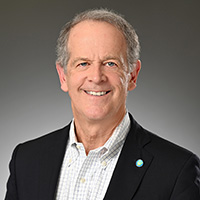
Martin Flaherty, Charles and Marie Robertson Visiting Professor:
“Trump's actions in the abduction of Maduro and his wife have, in a single stroke, violated the U.S. Constitution, through the failure to obtain authorization from Congress, and the United Nations Charter, by the use of force against Venezuela without either the justification of self-defense or the sanction of the Security Council. These violations will serve as an invitation to authoritarian leaders elsewhere further destabilize the embattled international order.”
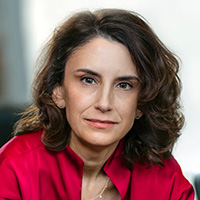
Deborah Pearlstein, Director, Program in Law and Public Policy and Charles and Marie Robertson Visiting Professor in Law and Public Affairs:
“The U.S. attack on Venezuela violates international law in exactly the same way Russia’s attack on Ukraine did: States are prohibited from using force against the territorial integrity of another state. This rule is at the core of the U.N. Charter, the treaty the U.S. signed and ratified and made ‘supreme law’ under our own Constitution. The existence of a pending criminal indictment against Maduro doesn’t change that analysis. Neither does our view of the legitimacy of Maduro’s regime. And if the President is actually serious about his intention to ‘run’ or ‘occupy’ Venezuela going forward without authorization from Congress, he will be claiming a degree of unilateral power for the executive unprecedented in American history.”
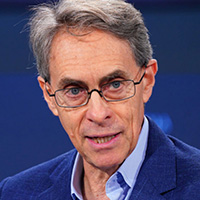
Kenneth Roth, Charles and Marie Robertson Visiting Professor and Visiting Lecturer:
“Under the U.N. charter, military force can be used against a sovereign nation only with U.N. Security Council authorization or in self-defense from an actual or imminent armed attack. But there is no Security Council resolution, and Venezuela posed no such military threat to the U.S.
“Drug trafficking is no more an armed attack than cross-border pollution or infectious disease. If Trump can get away with invading Venezuela, Putin can invade Ukraine. The principles are the same. If Trump can invade Venezuela for its oil, Rwanda can attack eastern Democratic Republic of Congo for its minerals, the United Arab Emirates can arm the Rapid Support Forces for access to Sudan’s gold, and China can seize Taiwan for its semiconductor factories.”
Kim Lane Scheppele, Laurance S. Rockefeller Professor of Sociology and International Affairs and the University Center for Human Values:
“While the power to declare war belongs to Congress under the U.S. Constitution, Congress has ceded much of this power over the years to the President. Conducting a hit-and-run raid with U.S. forces, not contemplating a longer commitment, has been something many presidents have done, telling Congress only after the fact. In fact, the War Powers Act passed in the wake of Watergate only requires the president to 'notify' Congress within 48 hours of the deploying forces abroad. The WPA also gives the President 60 days to use U.S. troops abroad before he must stop unless Congress approves an extension.
“What’s outrageous about the weekend raid, however, is that this administration could have consulted with the relevant congressional committees and kept them in the loop given how long this raid was in the planning – but the administration did not do so. Moreover, since the raid, the president seems to believe that he only needs to communicate with congresspeople from his own party and not to notify Congress as an institution. The legal basis for this raid is still mysterious, as there has been no authoritative explanation of why the president thought he had either the international or domestic legal authorization for his actions. All of this is highly irregular and bodes ill for any attempt by Congress or for the rule of law to rein in Trump’s excesses.”
Signals for Containing Global Adversaries
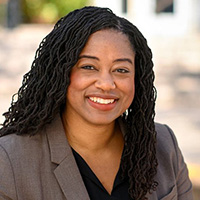
Naima Green-Riley, Assistant Professor of Politics and International Affairs:
“I worry about the precedent set by the actions taken by the U.S. government in Venezuela. Undemocratically selected and ruthless as Maduro may be, is it now acceptable to unilaterally engage the military in the capture of a president? Is it acceptable to appoint one’s own cabinet to 'run' a foreign country? Why not seek multilateral support from the United Nations? What would we say if China took this tactic in Taiwan? The potential implications for international norms are staggering.”
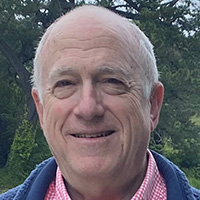
Daniel L. Kurtzer, Lecturer and S. Daniel Abraham Professor of Middle East Policy Studies:
“The capture and rendition of Maduro has sent shock waves globally, especially in places where President Donald Trump has issued threats — for example, Iran. Trump warned Iran the U.S. will act if Iranian protestors are harmed. Trump’s wild and irresponsible rhetoric defined no American national security interest or how this kind of intervention in a foreign country can be justified. Trump’s 'Donald Doctrine' in the Western hemisphere is bad enough; extending it to Iran (or Greenland) would be outright dangerous.”
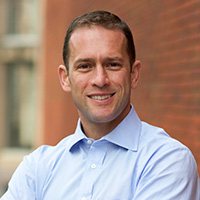
Jacob N. Shapiro, John Foster Dulles Professor of International Affairs:
“Saturday’s strikes and capture of Nicolás Maduro reflected the U.S. military’s deep excellence at coordinating complex strike operations. And so far, Venezuela remains stable with the transition to Vice President Rodríguez. But those of us who have been working on national security issues since before 9/11 well remember the heady days immediately after the invasions of Afghanistan and Iraq when it seemed like tactical and operational brilliance had paved the way to strategic victory. Reflecting on those, here are some early warnings signs that administration's plans will not work out: (1) They don’t realistically account for the incentives of potential anti-government elements; (2) They require breaking implicit bargains between armed elites; (3) They depend on government or international organizations expertly executing complex tasks outside their core mission.”
###