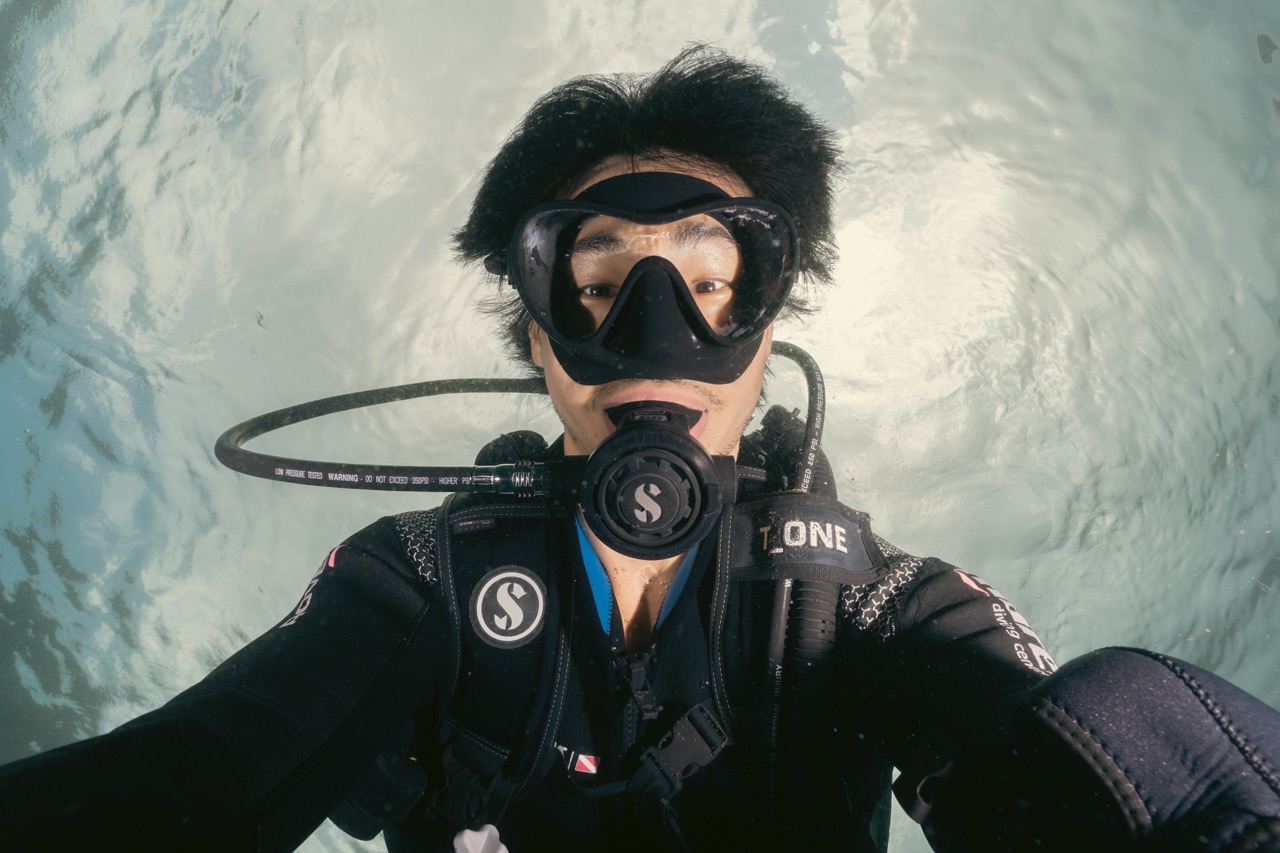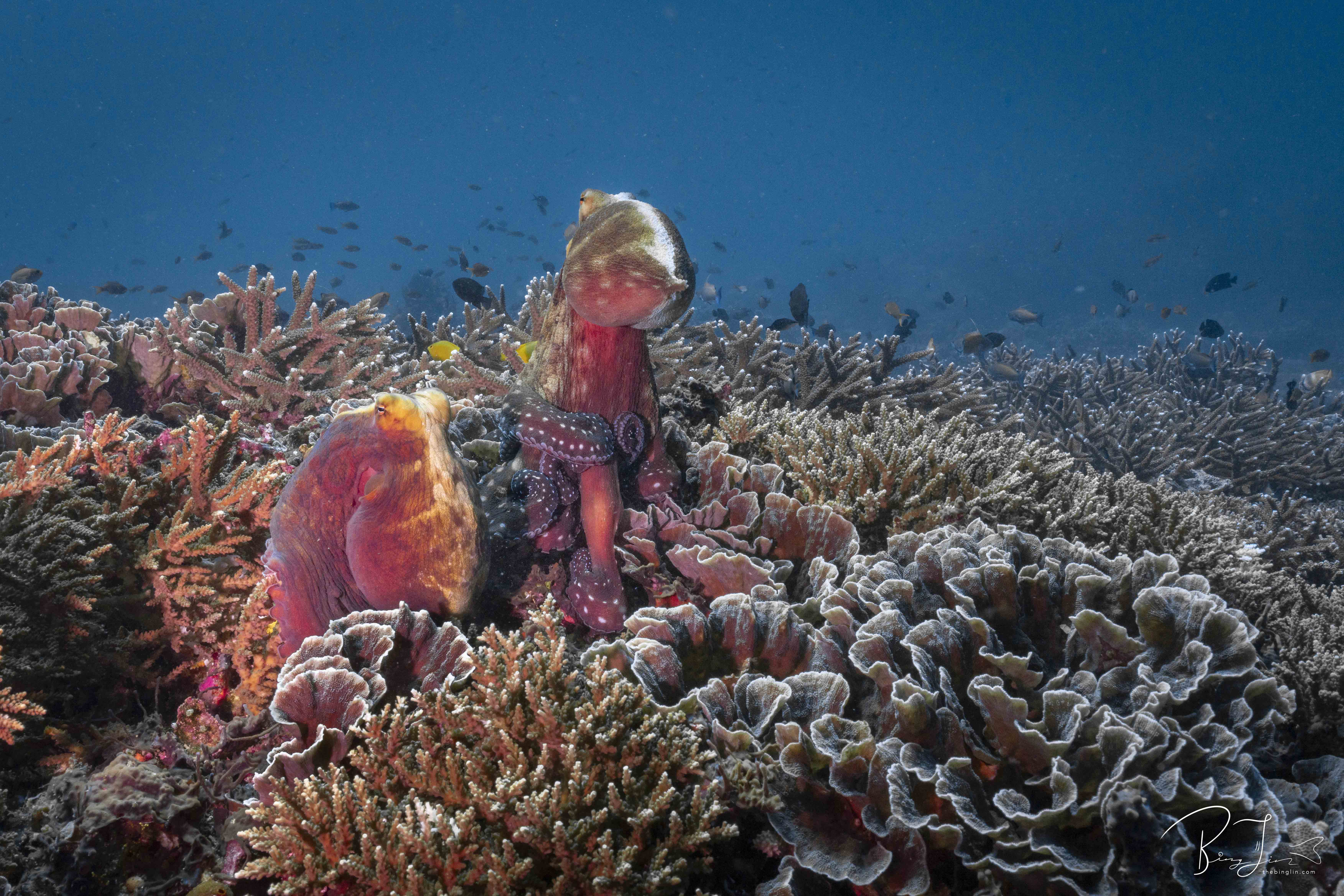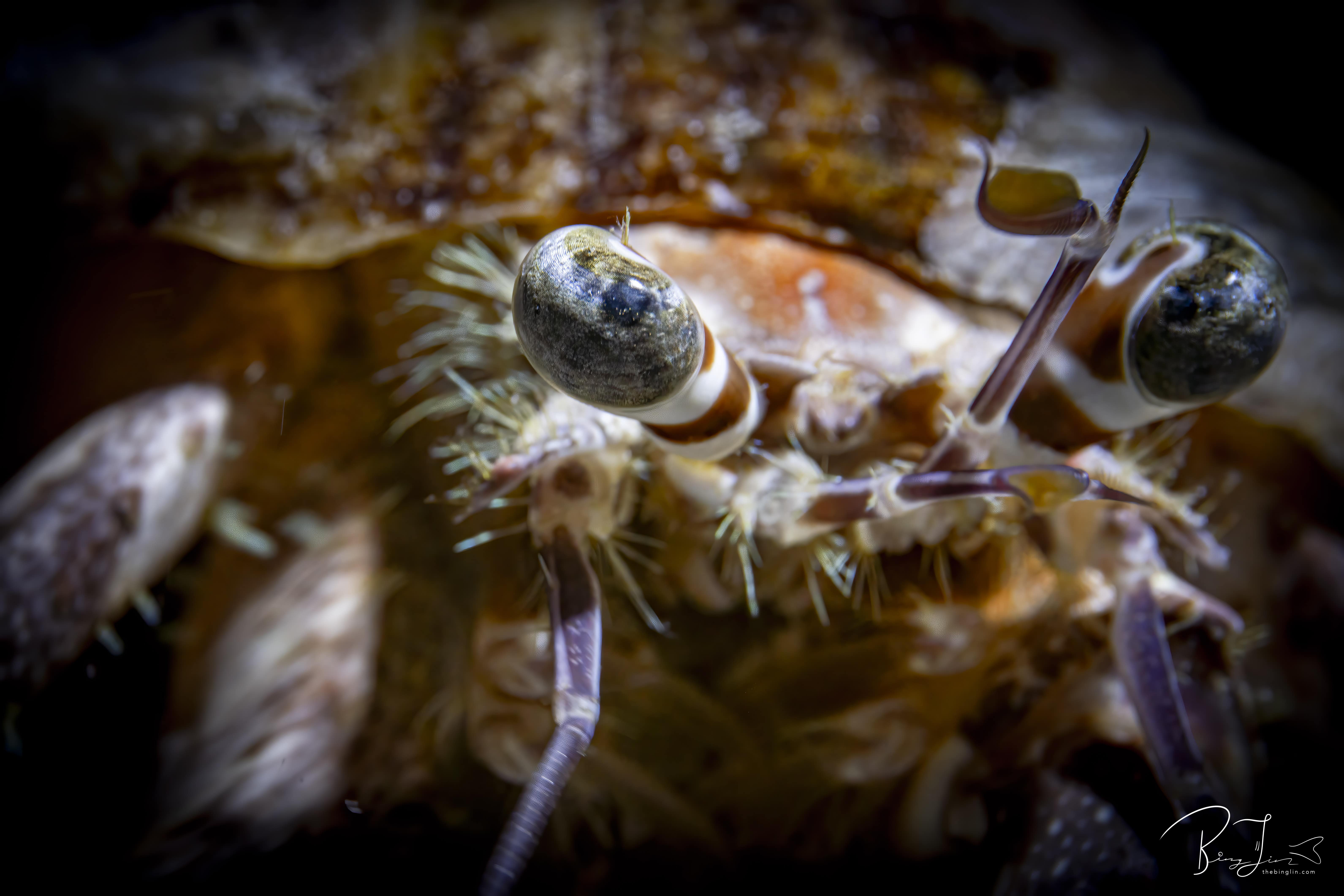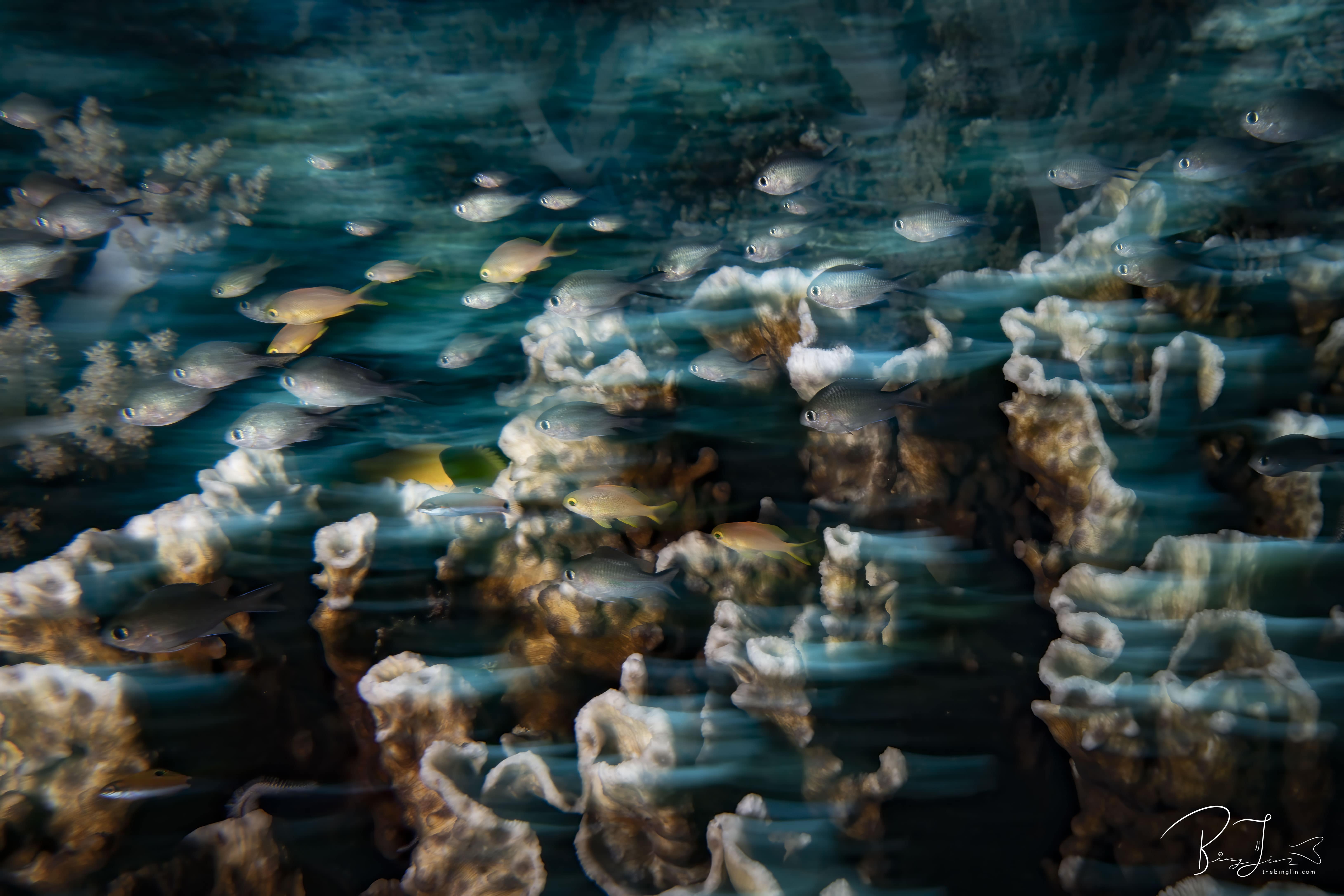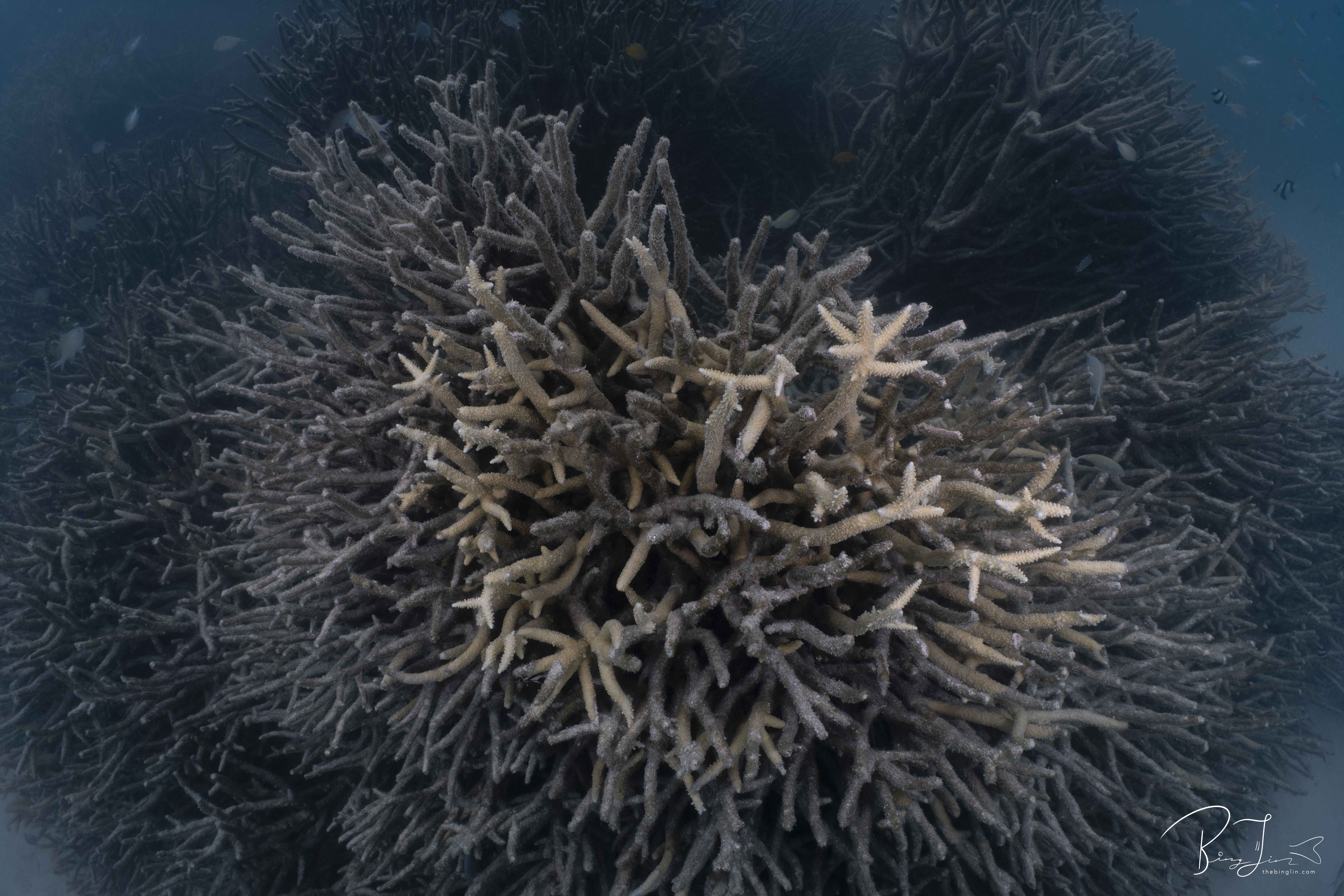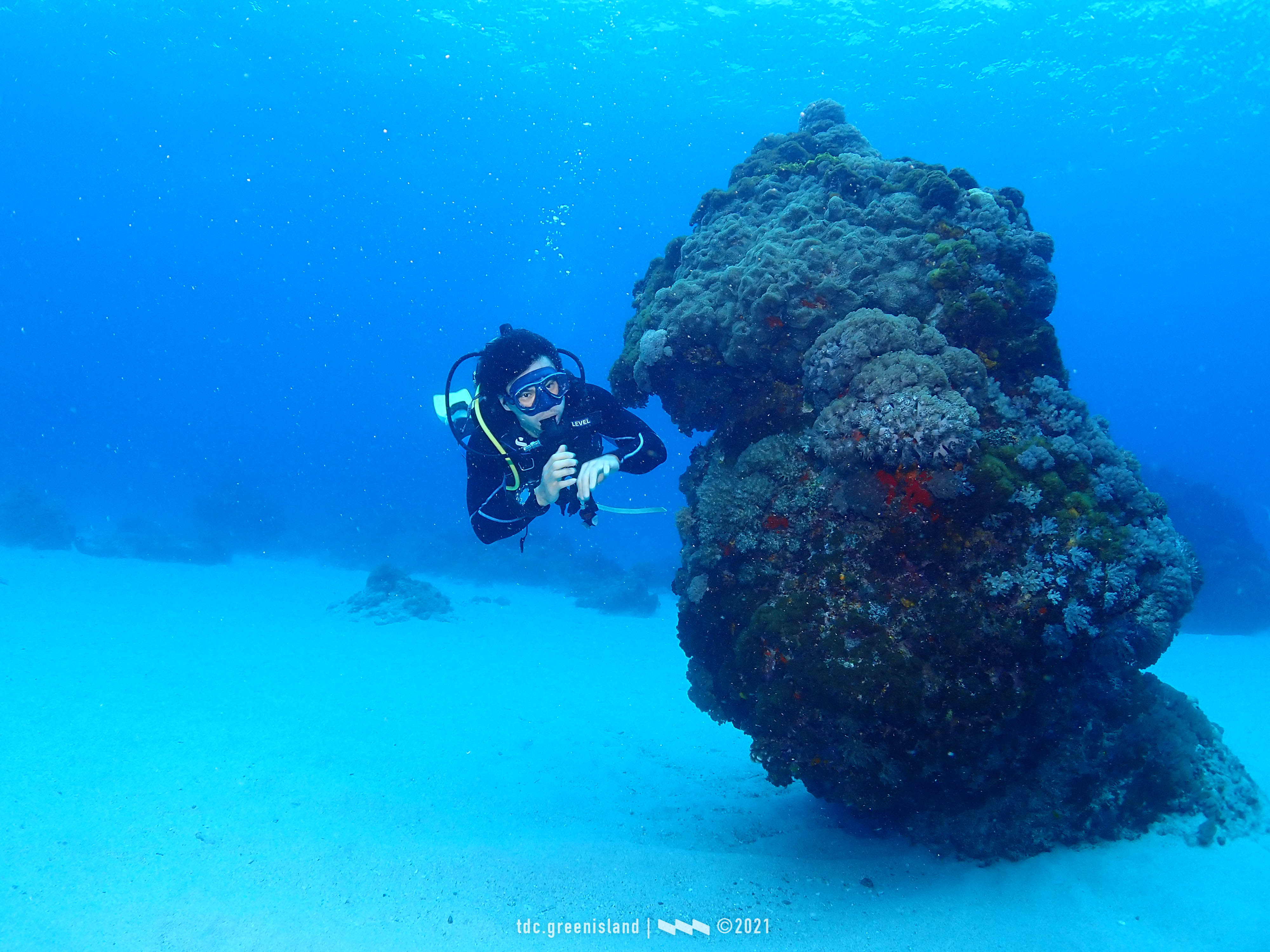


As an undergraduate student studying ecology and evolutionary biology at Princeton University, Bing Lin ’16, Ph.D. ’21 traveled to Honduras for field work that saw him work on two coral reef patches that, despite their proximity, featured completely different fish and coral compositions.
Investigating this juxtaposition was a lightbulb moment for Lin, who found that applying real-world methods to scientific questions was exactly his speed.
“I could put on my thinking cap and answer questions that no one knew the answers to,” he said.
It was the adventure that began a journey for Lin under the sea.
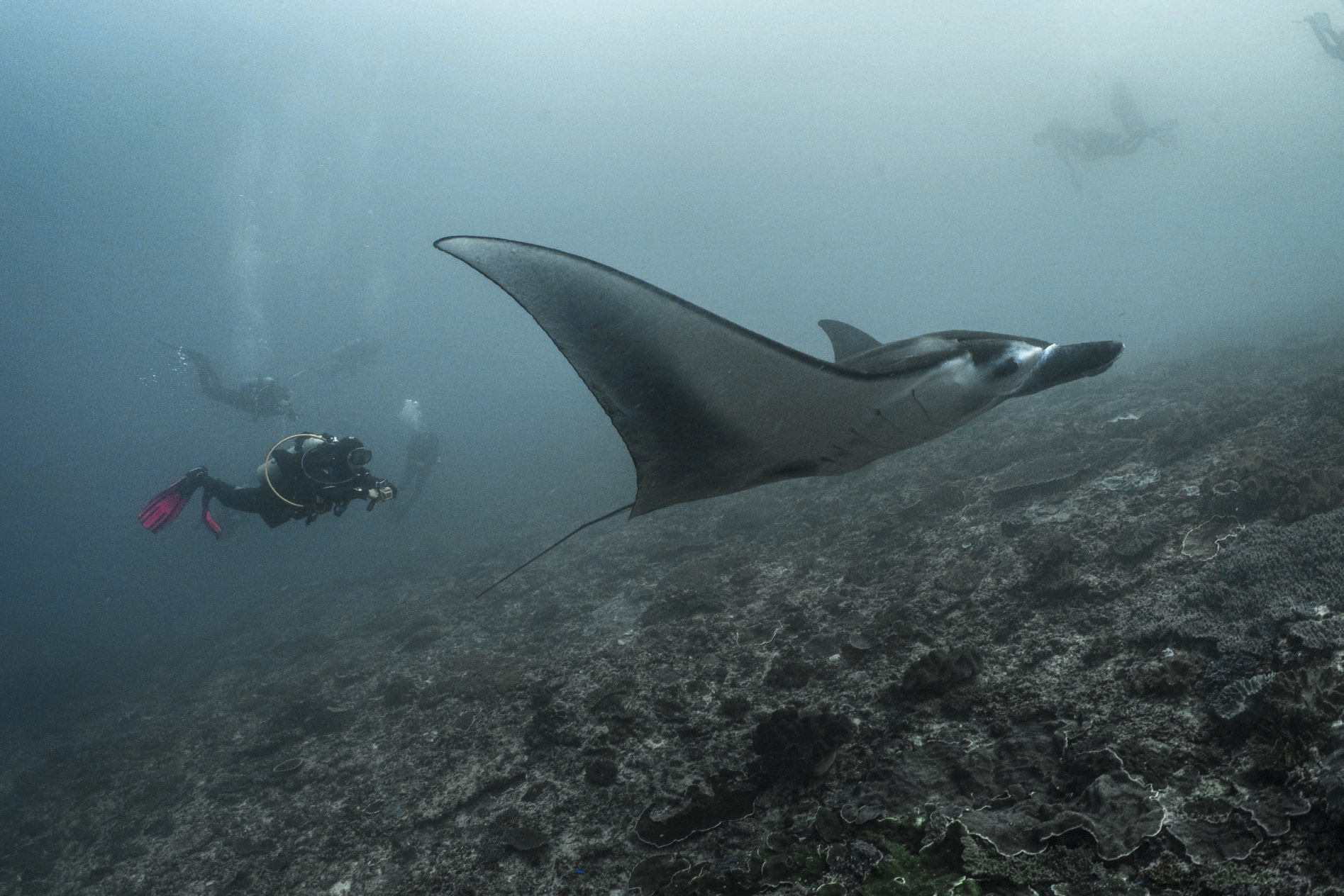
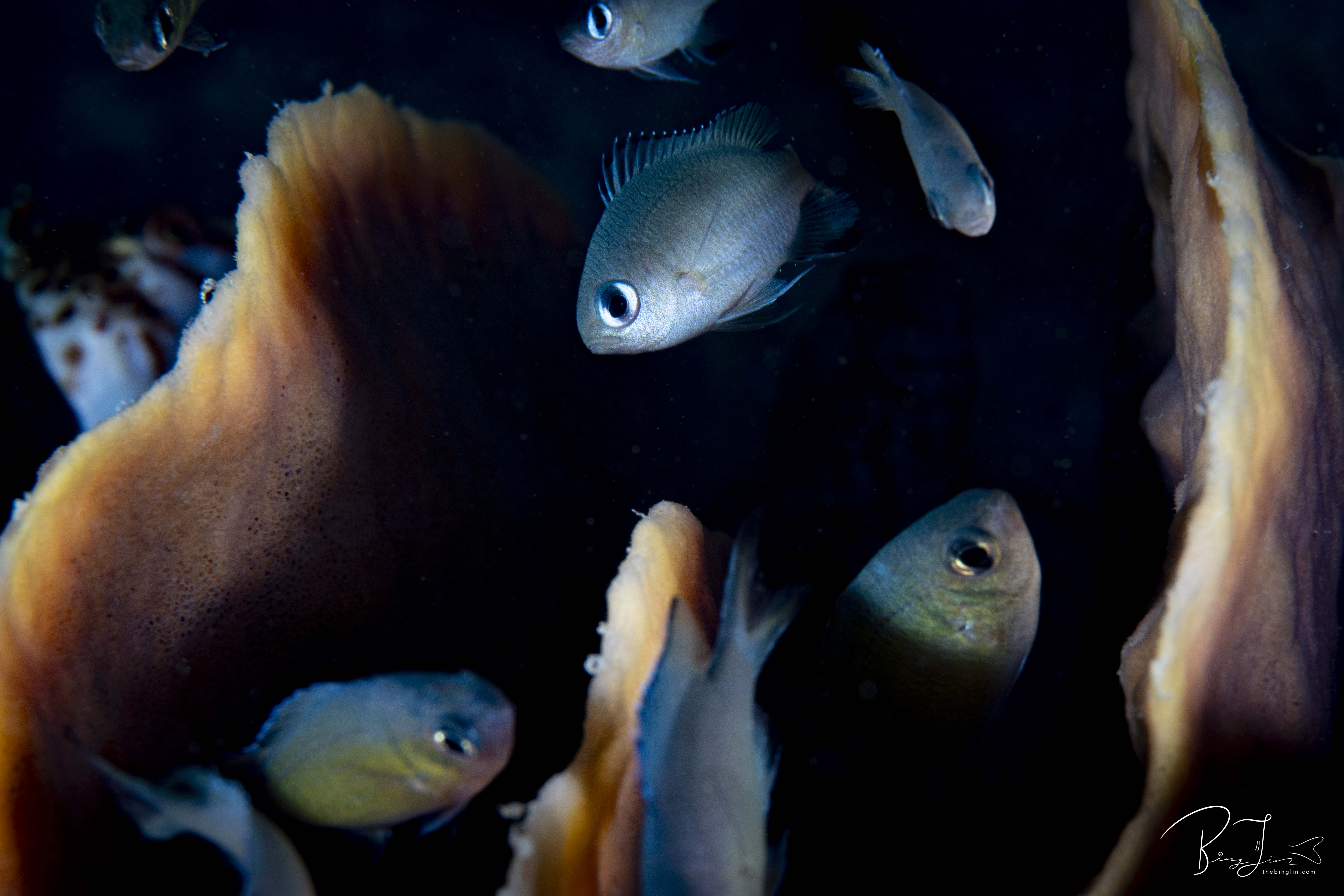
Today, Lin is a conservation scientist at the University of Sydney’s Thriving Oceans Research Hub and a photographer for the International League of Conservation Photographers, where his proclivity for the sea continues to play a central role as he advances his work on coral reef resilience to support sustainable ocean futures.
Following his undergrad experience, Lin moved to Thailand as part of the Princeton in Asia program, where he taught English at a local boarding school and served as a scuba diving guide on the weekends. The former revealed his love for effective communication while the latter reinforced his interest in the human dimensions of marine conservation. Inspired by a talk given by one of his professors during his senior year, Lin eventually returned to Princeton, enrolling in the Science, Technology, and Environmental Policy Ph.D. program at the Princeton School of Public and International Affairs.
“Professor David Wilcove had given this extremely uplifting, motivational speech about how to make a difference; how we could do it; and the ways we could dedicate our careers to conservation,” Lin said. “It was the most moving thing and stuck in the back of my mind.”
In the final summer of his doctoral program, Lin received a Mass Media Science & Engineering Fellowship from the American Association for the Advancement of Science. The program pairs research scientists with media organizations nationwide to improve their science communication and storytelling skills on the job. Lin was assigned to Inside Climate News, the oldest and largest climate newsroom in the nation. Over a summer, AAAS helped him complete a basic journalism workshop before “they sent us out into the world for two months to basically be a science journalist,” Lin said.
During his fellowship, Lin pitched to embark on a 500-mile hike of the Pacific Crest Trail in Northern California, and the result was a four-part photojournalism series that explores the impacts of climate change along the trail.
His work garnered national recognition, winning the Eric and Wendy Schmidt Award for Excellence in Science Communications from the National Academies of Sciences, Engineering, and Medicine. The same series also won Gold from the Society of American Travel Writers Award for Environmental and Sustainable Tourism and first prize in Longform Storytelling from the Society of Professional Journalists NorCal Excellence in Journalism Awards.
"Science and storytelling are strongest together,” Lin said. “They help us confront what we have lost and convey all that we still stand to lose.”
At the University of Sydney, Lin is able to put his diverse background to work, applying interdisciplinary mixed methods to coral reef communities and ecosystems for their conservation.
“The work we’re doing right now is trying to identify coral reef ‘bright spots’ around the world,” Lin said. “These are places, systems, or communities that are doing better than expected given the prevailing local constraints they’re exposed to.”
Studying and understanding bright spots and the socio-ecological conditions that sustain them provide Lin and his research team with insights that can help inform real-world coral conservation long term.
As Lin considers his future, he’s excited about his options. Whether he continues on the path of academia and research, pursues a full-time career in photojournalism, or both, there’s no question that his primary focus will remain the same: to inspire meaningful change in oceans, conservation, and beyond.
"I think a lot of people don't realize that doing what you love is the secret to loving what you do, and when the world's better for it, that's all that matters," Lin said.