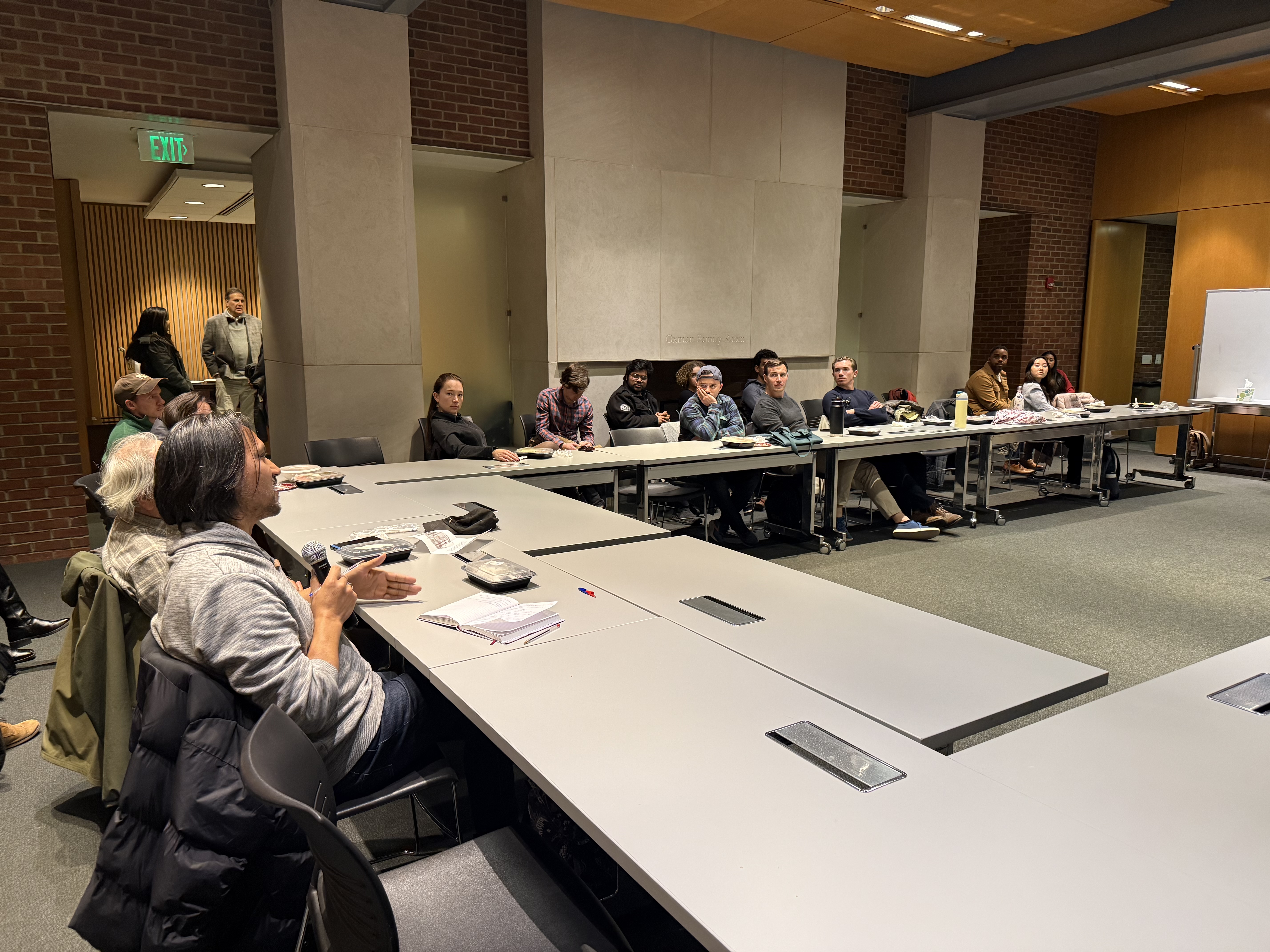


On November 13, the Princeton School of Public and International Affairs’ Afghanistan Policy Lab and the School’s SPIA Diversity & Inclusion Team co-hosted a panel discussion on the topic “Reform and Government Effectiveness in Afghanistan.” Princeton SPIA students Heather Mercer MPP ’26, Valerie Chua MPA ’26, and Mert Ozturkoglu BA ’28 and former APL affiliate Abdullah Azizi led the discussion.
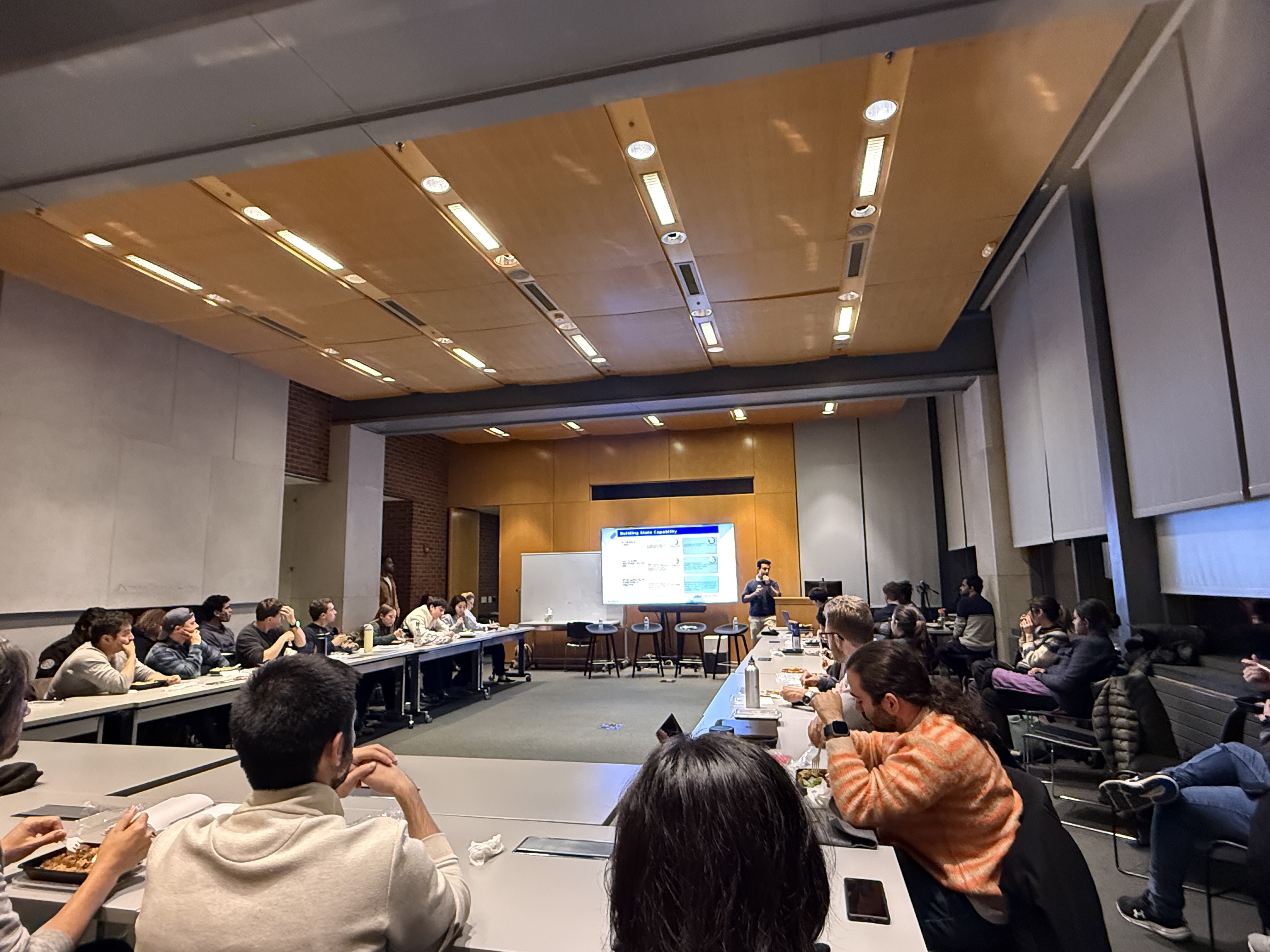
The event opened with a presentation by Azizi, who outlined the existing theoretical models and empirical studies, stating they provide narrowly scoped diagnostic tools and overly broad policy frameworks to address reform challenges within a highly fragmented society, underdeveloped state institutions, particularly at the local levels, and the absence of citizen-state relations based on accountability and service delivery. He discussed the top-down and bottom-up approaches and provided cases of problem- and solution-oriented reforms.
“If reform is problem-oriented, especially with a motivating problem, the success rate is much higher,” he said.
Azizi also mentioned the successful measuring analysis for a reform, which includes ecosystem problems – whether it is designed to promote solution or problem, or to fit the agenda of donor organization, if they demonstrate success, and if they promote value creation.
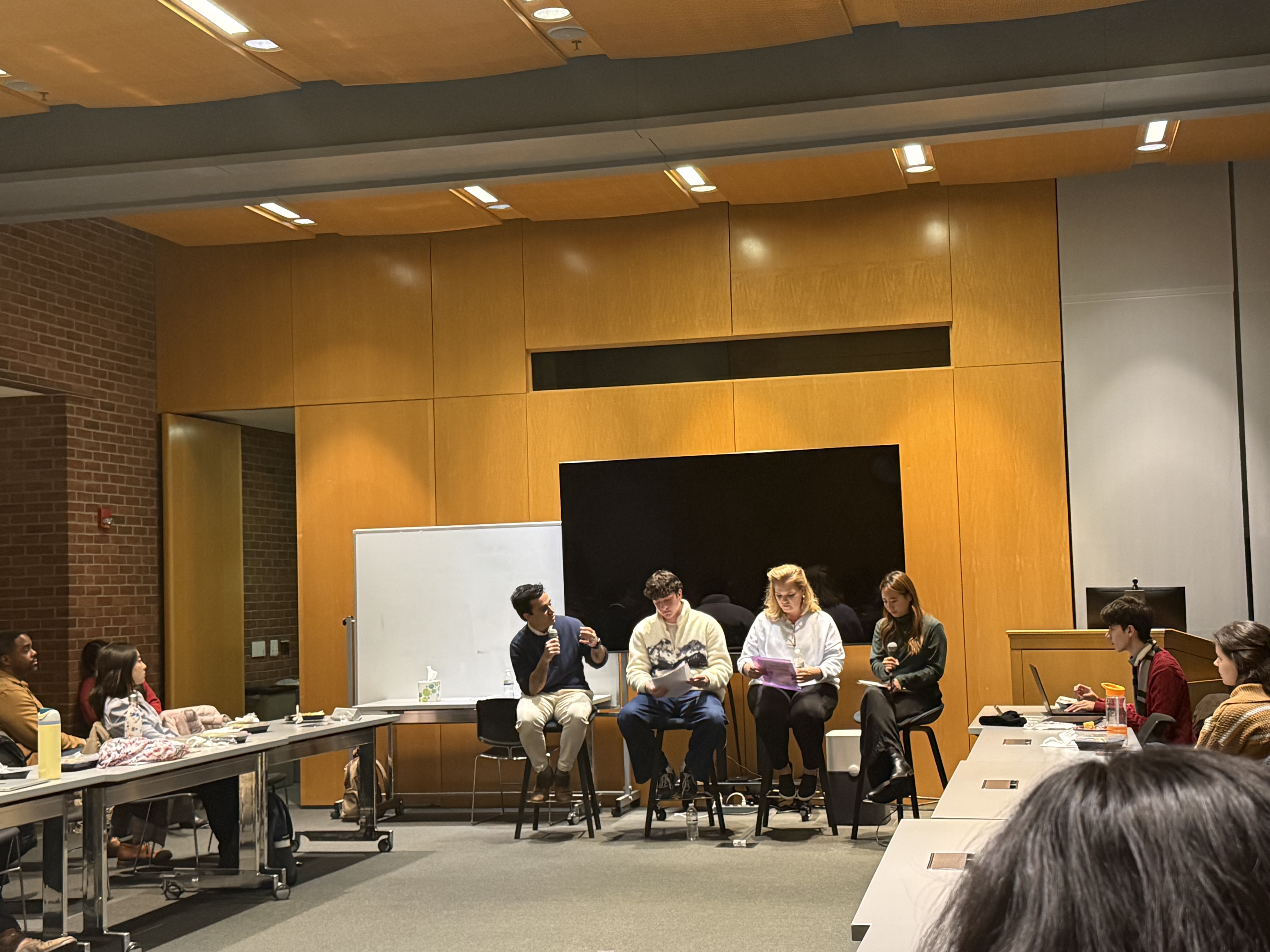
Afterwards, Azizi provided an overview of Afghanistan’s reform and governance trajectory from 2001 to 2021. Following the presentation, Chua initiated the panel discussion by introducing the speakers and asking them questions. The panelists included Heather, Mert Ozturkoglu, and Azizi.
During the panel, the speakers shared their expert insights on reforms and governance as the pillars of a well-functioning society. They discussed how leaders design and implement large-scale reforms to achieve functional institutions, foster economic development, and enhance service delivery. The panelists also draw key lessons from the case study of Afghanistan and others as to why some reforms succeed and others fail.
The discussion also addressed the women's empowerment agenda, including the situation of women’s rights and girls' education in present-day Afghanistan, the role of the international community and regional and global powers, and best strategies of introducing reforms.

Mercer narrated the similarities between the Afghan and Kurdish societies, focusing on her work experiences in both countries. She mentioned grassroots advocacy and goodwill work at the macro level as a successful way of introducing reforms. She also mentioned developing microbusinesses for Afghan women, as the women and girls are going through an extremely hard time under the Taliban. They are not allowed to study beyond grade six, and working opportunities for them are extremely limited.
“Reforms fail when imported in a way that ignores the local realities. The Bonn agreement in 2001 was built on a fragile foundation, whereas the U.S. counterterrorism measures introduced were not structurally stable,” Ozturkoglu said.
Ozturkoglu also highlighted the vital role women play in Afghan society, such as was seen during the earthquakes in eastern Afghanistan in 2025. Women provided critical support, including basic health services to women and girls. Unfortunately, women were later banned from providing such services by the Taliban.